
The HHR SS Flopped When New—Here’s Why Its Turbo Engine Makes It The Used-Car Sleeper Chevy Never Intended
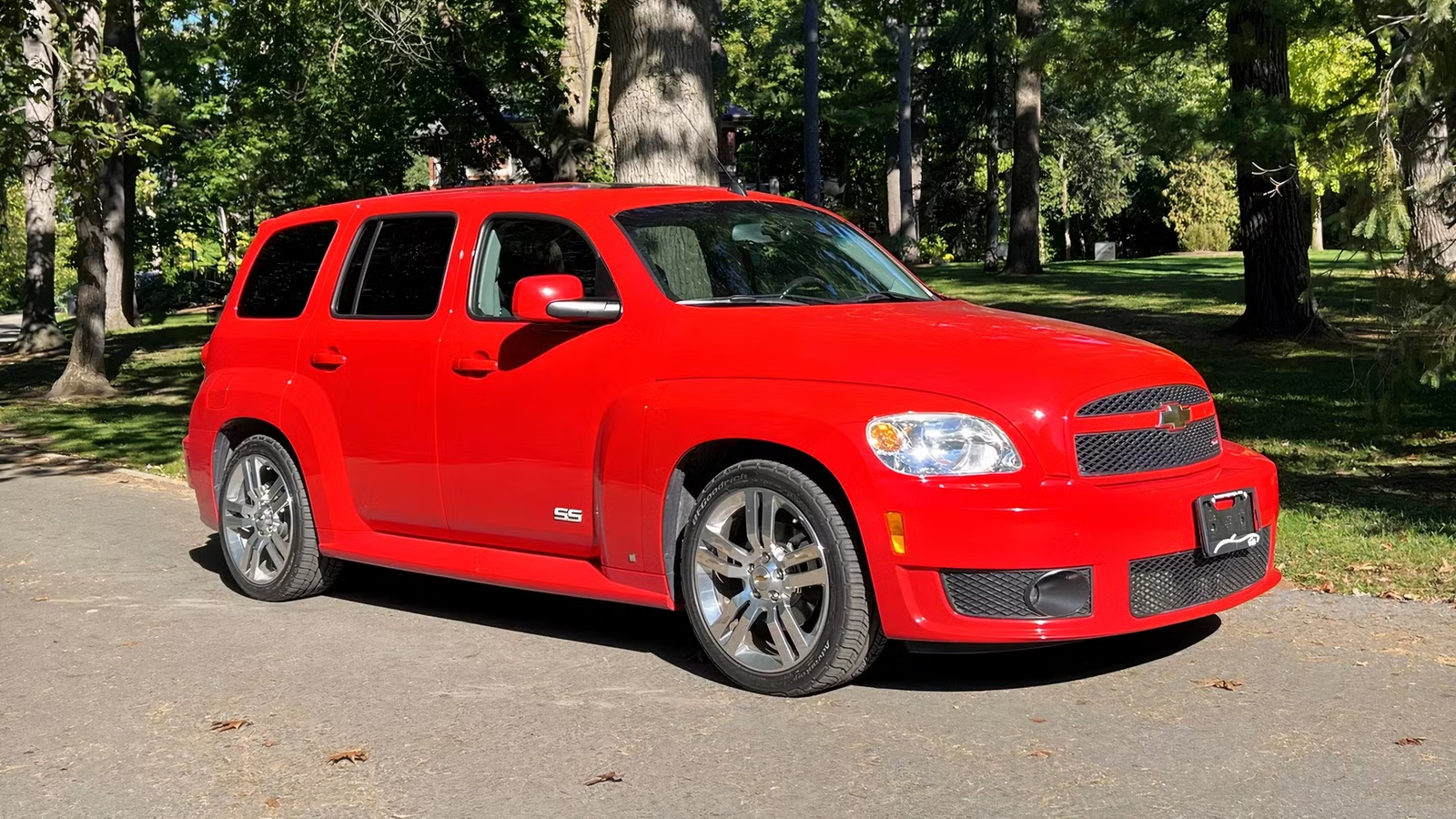
The Chevrolet HHR SS arrived in 2008 wearing retro sheet metal that buyers liked and a turbocharged 2.0-liter four-cylinder that most of them didn’t. Sales were modest, the car was discontinued after the 2011 model year, and Chevrolet quietly moved on. A recent CarBuzz pricing survey of the current used market tells the rest of the story: those same cars are now trading well below the sticker price of a new Toyota Corolla Cross, and the turbo hardware that confused buyers back then is exactly what makes the HHR SS worth a second look today.
This is the classic sleeper setup. A car fails commercially, floods the used market, and depreciation does the rest—leaving a legitimate performance package at a price that would have seemed impossible when the car was new. The HHR SS isn’t a muscle car, and it was never meant to be. But 260 horsepower from a turbocharged four-cylinder in a compact wagon body, available for crossover-undercutting money, is a combination worth understanding.
What The HHR SS Actually Delivered Under The Hood
The SS trim used a 2.0-liter Ecotec turbocharged four-cylinder producing 260 horsepower and 260 lb-ft of torque—the same basic engine family that underpinned the Cobalt SS at the time. Power went to the front wheels through a five-speed manual (a four-speed automatic with 235 horsepower was also available), and Chevrolet tuned the suspension specifically for the performance variant, giving it a firmer, lower stance than the standard HHR. The result was a car that handled with noticeably more composure than its grocery-getter styling suggested.


For context, 260 horsepower from a turbocharged 2.0-liter in 2008 was a legitimate number. The Mazdaspeed3 of the same era made 263 horsepower from a similar displacement; the Focus ST wouldn’t arrive in North America until 2013. The HHR SS was punching in real performance territory, even if its boxy retro body made that hard to see.
Why Buyers Passed On It When It Was New

The HHR’s commercial problem was one of mixed signals. Chevrolet styled it after the 1949 Suburban Carryall—a deliberate retro move that attracted buyers looking for something distinctive but practical. Those buyers generally wanted a comfortable, easy-driving family hauler, not a front-wheel-drive performance wagon with a stiff suspension and a manual-only transmission. The SS trim asked them to pay more for a driving experience they hadn’t come looking for.

Brand positioning didn’t help. The HHR occupied an awkward middle ground between the Cobalt (a proper compact car) and the Equinox (a proper crossover). It was neither, and Chevrolet never quite figured out how to explain what it was. The SS version compounded the confusion—a performance variant of a retro-styled wagon that most buyers associated with their parents’ grocery run. Timing mattered too: the 2008 financial crisis hit during the SS’s production window, and discretionary performance purchases were among the first things buyers cut.
The Used-Market Case For Buying One Now

That commercial disappointment created the conditions for the current opportunity. HHR SS examples in reasonable condition are appearing in the used market at prices that sit comfortably below the MSRP of a new Corolla Cross—a crossover with significantly less power and no manual transmission option. The depreciation curve on a car this obscure tends to flatten out, meaning further price drops are unlikely to be dramatic; what’s available now reflects the floor.
Parts availability is a genuine asset here. The Ecotec engine family was used across a wide range of GM products through the 2000s and into the 2010s, which means replacement components are neither scarce nor expensive. A small but active tuner community has also mapped the engine’s boost response, and modest power gains are achievable without exotic hardware. For a buyer who wants a turbocharged manual-transmission car that doesn’t require a specialist to maintain, the HHR SS checks boxes that more fashionable used-car options don’t.
The 2008–2011 model years are the only ones to target—the SS trim was exclusive to that window. Condition and mileage vary considerably at current price points, so a pre-purchase inspection is worth the cost. But for buyers who know what they’re looking at, the HHR SS is a rare case of a car’s failure working entirely in their favor.
The HHR SS never got the audience it deserved when it was new. The used market is offering a second chance at a price that makes the original commercial math irrelevant.

Related posts

Latest Post


No Comments