
The Forgotten Police Car That Could Catch Anything
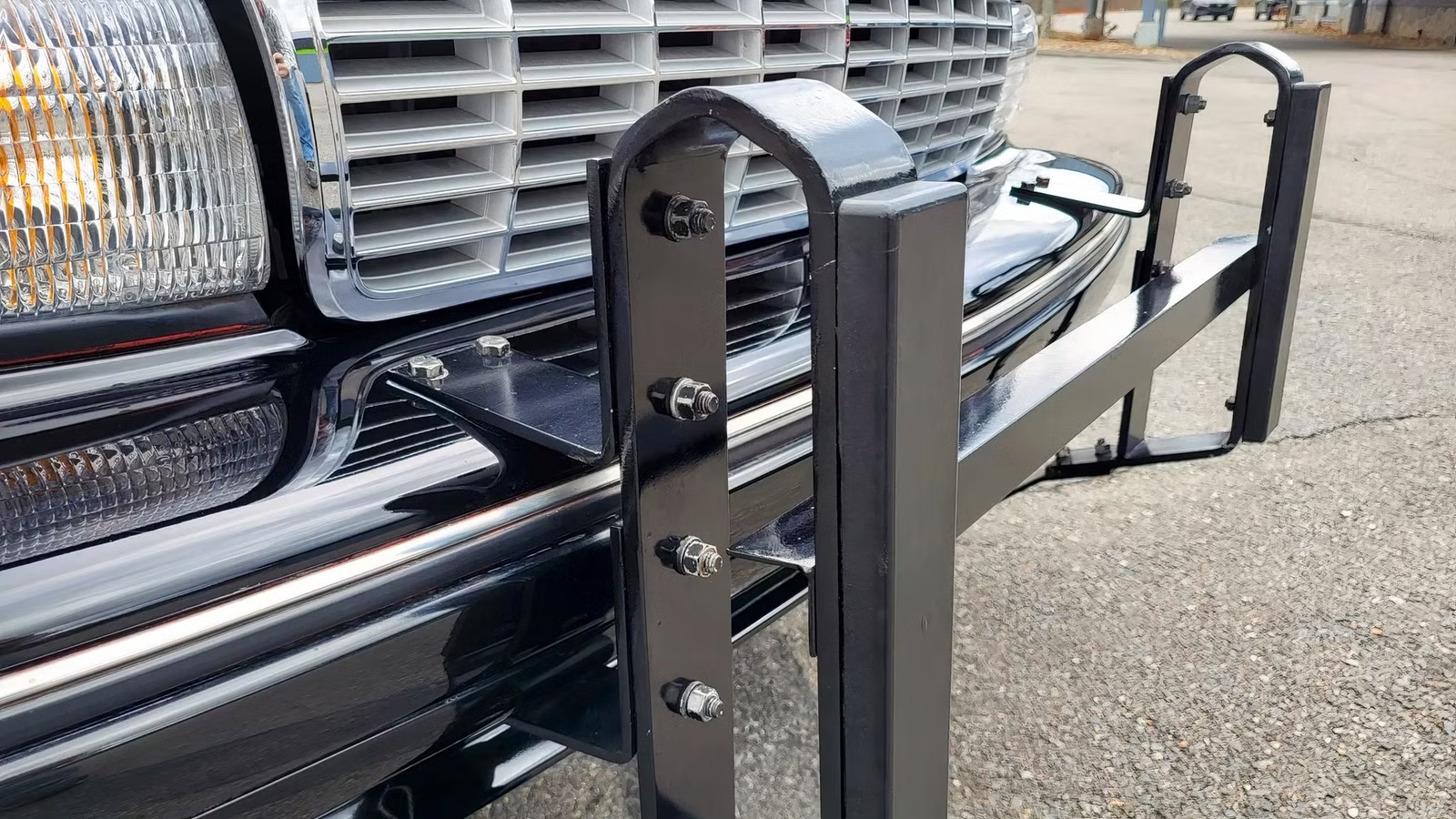
The late 1980s and early 1990s were a golden era for law enforcement vehicles. Iconic cars like the ubiquitous Ford Mustang SSP, Chevrolet Camaro B4C and rugged Dodge Diplomat defined patrol cars for a generation. While these high-profile interceptors grabbed the headlines, Chevrolet was quietly engineering something completely different behind closed doors. Chevy set out to build the ultimate patrol sleeper that could outrun, outlast, and out-muscle almost anything else on the road.
The Police Needed Faster Cars

The American performance landscape underwent a massive shift as it rolled into the 90s. The dark, choked era of emissions-restricted cars was finally ending. Factory horsepower was soaring once again. Affordable sports cars, highly tuned imports, and domestic muscle cars were hitting the streets, giving everyday drivers access to some serious performance. Unfortunately, this horsepower renaissance wasn’t just celebrated by law-abiding enthusiasts.
Street racers and criminals now had access to some of these fast cars and even older performance cars that were too fast to chase. A standard-issue patrol car of the late 80s was often weighed down by a lot of equipment and hundreds of pounds of police gear. They simply did not have the power to keep up. When a pursuit went onto the open highway, law enforcement found themselves severely outmatched.
Reliability Was Just As Important As Speed

However, having a fast patrol vehicle means absolutely nothing if a vehicle can’t survive the brutal reality of daily law enforcement duties. The operational life of a police patrol vehicle is arguably more punishing than any other commercial application. A typical patrol car doesn’t just drive around; it also idles for six, eight, or twelve hours straight, keeping the electronics, radios, and climate control running in extreme heat or freezing cold.

Then, without a moment’s warning, the officer must floor the accelerator, launching the cold or heavily idled engine into a maximum-attack, triple-digit highway pursuit. For an engine, this constant cycling between prolonged idling and sudden takeoff is a death sentence. Therefore, absolute mechanical reliability was just as crucial as raw speed.
One Ordinary Sedan Quietly Became America’s Ultimate Pursuit Weapon

To solve this high-stakes dilemma, Chevrolet didn’t bother building an expensive, specialized vehicle from scratch. Instead, they looked at an existing, ordinary platform within their stable. It was a massive, full-size body-on-frame sedan that had already spent years serving the American workforce. This platform was a staple of taxi fleets, airport shuttles, and standard government motor pools. It was big, heavy, round, and intentionally boring. But beneath that bland, utilitarian sheet metal lay a rugged, traditional rear-wheel-drive architecture. It was the perfect foundation to build a heavy-duty tactical weapon, because nobody would ever see it coming.
This lack of visual drama was exactly what made the platform so lethal. During highway patrol and undercover operations, stealth is a massive tactical advantage. A brightly colored sports car or an aggressive, low-slung coupe sticks out like a sore thumb on the interstate, giving speeders and criminals plenty of time to plan their escape. But an ordinary looking family sedan? It blended seamlessly into the background noise of daily traffic. It looked like an off-duty rental car or a grandmother’s cruiser. Law enforcement absolutely loved this stealth factor. By the time a suspect realized the plain white or black sedan in their rearview mirror wasn’t an ordinary commuter car, the flashing lights were already on, and the chase was effectively over.
The Chevrolet Caprice 9C1 Could Catch Almost Anything

In 1994, Chevrolet officially unleashed their undercover masterpiece: the fourth-generation Chevrolet Caprice 9C1. The “9C1” designation wasn’t a fancy trim level or a marketing gimmick; it was General Motors’ internal Regular Production Option (RPO) code for a dedicated, fleet-ordered police package.
Just like other RPO packages, when an agency checked the box for the 9C1 package, Chevrolet transformed the bubble-shaped Caprice from a floating, comfortable family lounge into a hardcore, high-speed tank. The package stripped away the car’s soft, comfortable, forgiving nature and replaced it with heavy-duty components designed exclusively for high-speed duty.
The LT1 V8 Turned This Sedan Into A Highway Missile

What made all this possible in the Caprice 9C1 lived under the hood. Chevrolet dropped a detuned version of the legendary 5.7-liter LT1 V8 engine straight into the engine bay—the exact same power plant found in the C4 Corvette and the Camaro Z28 of the era. In those cars it made 300 horsepower, but here it made 260 hp and a staggering 330 lb-ft of torque mated to a four-speed automatic transmission. While those numbers might look modest by modern standards, in the mid-1990s, that was plenty for a full-size sedan.
Despite tipping the scales at a hefty 4,080 pounds, the Caprice 9C1 could rocket from 0 to 60 mph in roughly7.3 seconds and scream all the way to a certified top speed of141 mph. People simply did not expect a vehicle the size of a small boat to move with the explosive urgency of a dedicated sports car, allowing it to effortlessly run down fleeing vehicles on long stretches of highway.
It Was Built To Survive What Civilian Cars Couldn’t

What truly separated the 9C1 from a regular Caprice, or even the performance version (the Impala SS), was how heavily over-engineered it was to survive extreme physical abuse. Chevrolet didn’t just give it a big engine; it rebuilt the entire chassis to take a beating.
The 9C1 Caprice was outfitted with a heavy-duty steel frame for maximum structural rigidity during hard impacts. That was paired with thick front and rear stabilizer bars, stiff springs, re-valved shocks, and firm steering to make this massive sedan predictable. It was also set up with a 3.23 performance rear axle with an 8.5-inch ring gear to handle brutal, repeated acceleration. And, of course, four-wheel disc brakes equipped with ABS and thick, semi-metallic pads to reduce brake fade during high-speed deceleration.
To ensure the engine never cooked itself during pursuits, Chevy added a massive heavy-duty cooling package. This included an external air-to-oil engine cooler, an external power steering fluid cooler, and an auxiliary external transmission oil cooler. They even went so far as to equip the car with lifetime green silicone radiator and heater hoses held down by heavy clamps, guaranteeing that a cooling line would never blow out under pressure. These were some serious upgrades, but this interceptor was made for serious business.
It Became A Favorite Beyond Police Departments

Because the fourth-generation Caprice 9C1 was so profoundly tough and mechanically reliable, its reputation rapidly spread far beyond highway patrol units. Yellow cab companies quickly caught on, heavily adopting the identical structural platform under the 9C6 taxi package because the cars could easily log 300,000 to 400,000 miles of brutal city driving without major failures. Federal government agencies, undercover operatives, and municipal fleets bought them in droves.
Decades later, this incredible durability served a renewed purpose for this car. A passionate, dedicated Caprice 9C1 enthusiast and collector community emerged. Car fans realized that if you wanted an incredibly reliable, rear-wheel-drive V8 cruiser that could burn rubber, haul five adults in comfort, and take on potholes, an ex-cop Caprice 9C1 was the ultimate vehicle.
It Changed What A Police Interceptor Could Be

The fourth-gen Caprice 9C1 completely redefined the expectations of what a law enforcement vehicle could achieve. Before its arrival, agencies had to choose between the rugged durability of a slow, full-size sedan or the outright speed of a fragile, cramped sports coupe. The 9C1 offered both in a single package. It raised the bar so high that it forced competitors to re-engineer their own fleet offerings.
This car directly influenced the evolution of later iconic pursuit vehicles. When General Motors discontinued the B-body platform in 1996 to focus on money-making SUVs, it left a massive void that Ford spent years trying to fill by constantly upgrading the suspension and power of the Crown Victoria Police Interceptor to match what Chevrolet had left behind. It paved the way for modern, high-horsepower police cruisers like the Dodge Charger Pursuit and Ford Explorer Interceptors we see today.
It Is Finally Getting The Recognition It Deserves

For a long time, the fourth-generation Caprice was largely ignored by mainstream collectors, dismissed as just another outdated piece of machinery. Because these cars were so incredibly reliable, the vast majority of them were driven straight into the ground by police departments, taxicab drivers, and subsequent cheap car owners, making clean, surviving examples exceptionally rare.
Today, these cars are getting the recognition they deserve. Modern enthusiasts are actively searching for authentic, verified 9C1-coded cars, and values are now sitting around $20,000–$30,000. This comes as no surprise, as this represents the pinnacle of the traditional, full-size, body-on-frame American V8 sedan, mixed with the legendary DNA of a Corvette engine. This forgotten police car has finally caught the attention of the collector world.
Sources: Chevrolet, Bring A Trailer, Collecting Cars.

Related posts



Latest Post


No Comments