
Toyota Corolla Cross Explained: Trims, Powertrain, and Real Value
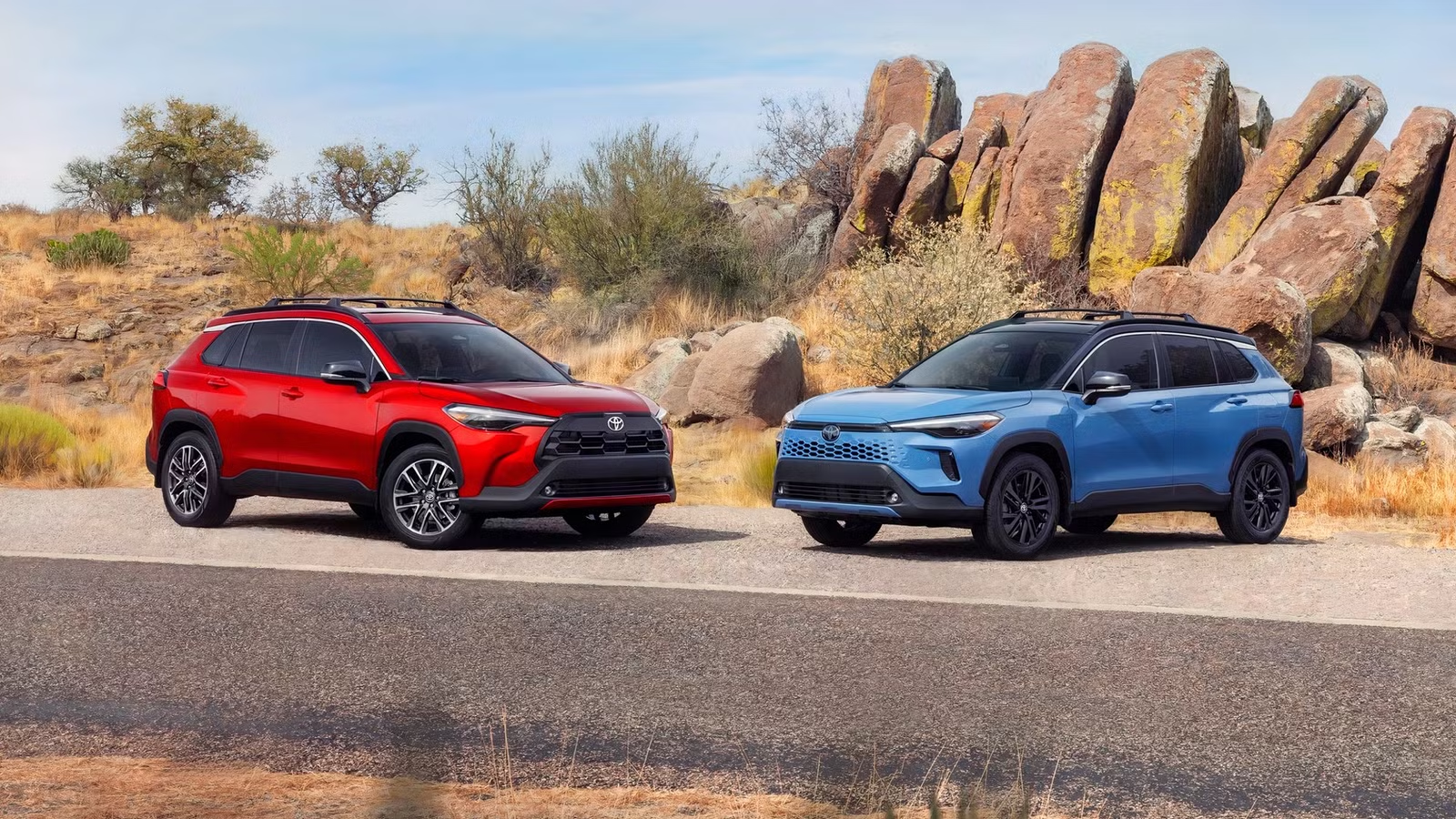
The American compact crossover segment is now crowded with options. The 2026 Toyota Corolla Cross enters this arena as a practical and affordable entry-level option. This smaller family urban utility vehicle sits just below the RAV4 in Toyota’s SUV lineup. Opting for this strategy makes the Corolla Cross somewhat of a spiritual successor to the unsuccessful C-HR, while offering a more traditional SUV shape and better practicality.

Buyers looking for an affordable, reliable vehicle frequently consider this model, as highlighted by its sales success in Toyota’s monthly reports. You can choose between a standard gasoline engine and an efficient hybrid system. The lineup is available in a range of Toyota Corolla Cross trims catering to varying consumer needs.
Powertrain Deep Dive: Gas Vs. Hybrid Performance And Efficiency
The 2026 Toyota Corolla Cross range is available with two unique drivetrain configurations. Both Toyota Corolla Cross specs prioritize usability, affordability, and efficiency to varying degrees. Opting for either powertrain will ultimately affect your initial purchase price, daily driving experience, and your long-term fuel expenses.
The Standard 2.0-Liter Gasoline Engine


The base-level Toyota Corolla Cross comes standard with the brand’s trusted and widely applied 2.0-liter Dynamic Force four-cylinder engine. This unit generates 169 horsepower at 6,600 RPM and 151 pound-feet of torque at 4,400 RPM. Toyota pairs this engine with a Continuously Variable Transmission that features a physical first gear for smoother takeoffs. You can configure this engine with a front-wheel drive or all-wheel drive system.
The Corolla Cross Hybrid System

The Corolla Cross Hybrid employs Toyota’s fifth-generation HEV system, consisting of an Atkinson-cycle 2.0-liter four-cylinder engine with three electric motors. This setup produces a combined 196 hp and sends power to all four wheels via an electronic AWD system. This version uses electric motors to power the rear wheels automatically when the system detects a loss of traction.
Real-World Fuel Economy

The EPA rates the front-wheel-drive gasoline Corolla Cross at 31/33/32 MPG on the city/highway/combined cycle with a 397-mile range estimate from its 12.4-gallon tank. Opting for all-wheel drive drops those numbers to 29/32/30 MPG and a 396-mile range estimate.
The Corolla Cross hybrid delivers much higher efficiency numbers, reflecting an EPA-estimated 45/38/42 MPG with 445 miles of range from a 10.6-gallon gas tank, supported by a compact battery pack.
Real-world testing and owner reports from databases like Fuelly reveal a minor variance from these official ratings:
- Owners of gas all-wheel-drive models average 28 to 29 MPG in mixed driving environments.
- Hybrid model drivers routinely report averages between 40 and 43 MPG. The hybrid system shines brightest in stop-and-go urban traffic.
If your daily commute consists almost entirely of high-speed highway driving, the efficiency gap narrows. The gas model makes financial sense if you drive fewer than 10,000 miles per year and cover mostly highway miles. The hybrid powertrain provides substantial savings if you face daily city traffic or cover high annual mileage.
Acceleration And Handling

The performance differences between the two powertrains show up clearly in acceleration testing and the manufacturer’s claimed figures:
- Gasoline models take 9.2 seconds to sprint from 0 to 60 MPH before hitting a limited 112 MPH. Reviewers note that the CVT causes the naturally aspirated engine to buzz loudly under hard acceleration.
- Hybrid models drop the 0 to 60 MPH time down to 7.3 seconds. The instant torque from the electric motors provides a much more responsive feel when you pass other vehicles or merge onto the highway.
Both variants utilize a MacPherson strut front suspension. Gasoline front-wheel-drive models use a torsion beam rear setup, while all-wheel-drive models and all hybrids receive a multi-link independent rear suspension. The multi-link setup delivers superior ride compliance and controls body roll better through corners.
Reviewers also note that the steering feels light and predictable, which makes parking easy, but this comes at the cost of road feedback. Gasoline variants can tow up to 1,500 pounds when properly equipped. Toyota does not recommend towing with the hybrid variant.
Trim-by-Trim Breakdown: Features, Options, And Value

Toyota divides the 2026 lineup across six distinct Corolla Cross trims. Gas models use the L, LE, and XLE nomenclature. Hybrid versions come in S, SE, and XSE trims.
|
Trim Level |
Powertrain |
Starting MSRP |
Key Standard Features |
|
L |
ICE |
$25,235 |
8.0-inch touchscreen, Toyota Safety Sense 3.0, LED headlights |
|
LE |
ICE |
$27,565 |
Blind-spot monitor, automatic climate control, roof rails |
|
XLE |
ICE |
$30,160 |
18-inch alloy wheels, SofTex upholstery, heated front seats |
|
S |
Hybrid |
$29,595 |
8.0-inch touchscreen, sport suspension, AWD |
|
SE |
Hybrid |
$30,915 |
Privacy glass, paddle shifters, blind-spot monitor |
|
XSE |
Hybrid |
$33,630 |
18-inch black alloy wheels, heated SofTex seats, premium LED lighting |
Feature Additions by Trim

Toyota Safety Sense 3.0 comes standard across the 2026 Toyota Corolla Cross lineup, which is a major inclusion for a budget-beating compact crossover. This suite includes the following functions:
- Pre-Collision System with Pedestrian Detection
- Lane Departure Alert with Steering Assist
- Full-Speed Range Dynamic Radar Cruise Control.
The entry-level L and S trims feature an 8.0-inch infotainment screen with wireless Apple CarPlay and Android Auto. Moving up to the LE or SE introduces a wireless smartphone charging pad, additional USB-C ports, and a blind-spot monitoring system with rear cross-traffic alert.
The top-tier XLE and XSE trims upgrade the interior comfort significantly. You get a 7.0-inch fully digital gauge cluster, dual-zone automatic climate control, a 10-way power-adjustable driver’s seat, and ambient lighting.
Which Trim Offers The Best Value?

The LE trim represents the sweet spot Toyota Corolla Cross price for budget-conscious gasoline buyers. It adds essential safety and convenience items like blind-spot monitoring and automatic climate control without pushing the price close to larger SUVs. However, there are some essential comfort features that buyers will miss, so many may argue it is not the best outright value proposition.
For those looking at the hybrid lineup, the SE provides the strongest feature balance. It includes the crucial safety upgrades and roof rails while keeping the price below $30,000. The hybrid model carries roughly a $2,000 premium over a comparably equipped all-wheel-drive gas model, bolstering its value appeal within the broader lineup. Based on fuel savings alone at average national gas prices, the typical payback window to recoup the hybrid investment is five to six years for drivers covering 12,000 miles annually. The improved acceleration and smoother power delivery shorten this psychological payback period for many owners.
Interior Space, Cargo, And Practicality

The 2026 Toyota Corolla Cross’s cabin layout prioritizes utility and straightforward ergonomics over avant-garde design. Controls sit right where you expect them, making it a comfortable and familiar vehicle to operate even on the most chaotic days.
Rear Seat And Passenger Comfort

Up front, the Corolla Cross provides good visibility and headroom, even for taller users. The rear seat area is tighter than some competitors’, with rear legroom measuring in at 32.0 inches. This falls behind the 2027 Honda HR-V, which is the Cross’s biggest rival in the segment. Taller adults will find their knees close to the front seat backs, though headroom remains adequate due to the flat roofline.
Installing child safety seats is straightforward thanks to clearly marked LATCH lower anchors in the outboard rear seats. The wide rear door openings assist with lifting large car seats in and out.
Cargo Space And Versatility

The Toyota Corolla Cross cargo space varies depending on the chosen drivetrain and layout, because the varying components and drivelines occupy space beneath the floor.
- Front-wheel-drive ICE models offer 24 cubic feet of cargo space behind the second row and 61.8 cubic feet with seats folded flat.
- All-wheel-drive ICE models benefit from 25.2 cubic feet of cargo space behind the second row and 61.8 cubic feet of total capacity.
- Hybrid models only have 21.5 cubic feet of cargo space behind the second row and 58.0 cubic feet of total capacity due to the compact battery pack and electric motors.
The 2026 Toyota Corolla Cross’s rear seatbacks fold forward in a 60/40 split, though they do not create a perfectly flat load floor with the trunk area. Side compartments and grocery bag hooks built into the plastic trim add everyday usability. Roof rails come standard on LE trims and above, allowing you to add crossbars for cargo boxes or bike racks.
Real-World Reliability And Ownership Costs

Predictable ownership costs serve as a key selling point for the 2026 Toyota Corolla Cross range, as it fittingly leans into the reputation of its sedan and hatchback counterparts. Toyota achieves this reliability by sharing proven components with other dependable compact and midsize models.
Reliability And Warranty Coverage

J.D. Power awards the Corolla Cross a high predicted reliability score of 82/100, placing it near the top of the compact crossover class. National Highway Traffic Safety Administration data shows few consumer complaints and minimal recall activity for recent model years.
Toyota backs the vehicle with a standard warranty package:
- Basic Warranty: Three years/36,000 miles
- Powertrain Warranty: Five years/60,000 miles
- Hybrid Component Warranty: Eight years/100,000 miles
- Hybrid Battery Warranty: 10 years/150,000 miles
Every new Corolla Cross also includes ToyotaCare. This complimentary plan covers normal factory-scheduled maintenance for two years or 25,000 miles.
Cost of Ownership

Insurance premiums for the Corolla Cross track along the lower end of the crossover segment because of its extensive standard safety suite. According to Edmunds, you can expect to spend $4,258 on insurance over five years for the base S model. Five-year cost-of-ownership projections indicate low depreciation rates of $7,441 for the same trim. The 2026 Corolla Cross retains its value better than segment rivals like the Jeep Compass, primarily thanks to its better reliability and build-quality reputation. Annual scheduled maintenance costs after the expiration of ToyotaCare remain low, with simple oil change and tire rotation intervals every 10,000 miles. Five-year estimates reveal a $3,431 maintenance cost and $601 repair cost.
How It Stacks Up: Corolla Cross Vs. Segment Rivals

The 2026 Toyota Corolla Cross has to deal with intense competition in the subcompact and compact crossover segments. While the midsize market remains a leading segment, these smaller options are rapidly rising in popularity, as more consumers demand crossover utility at a more affordable price.
Segment Comparison Table
|
Metric |
Toyota Corolla Cross |
Honda HR-V |
Mazda CX-30 |
Jeep Compass |
Subaru Crosstrek |
|
Base MSRP |
$25,235 |
$26,600 |
$26,375 |
$29,550 |
$26,995 |
|
Base Engine Power |
169 HP |
158 HP |
191 HP |
200 HP |
152 HP |
|
Combined EPA Fuel Consumption |
32 MPG |
28 MPG |
29 MPG |
27 MPG |
29 MPG |
|
Maximum Cargo Volume |
61.8 cubic feet |
55.1 cubic feet |
45.2 cubic feet |
59.8 cubic feet |
64.9 cubic feet |

Key Differentiators
- The Honda HR-V offers a more spacious rear bench than the Toyota Corolla Cross, but its engine struggles with poorer performance and lacks a hybrid option.
- The Mazda CX-30 bests the Corolla Cross in delivering a premium interior and sportier handling dynamics. It struggles to match the Corolla Cross in cargo volume and fuel economy due to its more powerful engine options.
- The Jeep Compass’s engine produces more horsepower and benefits from light off-roading capabilities. Unfortunately, it carries a higher base price and historically struggles with long-term reliability.
- The Subaru Crosstrek provides good ground clearance and capable all-wheel drive, but the base engine is underpowered compared to the Toyota, without the fuel efficiency benefits.
The Verdict: Is The Corolla Cross Right For You?

The Corolla Cross remains a successful compact crossover by offering dependable and efficient transportation that’s free of unnecessary complexity. It may not be the most engaging to drive or offer the most luxurious interior, but it executes daily tasks with dependable competence.
Who Should Buy It?
You should buy the Corolla Cross if you want low ownership costs, excellent fuel efficiency, and straightforward cabin controls. If you’re an urban commuter or have a small family, you’ll also appreciate the compact exterior footprint and generous cargo capacity. The 2026 Toyota Corolla Cross Hybrid version stands out as the ideal choice for its better acceleration and fuel economy.
Who Should Look Elsewhere?
You should look elsewhere if you routinely carry adults in the back seat or desire an engaging driving experience with multi-terrain versatility. In those cases, the Honda HR-V makes a more compelling alternative, while the Mazda CX-30 will better serve your aesthetic needs.
Sources: Fuelly, the EPA, Edmunds, and J.D. Power.

Related posts


Latest Post


No Comments