
Lexus Says The New LFA Will Feel Like The Original Even Without The Screaming V10
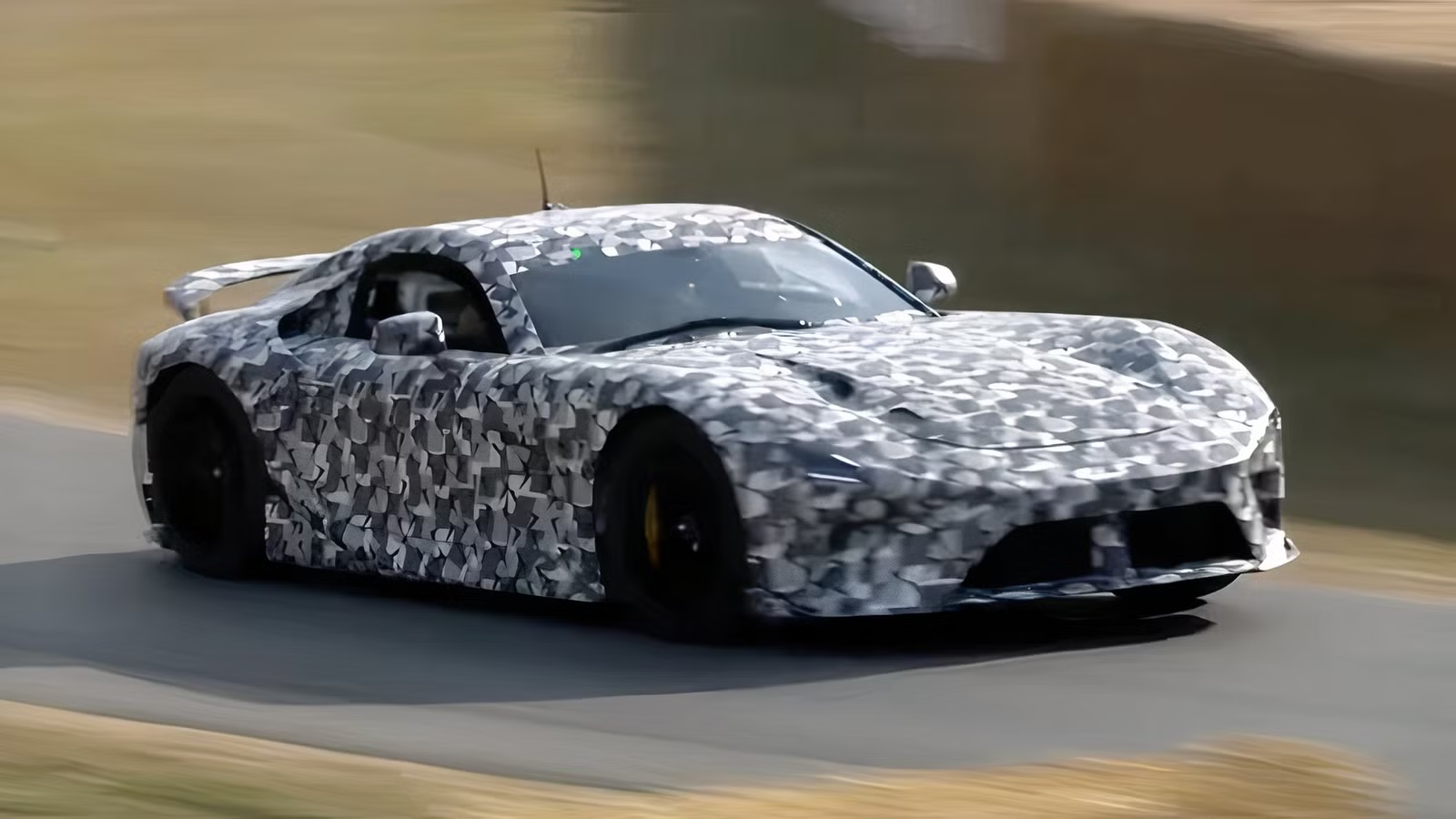
The highly anticipated upcoming Lexus LFA supercar just made a very exciting appearance at the Goodwood Festival of Speed, and it’s gotten everyone talking again. The biggest news right now is that Lexus has confirmed the new LFA is ‘almost ready,’ and with that announcement came a claim that will raise every LFA purist’s eyebrow. The electric successor will deliver the same driving sensation as the original, and it will do it without the legendary V10. The car will get motors, batteries, and Lexus’s promise that it can somehow bottle what took a decade and millions of dollars to engineer the first time around.

It’s a bold thing to say out loud. The original LFA’s 1LR-GUE V10 — a 4.8-liter, naturally aspirated screamer developed with Yamaha — wasn’t just a powerful engine. It was a sensory event. The question isn’t whether the new LFA will be fast. It almost certainly will be. The question is whether Lexus has actually figured out what made the original feel the way it did — and whether any EV architecture can replicate it.
What Made The Original LFA So Hard To Forget

The 1LR-GUE produced 552 horsepower and revved to 9,000 rpm — numbers that look impressive on paper but barely communicate what the engine actually felt like in practice. Because of its high-revving character, Lexus famously had to use a tachometer with a needle so fast that an analog gauge couldn’t track it. They replaced it with a digital display. That’s how quickly this engine moved.
Beyond the rev ceiling, the LFA’s engineering was obsessively analog. The chassis was built from carbon fiber-reinforced polymer, keeping weight to around 3,263 pounds — lean for a car with this much presence. Weight distribution was dialed to 48/52 front-to-rear. Steering was hydraulic, not electric, giving the driver direct road feel that most modern performance cars have traded away for efficiency and adjustability. Every input had a consequence you could feel, not just measure. The car was valued at over $375,000 new and is now trading at or above $1 million — a market signal that the driving experience it delivered hasn’t been replicated.
2027 Lexus LFA: What We Know

According to Autocar’s reporting, Lexus is aiming for the new LFA to feel like its predecessor behind the wheel — a direct, stated goal from the development team. The publication notes Lexus is specifically trying to win over EV skeptics, which suggests the team understands the credibility gap it’s working against.
What Lexus hasn’t made fully public yet is the technical architecture behind that claim. There’s no confirmed motor count, no disclosed torque curve shaping strategy, no detail on whether haptic feedback systems are being used to simulate the tactile sensation of a high-revving combustion engine. The ‘almost ready’ framing implies the car is close to production-ready, but the engineering specifics that would actually answer the sensation question remain under wraps. That gap between the marketing claim and the technical disclosure is exactly where the skepticism lives.
Where Other EV Supercars Can Compete — And Where The Gap Is Real

To be fair to Lexus, electric powertrains do some things better than any V10. Instant torque delivery means response times measured in milliseconds, not the tenths of a second it takes a combustion engine to build revs. A low-mounted battery pack drops the center of gravity below what the LFA’s carbon tub could achieve. Weight distribution can be tuned with precision by positioning motors and battery cells. These are genuine performance advantages, not marketing spin.
But the sensation gap is real, and it runs deeper than sound. A naturally aspirated engine at 8,500 rpm communicates through vibration, through the way the car’s whole body tightens as it approaches the limit, through the physical effort of keeping a rear-wheel-drive car honest at the edge. Electric motors deliver torque silently and linearly — which is thrilling in its own way, but it’s a fundamentally different kind of thrill. Lexus would need to engineer steering feel, chassis feedback, and possibly some form of artificial induction or exhaust note with enough fidelity to bridge that gap. Whether they’ve done it is the only question that matters now.
What Lexus Would Need To Pull Off To Make This Credible

For LFA purists, the bar isn’t ‘fast EV.’ The bar is a car that makes you feel something — that rewards commitment, punishes mistakes, and communicates its limits through your hands and spine rather than a screen. Lexus would need hydraulic or at minimum heavily weighted steering with genuine road feel. It would need a chassis tuned to transmit rather than isolate. And it would need some answer to the acoustic question — even if that answer is an honest one, acknowledging the sound is gone and compensating through every other sensory channel.
The original LFA’s legacy is secure. At north of $1 million on the current market, it’s not a car people are buying to drive to the grocery store — it’s a benchmark. The new LFA doesn’t need to be the same car. It needs to be a car that earns the name. Lexus has said it’s almost ready. Now it has to show its work.
Source: Autocar

Related posts





Latest Post




No Comments