
10 Greatest American Muscle Cars Ever Built
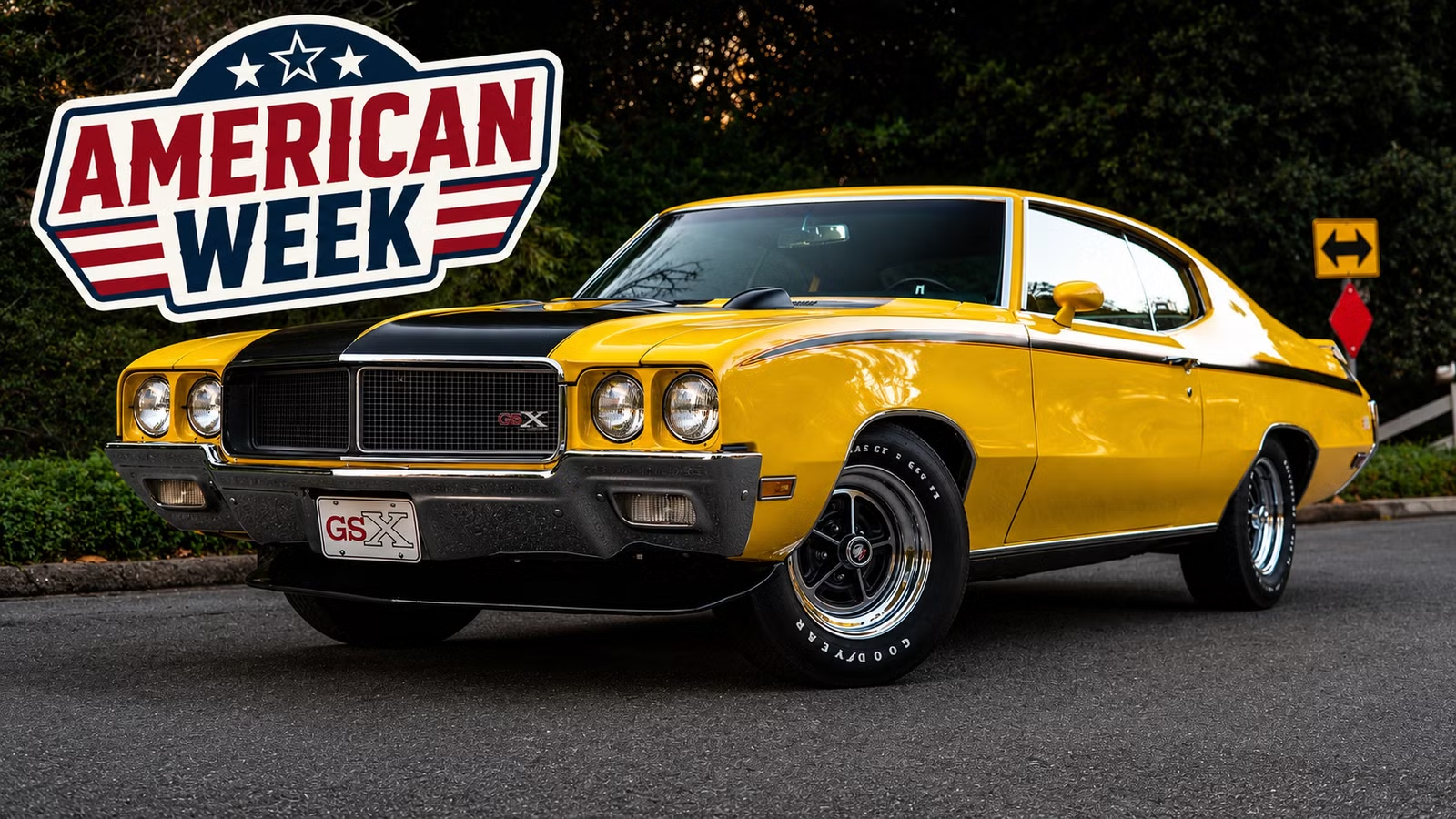
In the mid-1960s, Detroit’s automotive industry introduced a new level of performance to the world via the muscle car. This new type of accessible fast car has made a permanent impact on the global landscape of car enthusiast culture. The principle was a simple task of taking a lightweight, midsized platform, stripping away unnecessary amenities, and installing the largest, highest-displacement V-8 engine available from the corporate parts bin beneath the hood.

Before this golden era, ultimate performance was largely the playground of wealthy European elites who bought high-revving, intricate sports cars from the likes of Ferrari and Porsche. Muscle cars were designed to be affordable, mechanically simple, and staggeringly fast in a straight line, which perfectly suited the expansive, grid-like road infrastructure of post-war America and the blossoming culture of localized drag racing.
1964 Pontiac GTO Tri-Power
The 1964 Pontiac GTO Tri-Power is widely regarded as the first-ever muscle car to be produced. Internal visionaries working for the General Motors group were able to circumvent a strict corporate ban on large engines in midsized cars with this model. The GTO sneaked into production as an optional package for the Tempest, resulting in blurred market segments. This model’s introduction aggressively kickstarted the American horsepower wars by proving that consumers were hungry for raw power over luxury features.


The heart of the GTO experience was a 6.4-liter V-8 with a Tri-Power three-by-two-barrel carburetor setup, which was paired with a four-speed Muncie manual transmission. This combination generated 348 horsepower at 4,900 RPM and 428 pound-feet of torque at 3,200 RPM. It clocked a 0-60 MPH sprint in 5.7 seconds, crossed the quarter-mile marker in 14.1 seconds at 101 MPH, and hit a top speed of 120 MPH. When new, this package required an original MSRP of approximately $3,200. Today, it commands a current market value ranging from $45,000 to over $115,000 according to Hagerty’s excellent-to-concours guidelines and verified Mecum auction data.
1968 Dodge Charger R/T 426 Hemi

Featuring what many automotive stylists consider to be the finest body shape of the era, the 1968 Dodge Charger R/T 426 Hemi epitomized a sinister street presence. Boasting a refined double-diamond, coke-bottle profile, hidden headlamps, and a scalloped hood, it still looks thoroughly menacing today. Beneath the sheet metal lay an iconic racing engine adapted for street use, cementing its place as an absolute pop-culture icon and an undisputed ruler of the late-1960s street-racing scene. It came armed with the fearsome 7.0-liter Hemi V-8, routed through either a four-speed A833 manual or a three-speed TorqueFlite automatic transmission.

The Hemi engine churns out a factory-rated 425 hp at 5,000 RPM and 490 lb-ft of torque at 4,000 RPM. Performance metrics were staggering for the time, pushing the coupe from 0 to 60 MPH in 5.1 seconds and through the quarter-mile in 13.5 seconds at 105 MPH on its way to a top speed of 140 MPH. Buying one brand new in 1968 cost roughly $4,300 as equipped with the Hemi powerplant. Modern market values have soared dramatically, with verified Hemi examples bringing between $160,000 and $285,000, based on the most recent auction data.
1970 Chevrolet Chevelle SS 454 LS6

When General Motors finally lifted its internal engine displacement restrictions for the 1970 model year, its flagship brand responded with the 1970 Chevrolet Chevelle SS 454 LS6. This model represents the mountain peak of muscle car power ratings during the classic era. It carried an engine with a solid-lifter camshaft and a massive four-barrel carburetor that pushed out a factory rating widely considered to be highly conservative, making it a potent straight-line performance coupe.

The mechanical core of the Chevelle SS was the 7.4-liter Big-Block V-8 linked to the four-speed Muncie M22 Rock Crusher manual transmission. The LS6 variant produces 450 hp at 5,600 RPM and 500 lb-ft at 3,600 RPM. This translates into a 0 to 60 MPH time of 5.4 seconds, a quarter-mile run of 13.1 seconds at 108 MPH, and a top speed of 135 MPH. A buyer in 1970 would look at an original MSRP of around $4,500 with the SS and LS6 package upgrades selected. In the modern classic market, recent sales highlight a current market value from $110,000 to well over $250,000.
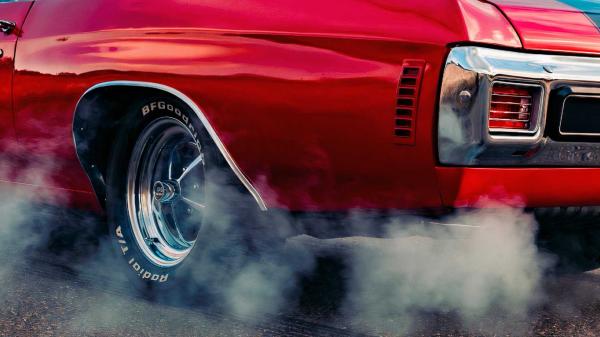
This Classic Muscle Car Could Outrun Modern Performance Cars
The 1970 Chevelle SS 454 set a muscle car performance standard the lasted almost four decades and still impresses.
1970 Plymouth Hemi ‘Cuda

Moving over to the newly redesigned E-body platform for 1970, the 1970 Plymouth Hemi ‘Cuda transformed into a legendary heavyweight muscle icon when paired with the famed race-bred powerplant. Featuring a striking Shaker hood scoop that vibrated intensely with the engine’s idle, high-impact paint colors, and aggressive hockey-stick billboards, the ‘Cuda is widely hunted by modern collectors as one of the ultimate status symbols of the muscle car era. Under the hood sits a 7.0-liter Hemi V-8, available with a four-speed manual or a three-speed automatic transmission.

This Hemi-based unit officially produces 425 hp at 5,000 RPM and 490 lb-ft of torque at 4,000 RPM. You can expect to hit 0 to 60 MPH in 5.6 seconds, achieve a 13.7-second quarter-mile at 104 MPH, and reach a top speed of 135 MPH. The base Hemi model carried an original MSRP of about $4,100. Today, current market values easily sit between $200,000 and $400,000, while ultra-rare convertible variants have been known to eclipse the million-dollar mark.
1969 Ford Mustang Boss 429

The 1969 Ford Mustang Boss 429 was constructed solely to satisfy Nascar production requirements for a new semi-hemispherical combustion chamber cylinder head design. It remains one of the rarest and most mechanically fascinating pony-turned-muscle cars ever built. Because the massive powerplant was physically too wide for the standard factory engine bay, the assembly process required hand-modification of the shock towers by an outside engineering firm, resulting in a low-slung, ultra-aggressive masterpiece.

The Boss 429 features a specialized 7.0-liter Cobra Jet-derived V-8 engine fitted exclusively to a four-speed Toploader manual transmission. Its official rating was 375 hp at 5,200 rpm and 450 lb-ft of torque at 3,400 RPM. Using this configuration, it achieves 0 to 60 MPH acceleration in 5.3 seconds, completes the quarter-mile in 13.6 seconds at 106 MPH, and hits a lower 118 MPH top speed due to shorter drag-strip gearing. It arrived with an original MSRP of $4,800. In the contemporary collector space, Bring a Trailer and Mecum auction standards dictate a current market value spanning from $250,000 to over $450,000.
1969 Dodge Charger Daytona

The 1969 Dodge Charger Daytona was born strictly out of aerodynamically driven desperation to dominate the high-speed superspeedways of Nascar. This wild aero-focused muscle car defied traditional styling boundaries, sporting a massive 23-inch tall rear wing designed to provide stability in high-speed corners and a fiberglass nose cone that sliced through the air. This appearance made it the first car in Nascar history to officially break the 200 MPH threshold, making its street-legal version a rare collectible marvel. Under its elongated hood is either a 7.2-liter Magnum V-8 or the top-tier Hemi V-8, managed by a heavy-duty four-speed manual transmission.

The base engine develops 375 hp or 425 hp with the Hemi, which also produces 490 lb-ft of torque. The street version used its aerodynamics to hit 0 to 60 MPH in 5.2 seconds, finish a quarter-mile in 13.8 seconds at 104 MPH, and push onward to a top speed of 165 MPH. The car originally debuted with an MSRP of $4,000. The current market value routinely sees values between $220,000 and $450,000, though true Hemi examples frequently eclipse $750,000 at premium Mecum events.
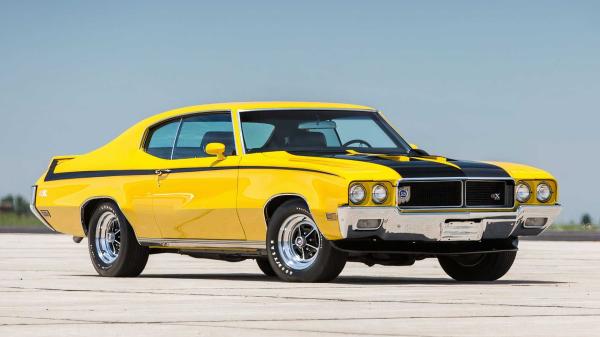
Buick’s Greatest Muscle Cars: The Underrated Icons Of American Power
Buick may not be famous for muscle cars, but they sure did create some of the baddest rides of the Golden Age.
1970 Buick GSX Stage 1

The 1970 Buick GSX Stage 1 is famous for blending high-end luxury interior options with a high-output engine. For decades, it held the record for the highest torque output of any American production car, surpassed only by modern multi-valve supercars. Available only in Saturn Yellow or Apollo White paint with bold black stripes, it counters its upscale brand image with brutal street performance.

Power comes from a 7.5-liter Big-Block V-8 linked to a four-speed manual or a three-speed Turbo-Hydramatic automatic transmission. This massive motor turned out 360 hp at 4,600 RPM alongside 510 lb-ft at a low 2,800 RPM. This enables the luxury cruiser to accelerate from 0 to 60 MPH in 5.1 seconds, clearing the quarter-mile in 13.3 seconds at 105 MPH, and reaching a top speed of 130 MPH. The car was originally priced with an MSRP of $4,900. According to the Hagerty Price Guide and verified Bring a Trailer sales, its current market value ranges between $90,000 and $180,000.
1969 Chevrolet Camaro COPO ZL1

Using the Central Office Production Order system typically reserved for fleet vehicles like taxis and school buses,
dealerships found a loophole to order a full-race, all-aluminum big-block engine inside a lightweight pony car body. The result was the 1969 Chevrolet Camaro COPO ZL1. This was Chevy’s light, fast, and prohibitively expensive pony car, of which only 69 units are revered today as holy grails of drag racing history. The mechanical centerpiece was the exotic, all-aluminum 7.0-liter ZL1 V-8 mated to a close-ratio four-speed Muncie manual gearbox.

While the factory rated output at 430 hp at 5,200 RPM and 450 lb-ft at 4,400 RPM, true output neared 500 hp. It typically accelerates from 0 to 60 MPH in 5.1 seconds, clears a quarter-mile in 13.1 seconds at 110 MPH, and hits a top speed of 135 MPH. Because of the race-derived aluminum engine block, the original MSRP skyrocketed to an astronomical $7,300. Reflecting its extreme rarity, current market values are highly volatile, sitting comfortably between $600,000 and over $1,000,000 at top-flight Mecum and Bring a Trailer auctions.
1970 Oldsmobile 442 W-30 Holiday Coupe

The 1970 Oldsmobile 442 W-30 Holiday Coupe is fittingly named to highlight its four-barrel carburetor, four-speed manual transmission, and dual exhaust configuration. This highly engineered muscle machine offers a thoroughly balanced approach to performance. The specialized W-30 option package added a fiberglass dual-intake hood, lightweight red plastic inner fender wells, a performance-calibrated camshaft, and blueprinted engine internals. These make it a sophisticated and fast highway cruiser. The brand’s 7.5-liter Rocket V-8 engine features a four-speed manual or a three-speed automatic transmission.

The W-30 package tuned this engine to 370 hp at 5,200 RPM and 500 lb-ft of torque at 3,600 RPM. Performance testing clocked the car at 5.7 seconds for a 0 to 60 MPH sprint, 13.9 seconds at 102 MPH in the quarter-mile, and a top speed of 128 MPH. Buying this vehicle brand new in 1970 demanded an original MSRP of roughly $4,600. Today, it trades at a current market value of $85,000 to $165,000.
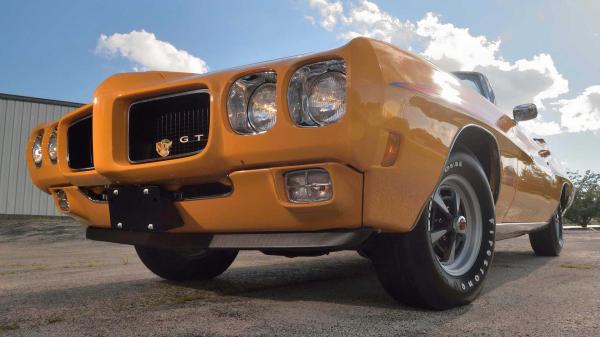
The 10 Most Powerful Pontiacs Ever Produced
Pontiac was synonymous with performance, but even among their elite rides, there was a power pyramid.
1969 Pontiac GTO The Judge Ram Air IV

The 1969 Pontiac GTO The Judge Ram Air IV was initially envisioned as a lower-cost, stripped-out model to combat other affordable options on the market. This legendary option package evolved into the ultimate expression of psychedelic pop-art culture. Pontiac it fitted with eye-catching decals, a prominent rear wing, a T-handle Hurst shifter, and functional hood scoops feeding an upgraded high-revving overhead-valve cylinder head assembly. Even today, it perfectly encapsulates the flamboyant spirit of 1969. The ultimate version wielded a 6.6-liter Ram Air IV V-8 engine is paired with a four-speed close-ratio manual transmission.

It boasts an official output of 370 hp at 5,500 RPM and 445 lb-ft of torque at 3,900 RPM. The mechanical setup yields a 0 to 60 MPH time of 6.0 seconds flat, a quarter-mile performance of 14.3 seconds at 100 MPH, and a top speed of 124 MPH. A fully loaded example carried an original MSRP of approximately $4,100. In modern times, the current market value hovers between $95,000 and $220,000, heavily contingent upon documented Ram Air IV engine verification across Bring a Trailer and Mecum sales databases.
Sources: Hagerty, Bring a Trailer, and Mecum

Related posts

Latest Post


No Comments