
This Yamaha Feels More Premium Than Bikes Costing $5,000 More
Some motorcycles wear their premium credentials proudly. They’re the ones with eye-watering price tags, exotic European badges, and spec sheets overflowing with technology that most riders will never fully exploit. They promise an elevated riding experience, and in many cases, they absolutely deliver. But they also reinforce the idea that genuine quality always comes at a steep cost.

That assumption doesn’t always hold true. Every so often, a manufacturer builds a motorcycle that blurs the line between mainstream and premium so effectively that it forces riders to rethink what their money actually buys. Instead of relying on exclusivity or prestige, these bikes win people over through thoughtful engineering, refined execution, and an experience that consistently exceeds expectations long after the novelty wears off.
What Actually Makes A Motorcycle Feel Premium?
Horsepower figures and price tags are easy to compare, but they’re rarely what separates a genuinely premium motorcycle from one that’s simply expensive. The best motorcycles create an impression that’s difficult to quantify because it comes from dozens of small details working together. It’s the confidence you feel when tipping into a corner, the precision of every control input, and the consistency with which the motorcycle responds to everything you ask of it.
The Details Riders Notice Every Time They Swing A Leg Over


Fit and finish are usually the first clues. Tight panel gaps, high-quality paint, durable switchgear, and controls that operate with satisfying precision all contribute to the impression that the manufacturer paid attention to details many riders will never consciously notice. It’s less about luxury and more about consistency. Every interaction should inspire confidence rather than remind you where corners were cut.
The riding experience matters even more. A refined engine shouldn’t surge unpredictably or vibrate excessively at highway speeds. Suspension should remain composed over rough pavement without sacrificing responsiveness when the road becomes twisty. Brakes should offer strong stopping power with a predictable feel, while rider aids should enhance confidence without constantly reminding you they’re there. When those fundamentals come together, the motorcycle starts feeling far more expensive than its MSRP suggests.
The Yamaha That Reminds You Why Riding Is Fun
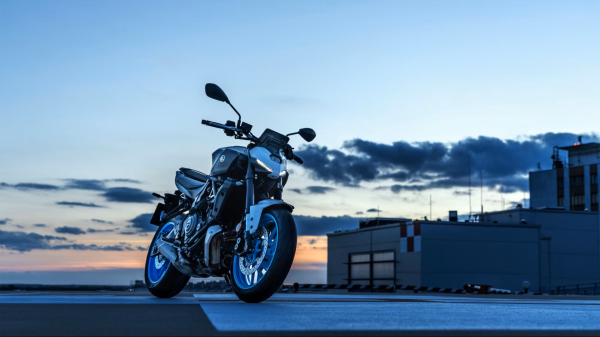
This middleweight Yamaha naked bike prioritizes fun and engagement above all else.
Yamaha’s Motorcycles Tend To Punch Above Their Weight

Yamaha has built a reputation for producing motorcycles that consistently deliver more than their price tags suggest. Rather than chasing prestige or loading every model with expensive hardware for the sake of marketing, the company has spent decades refining the fundamentals. Whether it’s an entry-level naked bike, a middleweight sportbike, or a flagship machine, there’s usually a sense that the engineering budget was spent where riders will actually notice it.

That philosophy has produced some of the most respected motorcycles of the modern era. Bikes like the MT-07 earned cult status by offering class-leading engines and playful handling without demanding premium money, while the MT-09 redefined expectations for middleweight nakeds with its charismatic CP3 triple. Even Yamaha’s supersports and touring motorcycles have long been praised for delivering refinement and reliability that often rival more expensive European alternatives.
The Yamaha XSR900 Feels More Premium Than More Expensive Motorcycles

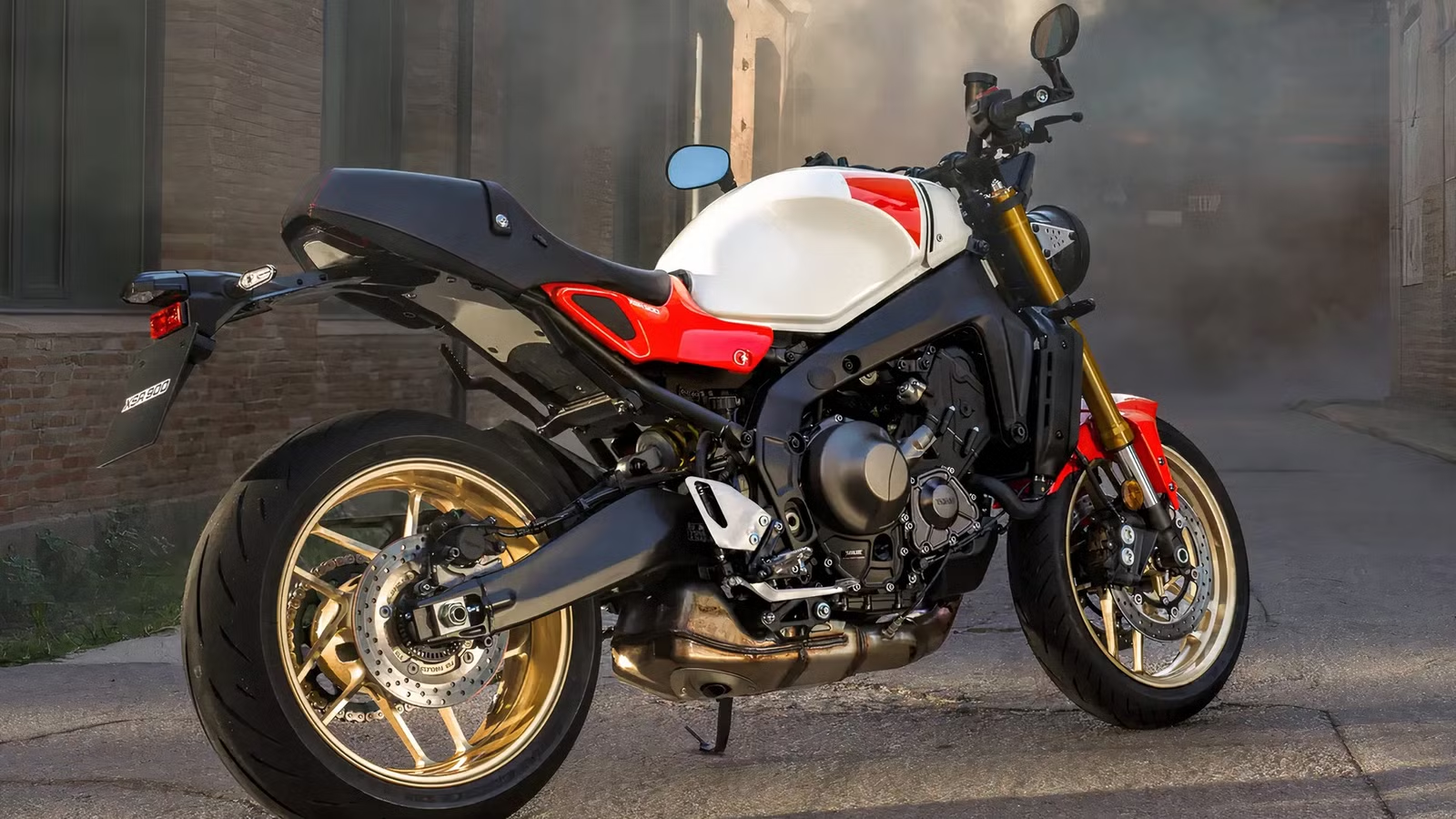
Few motorcycles illustrate that better than the Yamaha XSR900. Starting at just $10,599 in the United States, it combines retro-inspired styling with engineering borrowed from some of Yamaha’s most celebrated performance machines. At first glance, it looks like a stylish modern classic, but underneath sits a motorcycle that rivals far more expensive naked bikes in virtually every meaningful category.
Power comes from Yamaha’s acclaimed 890cc liquid-cooled CP3 inline-three, producing 117 horsepower and 68.6 pound-feet of torque through a six-speed transmission equipped with both an assist-and-slipper clutch and a standard up-and-down quickshifter. The triple-cylinder layout gives the engine a personality that’s increasingly difficult to find today, blending strong low-end pull with an addictive rush through the middle of the rev range before eagerly charging toward redline.
|
Engine |
890cc liquid-cooled inline-three (CP3) |
|
Output |
117 horsepower / 68.6 pound-feet |
|
Transmission |
6-speed with assist-and-slipper clutch and quickshifter |
|
0 to 60mph Time |
Approximately 3.1 seconds |

The engine is housed within Yamaha’s lightweight aluminum Deltabox frame, helping keep wet weight to just 425 pounds. That combination creates an excellent power-to-weight ratio while giving the motorcycle remarkable agility without sacrificing stability. Whether carving through mountain roads or filtering through city traffic, the chassis always seems to know exactly what the rider wants before the next input even arrives.
Premium Hardware Without The High-End Price

The component list continues to reinforce the impression that Yamaha could have charged considerably more. Suspension duties are handled by a fully adjustable 41 mm KYB inverted fork paired with a fully adjustable KYB rear shock, giving riders enough adjustability to tailor the bike for commuting, spirited weekend rides, or occasional track days without immediately shopping for aftermarket upgrades.
Braking performance is equally impressive. Dual 298 mm front discs work with a Brembo radial master cylinder and four-piston calipers to provide strong, progressive stopping power, while a 245 mm rear disc completes the package. Yamaha also integrates a sophisticated six-axis inertial measurement unit that enables lean-sensitive traction control, slide control, lift control, brake control, and cornering ABS.

|
Frame |
Aluminum Deltabox frame |
|
Suspension |
Fully adjustable 41 mm KYB inverted fork / Fully adjustable KYB rear monoshock |
|
Brakes |
Dual 298 mm front discs with Brembo radial master cylinder, four-piston calipers / 245 mm rear disc with cornering ABS |
|
Wheels and Tires |
17-inch cast aluminum wheels / 120/70 ZR17 front, 180/55 ZR17 rear |
|
Wet Weight |
425 pounds |
Technology extends beyond outright performance. The XSR900 comes equipped with cruise control for longer highway rides, Yamaha Ride Control with selectable riding modes, a five-inch full-color TFT display, smartphone connectivity, navigation support, USB-C charging, and LED lighting throughout. Individually, none of these features is groundbreaking. Together, they create the kind of complete ownership experience riders often expect only after spending several thousand dollars more.
12 Yamahas Proven To Reach 75,000 Miles Without Issues
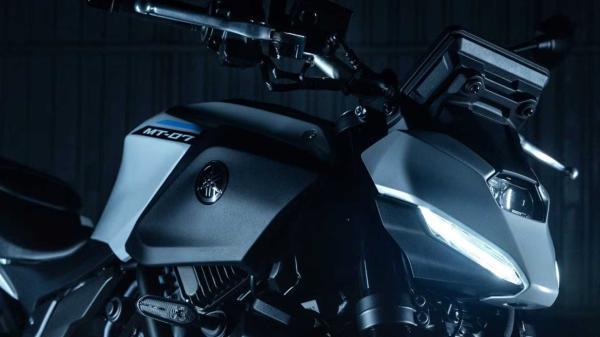
These motorcycles prove why Yamaha is among the most reliable motorcycle manufacturers out there.
The Ride Is What Separates It From The Competition
As impressive as the specification sheet may be, it’s the way every component works together that truly elevates the XSR900. This comes from personal experience of the XSR900. The CP3 engine found in the likes of the MT-09 and Tracer 9 remains one of motorcycling’s most charismatic powerplants because it combines qualities that usually exist in separate engine layouts. It delivers immediate torque at everyday speeds like a twin while maintaining the willingness to rev and top-end excitement that riders often associate with inline-fours.
The chassis complements that personality beautifully. Steering is light without feeling nervous, stability remains reassuring during fast sweepers, and the suspension strikes an excellent balance between comfort and precision. It communicates what the tires are doing without punishing the rider over rough pavement, making the motorcycle approachable enough for daily use while remaining entertaining on roads that demand a little more commitment.
Why Owners Rarely Regret Buying One

That balance is ultimately what makes the XSR900 stand out. It doesn’t force owners to compromise between performance and practicality, technology and simplicity, or retro styling and modern capability. Instead, it blends those qualities into a package that continues to feel fresh even after thousands of miles. Riders can commute during the week, disappear into the mountains on weekends, and even enjoy the occasional track session without ever feeling like they’re asking the motorcycle to perform outside its comfort zone.
Perhaps that’s why so many owners keep theirs for years instead of treating it as a stepping stone to something bigger or more expensive. The motorcycle already delivers the refinement, performance, technology, and versatility that riders often spend far more trying to achieve. Plenty of motorcycles can claim to be good value. Far fewer can convincingly argue that they feel like they belong in an entirely different price bracket.
Source: Yamaha

Related posts



Latest Post


No Comments