
The Lexus Sedan That Still Feels Underrated In Modern Performance Terms

Despite being a premium division of the world’s biggest company – Toyota – Lexus joins brands such as Porsche and Ferrari in having one of the industry’s most consistent track records of excellence. Ever since the brand unleashed its first car – the LS 400 – and famously outsold Mercedes-Benz in 1990, its reputation for flawless build quality and reliability never waned even slightly. The fact that LS 400s are still on the roads, and some have exceeded a million miles, tells you Lexus knows a thing or two about building V8-powered sedans.

However, too much of anything is probably not good, and most enthusiasts now put Lexus in the “boring-but-reliable” bracket. That’s not to say that Lexus didn’t make several very credible stabs at performance over the years. The 1998 Lexus GS 400 was a bona fide sleeper and made over 300 hp when muscle cars barely exceeded that figure. Then there was the 2JZ-powered IS 300. Lexus followed up with the IS F in 2008 before unleashing a purebred V10 supercar with the LFA. None of it helped. Even the new 471-hp LC 500 coupe is dubbed slow by enthusiasts.
When it comes to sedans, the market is now largely divided between those that are boosted and those that are electrified, with manufacturers increasingly moving away from naturally aspirated options that prioritize driver engagement and reliability over the bottom line. Well, except Lexus. The Japanese brand has stayed true to its roots and still quietly offers a naturally aspirated V8 sports sedan that prioritizes linear power and muscle car acoustics, alongside its trademark reliability – but it remains completely overlooked today.
Why Sports Sedans Have Become Boring

The modern sports sedan market has converged into a predictable formula. On one side, you have traditional automakers that mostly rely on turbocharged or hybridized inline-six engines and offer luxurious cabins in exchange for high maintenance costs. Some of the most popular options include the BMW M3 and M5, along with their “M-lite” variants packing B-series turbo-six engines. There’s also Audi’s RS and Mercedes’ AMG models. Heck, even the new Hurricane-powered Dodge Charger now follows the same recipe.
On the other hand, full EVs like the Tesla Model S Plaid, Porsche Taycan, or the Audi e-tron GT offer instant torque and 0-60 mph times that completely spoil young enthusiasts for performance. There are little to no interesting options in between. These cars are all fast and absolutely packed with tech, but they often feel soulless and clinical compared to the analog sports sedans of the past.

No amount of electric torque or AWD can replace the simple, lag-free delivery and intoxicating soundtrack that comes from a free-breathing V8. The new Cadillac CT5-V Blackwing deserves credit for being the last manual transmission V8 sedan on the market, but it’s supercharged. This leaves only one naturally aspirated V8 sedan on the market, and it’s an underrated Lexus no one expected to carry the classic sports sedan torch: the IS 500 F Sport Performance.
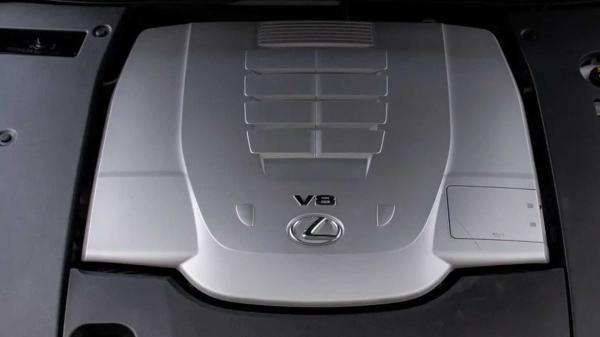
10 Unkillable Lexus Sedans For Reliable Power On A Budget
These Lexus sedans represent some of the best luxury sedan bargains on the used market.
The Lexus IS 500 Breaks The Sports Sedan Mold

It may have a really long new name (which we’ll shorten to IS 500), but the “new” IS 500 F Sport Performance is not really a new car. Instead, it’s the ultimate evolution of a formula that started in 2008, when the brand unleashed the IS F. It’s powered by the same Yamaha-tuned naturally aspirated 5.0-liter V8, except it now produces significantly more power at 472 hp and scoots to 60 mph in a Mustang-matching 4.3 seconds.
All the power goes to the rear wheels, and since it’s naturally aspirated, there’s no turbo lag, resulting in immediate, predictable shove whenever you floor the gas pedal – alongside a sonorous scream as the 5.0-liter V8 climbs up to 7,100 rpm. Publications that put the new car through its paces note a ¼ mile of just 12.7 seconds – just some two tenths behind the venerable 500-hp Mustang Dark Horse. Yes, it’s a Japanese car, but the wild thing is, it’s also the closest thing we currently have to an old-school 4-door muscle car – at least until the Hemi Charger comes back.

If Lexus had left it at that, this would already be a cool car. However, the IS 500 also doesn’t stray an inch from the recipe set by its predecessors, adding the finest luxury, build quality, and reliability into the mix. The cabin is a combination of quality leather and polished metal. Sitting in the center is a classy analog clock, and pressing the power button activates the sliding LFA-inspired digital gauge cluster. The car rides on Lexus’ track-tuned adaptive variable suspension with a standard Torsen limited-slip differential at the rear wheels.

Tipping the scales at almost 3,900 lbs, the IS 500 is not the quickest nor the sharpest sports sedan in the world, but by now, it’s clear that that was never the point. It’s fast enough, while also providing hair-raising pleasure while driving, along with an almost smug level of interior refinement and luxury. Of course, the V8 under the hood has always been the star of the show, which is why it’s such a shame that Lexus discontinued the IS 500 F Sport version of the car late last year. And while 2026 IS models no longer offer the V8, it continues to live in the LC500 coupe.
A Deep Dive Into The 2UR-GSE V8

|
Engine |
Power |
Torque |
Transmission |
0-60 mph |
|---|---|---|---|---|
|
5.0-liter V8 |
472 hp |
395 lb-ft |
8-speed automatic |
4.3 seconds |
Lexus has been stuffing that legendary 2UR-GSE V8 engine in its range-topping luxury sedan and grand tourers for over a decade. However, the IS is the reason why it was developed in the first place, and also the model that featured it the longest. Today, this 5.0-liter V8 is known as one of the most bulletproof engines of the modern era, and it owes a lot of that reputation to its simple, overbuilt design.
The block itself is aluminum – and so are the cylinder heads – but inside it is a forged crankshaft and connecting rods, along with titanium intake valves. Meanwhile, Toyota’s D-4S innovative direct/port fuel injection adds efficiency to all the power that’s being made.

Lexus didn’t stop there. To maximize power and also make sure the 2UR-GSE sounds the part, the company famously turned to Yamaha – yes, the bike and piano company – which helped develop its high-flow quad-cam cylinder heads and tuned its intake and exhaust for that perfect high-pitched note. Lexus continued to refine the V8 since its 2008 debut, adding features such as a larger throttle body and titanium exhaust, while smaller crank counterweights helped raise the original redline by as much as 500 rpm.

Still, equally important is what didn’t make it into the engine. Despite Toyota and Lexus’ strategy to optimize fuel economy in their lower-end models with robust turbocharging and hybrid systems, none of that detracts from the perfection that is the 2UR-GSE. Owners don’t have to worry about their turbos or batteries failing or sweating over stuff like electronic cylinder deactivation and what have you not. Consequently, compared to an average direct rival such as a BMW M3 or a Mercedes-AMG C63, the IS 500 may be a few tenths slower to 60 mph or lack the extra tire-tearing turbocharged low-end torque. But in exchange, it affords the driver an undoubtedly superior sound along with a careless, predictable reliability – which brings us to the next point.
The Lexus IS 500’s Reliability Is Legendary

While everyone knows Lexus is a synonym for quality and reliability, the same rule also extends to its most powerful enthusiast vehicles, such as the IS 500. J.D. Power has consistently rated the third-generation IS among the best sedans, with models such as the 2024 and 2025 earning a “best” 91/100 in quality and reliability. If we consult RepairPal, the average cost to maintain a Lexus comes out to just $551 per year, which is just over $100 more than Toyota and much less than you’d pay for virtually any German luxury brand.

For reference, the site puts the average brand-wide maintenance costs for BMW at $968 and Audi at $987 per year. Heck, maintaining entry-level BMW 1 Series and Audi A3 hatchbacks costs $871 and $741, respectively. Meanwhile, a BMW M3 will cost you $1,161 every year, and an Audi RS5 a scarcely-believable $2,560 per year.
As confirmation, CarEdge’s estimate is even lower than RepairPal’s, putting the IS 500’s repair and maintenance costs after 5 years at just $2,181 – that’s less than $437 per year. American luxury cars are not much of a match, either. According to the site, maintaining a new Cadillac CT5 will set you back a staggering $9,818 over 10 years (about $982 per year) while a new Mustang will cost you a more reasonable $7,830 in maintenance over the same 10-year period.

To see what that means for the IS 500’s ownership experience, we researched numerous enthusiast forums and used car listings. And while IS 500s are still fairly new cars and most are still under the 100k mile mark, it’s not all that uncommon to find a well-kept IS F with the same 2UR-GSE at over 300,000 or even 400,000 miles in perfect driving condition.
One owner on Reddit claims they bought theirs with 333k miles on the clock, while another bought his at 215k miles and reports, “it runs and drives flawlessly, shifts perfectly, no squeaks, creaks, or rattles.” The highest-mileage IS F we were able to find is a modified 433k-mile IS F on Facebook’s Mileage Impossible group, which already speaks a lot to this car’s durability.
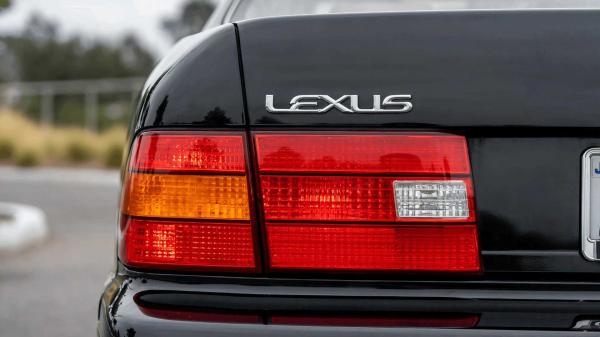
10 Ridiculously Reliable Lexus Models On The Used Market
These cars are the reason why Lexus is now considered one of the world’s most reliable car brands.
Buying A Lexus IS 500 F Sport Performance Today

While the IS 500 F Sport Performance is officially discontinued for the 2026 model year, you can still find new 2025 models on the market. These will set you back roughly $59,520 for the base trim, but can climb to well over $70,000 with options such as the Premium package. However, the with production for the current X30 generation starting in 2022, these are still relatively new cars, and the demand for them often outstrips the supply, pushing prices for both new and used IS 500s higher.
Bulletproof Reliability Drives The IS 500’s Resale Values

When it comes to whether it’s worth buying a used Lexus IS 500, the shared sentiment among owners on forums seems to always be “go for it,” regardless of the mileage. In fact, the only true downsides come from the perceived performance loss compared to the more unpredictable German rivals and burning through a lot of tires, it seems. This sort of worry-free reliability does come with its price implications on the used market, though.
Perhaps unsurprisingly, the IS 500 has one of the most impressive resale values on the used market right now. CarEdge puts its average 5-year depreciation at just 29%, meaning it kept 71% of its value over that time. iSeeCars puts that number at 67.5%, tying the IS500 with the IS 350 for third place in the small luxury car segment when it comes to resale value. In fact, the top four small luxury cars in the ranking are all Lexuses.
Looking at used models on Classic.com, the average 2022-2025 IS 500 traded hands for $56,688 – nearly the same as its MSRP. Edmunds shows this is largely accurate, with prices for high-mileage 2022 models starting in the mid-40s at the bare minimum and climbing to over $80k for the best F Sport Performance Premium examples. And if the sports sedan world continues to move toward electrification, used prices for cars like these could only keep rising.

Related posts


Latest Post


No Comments