
10 Cadillac V8 Engines Most American Drivers Forgot Existed
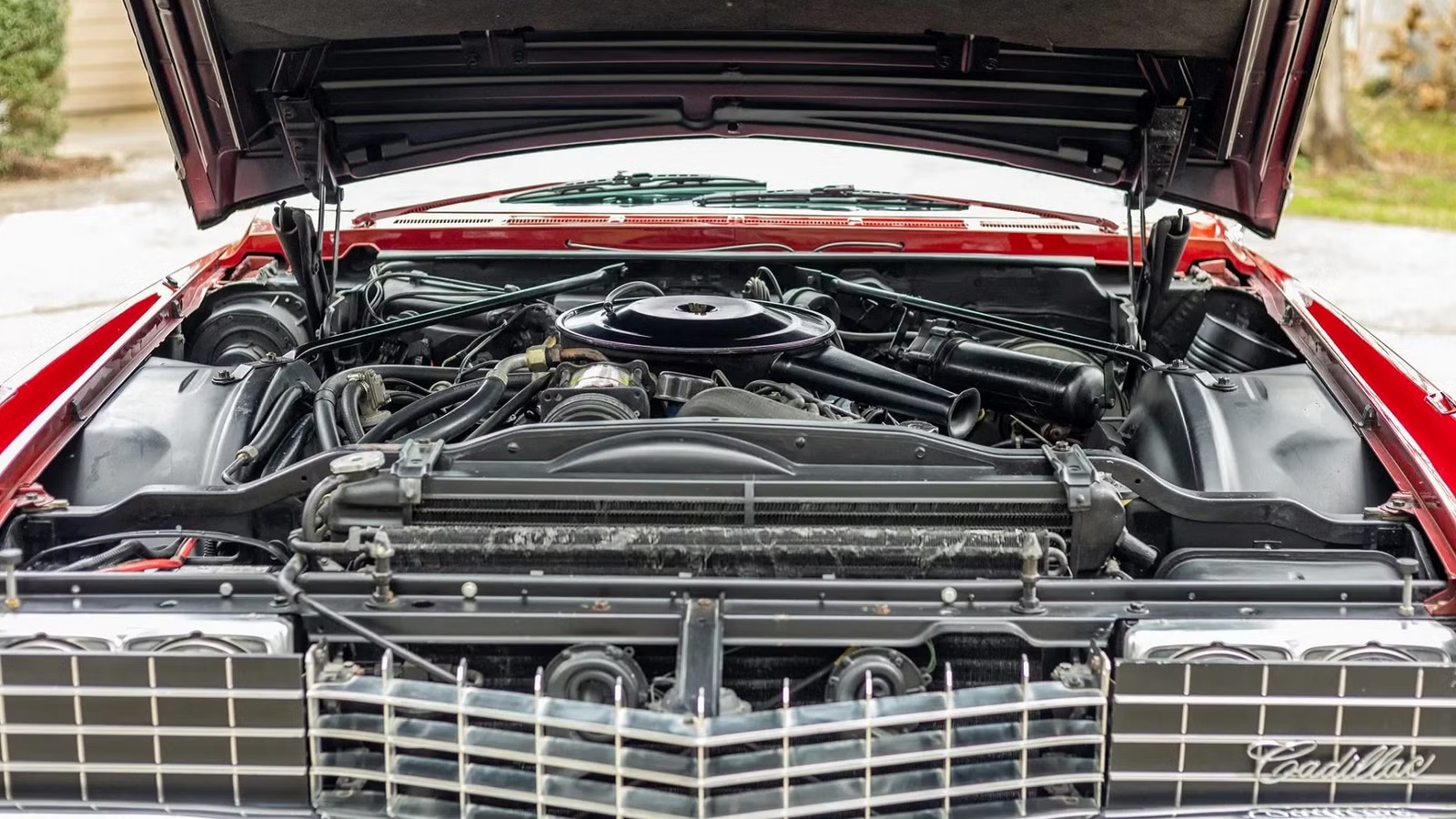
Cadillac built its name on quiet power, not loud growl. Long before every luxury brand started dreaming of Nürburgring lap times and launch-control videos, Caddy sold a simple idea. The driver should glide away while everyone else worked harder. A good Cadillac V8 never needed to shout; it just moved a big car like gravity had signed a lease under the hood.

The problem is that many of those engines slipped out of public memory. Sure, muscle-car fans remember Chevy small-blocks, Hemi V8s, Ford 427s, and Buick nailheads. Cadillac’s engines often lived in heavy luxury cars, which made them less known to the wider audience.
This list ranks the engines by debut year, not by power, popularity, reliability, or performance. That order shows how Cadillac’s V8 story changed over time, from early luxury innovation to giant torque machines, fuel-economy experiments, high-tech trouble spots, and modern supercharged muscle.
Cadillac Type 51 L-Head V8
Year of debut: 1915
 73 autotech Displacement |
Power |
Torque |
|
314 cu in |
70 hp |
180 lb-ft |
Cadillac kicked the door open into the V8 era in 1915 with the Type 51, which gave the brand one of the first mass-produced V8 engines in the world. The engine displaced 314 cubic inches and made 70 horsepower, which sounds cute now, like a lawn tractor with a trust fund. In 1915, though, it helped Cadillac look like a tech company before tech companies had hood ornaments. The Type 51 carried a base price of $1,975, and that was serious money when roads still looked like punishment.

The neat part is not just the output. The Type 51 made Cadillac feel modern in an era when many cars still felt like farm tools wearing Sunday clothes. Its L-head layout kept the design simple, smooth, and sturdy. It also gave Cadillac a calling card that lasted for more than a century—refined V8 power. American drivers may not remember the Type 51 today, but every later Cadillac V8 owes it a thank-you card. Maybe a nice one, with embossed lettering.
Cadillac 365 OHV V8
Year of debut: 1956

|
Displacement |
Power |
Torque |
|
365 cu in |
285 hp |
400 lb-ft |
The 365 arrived when Cadillac had confidence in bulk pricing, tailfins, chrome, and cubic inches. It grew out of the postwar overhead-valve V8 family, but Cadillac gave it more bore for 1956. The engine kept the 3.625-inch stroke and moved to a 4.00-inch bore, raising displacement to 365 cubic inches. The standard version made 285 hp, while the Eldorado version used two four-barrel carburetors and made 305 hp. By 1958, the hottest Eldorado setup used three two-barrel carbs and reached 335 hp.

This engine gets lost because the 331 started the OHV story, and the 390 followed with even more size. The 365 sits in the middle, like the quiet sibling at Thanksgiving who actually paid off the house. Enthusiasts should care because it helped Cadillac stay quick while still selling silk-smooth luxury. It made big sedans feel effortless, and the Eldorado versions gave Cadillac a little performance swagger without turning the car into a bar fight.
Cadillac 429 OHV V8
Year of debut: 1964

|
Displacement |
Power |
Torque |
|
429 cu in |
340 hp |
480 lb-ft |
The 429 showed up for 1964 and gave Cadillac one more strong run with its older OHV V8 family. Cadillac rated it at 340 hp and 480 lb-ft of torque, with a 4.13-inch bore, a 4.00-inch stroke, and a 10.5:1 compression ratio. This made the kind of torque that helped a huge DeVille leave a stoplight with the calm confidence of a hotel manager holding a master key.

Drivers forgot the 429 partly because Cadillac replaced it soon after with a much larger new engine family. That does not make it boring, though. The 429 powered Cadillacs during a sweet spot when the cars still had clean early-1960s style, tall gearing, soft cabins, and enough engine to make highway driving feel expensive in the best way. It also marked the end of an era. After this, Cadillac went bigger and more modern. The 429 was the final deep breath before the brand inhaled a whole steakhouse and called it 472 cubic inches.
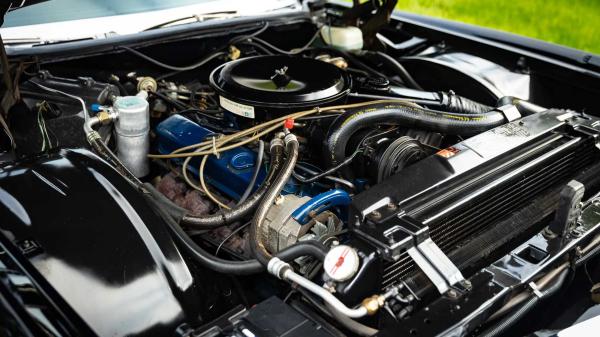
Every Car Powered By The World’s Biggest Displacement V8 Engine, Ranked By Price
These classic American icons all have one thing in common: the biggest V8 engine ever fitted in a production car.
Cadillac 472 Big-Block V8
Year of debut: 1968

|
Displacement |
Power |
Torque |
|
472 cu in |
375 hp |
525 lb-ft |
The 472 was Cadillac going full Cadillac. In 1968, GM’s luxury division launched a new 472-cubic-inch OHV V8, which delivered 375 hp. Caddy advertised the enlarged engine as offering more cubic inches and torque than any other American V8 at the time. That was Cadillac walking into the room with a tape measure and ending the argument.

This engine matters because it made the late-1960s Cadillac experience feel almost absurd. These cars were huge, plush, and not built for corners unless the corner happened sometime next Tuesday. Yet the 472 gave them real shove. It used fewer parts and fewer gasketed joints than the older design, which also made it less fussy than its size suggested. Hot rodders later noticed the weight-to-displacement payoff, but most original buyers just knew their Fleetwood could merge with the authority of a tugboat.
Cadillac 500 Big-Block V8
Year of debut: 1970

|
Displacement |
Power |
Torque |
|
500 cu in |
400 hp |
550 lb-ft |
The Cadillac 500 is famous and forgotten at the same time. Gearheads know the number, but many regular drivers have no idea Cadillac once sold an 8.2-liter passenger-car V8 from the factory. It debuted in the 1970 Eldorado as a stroked version of the 472, using a 4.30-inch bore and a 4.304-inch stroke. The early version made 400 SAE gross horsepower and a huge 550 lb-ft of torque at just 3,000 rpm.

The Eldorado was never a muscle car, even with the 500 engine, but that was never the point. That engine turned it into a leather sofa with a private weather system. Cadillac tuned the engine for hush, smoothness, and low-rpm pull, not smoky drag-strip heroics. Emissions rules and lower compression later cut power hard, and by the mid-1970s, the 500 had lost much of its original bite. Still, the early 500 remains a monster in the best old-school sense.
Cadillac 425 V8
Year of debut: 1977

|
Displacement |
Power |
Torque |
|
425 cu in |
180 hp |
320 lb-ft |
The 425 arrived after the party lights came on, and Detroit realized the big-block buffet could not last forever. Cadillac based it on the same general family as the 472 and 500, but shrank the bore and kept the long stroke. In 1977 form, the 425-cubic-inch V8 made 180 hp and 320 lb-ft of torque in carbureted DeVille trim. Cadillac also offered an electronic fuel-injected version rated at 195 hp with the same 320 lb-ft torque figure.

This engine gets little love because it followed legends and arrived during the emissions-and-fuel-economy squeeze. That’s a tough job, something like playing the harmonica after Elvis leaves the stage. Still, the 425 gave downsized Cadillacs the right feel. The 1977 DeVille and Fleetwood lost size and weight, so Cadillac did not need a 500 to keep them moving. The 425 delivered low-speed pull, smooth manners, and better packaging. It also served as the bridge to the 368 and the later V8-6-4. Not every bridge leads somewhere nice, but the 425 itself did the job.
Cadillac L62 V8-6-4
Year of debut: 1981

|
Displacement |
Power |
Torque |
|
368 cu in |
140 hp |
265 lb-ft |
The L62 V8-6-4 may be the most interesting bad idea Cadillac ever sold. The basic engine came from Cadillac’s 368-cubic-inch V8, but the trick sat in the cylinder heads. Solenoids could lock certain rocker arms, which stopped some valves from opening. The engine could run on eight, six, or four cylinders depending on load. Today, cylinder deactivation lives in many modern engines, but in 1981, Cadillac tried it with early electronics, vacuum-era expectations, and a customer base that didn’t want their luxury car playing “guess the cylinder count” on the freeway.

Period test specs showed the V8-6-4 at 140 hp and 265 lb-ft of torque in a 1981 Sedan de Ville. Testers from the era recorded an 11.6-second 0-to-60 mph run, which was not awful for a 4,240-pound luxury sedan of the era. The problem wasn’t the core engine. The problem was the system’s behavior in real traffic. It hunted, hesitated, and annoyed owners. Cadillac later issued many programming updates, but the engine left regular retail models after one year. Still, the idea was ahead of its time.
Cadillac HT-4100 V8
Year of debut: 1982

|
Displacement |
Power |
Torque |
|
249 cu in |
125 hp |
190 lb-ft |
The HT-4100 had the right mission and the wrong reputation. Cadillac needed a smaller, lighter, more efficient V8 after the V8-6-4 mess and tightening fuel rules. The new 4.1-liter engine used an aluminum block with iron heads and made 125 hp. It also became the smallest V8 Cadillac had produced up to that point. Only a few years earlier, Cadillac still offered the 500-cubic-inch V8, so the HT-4100 felt like a diet plan that removed the steak and kept the bill.

Enthusiasts remember the HT-4100 mostly for its problems, and that memory has teeth. Early engines suffered from gasket leaks, weak block-related issues, bearing failures, and other expensive headaches. Yet it deserves a place here because it shows Cadillac trying to reinvent itself under pressure. The brand wanted smooth V8 character in smaller front-drive and rear-drive packages. Later 4.5-liter and 4.9-liter versions improved the formula, but the first 4.1 took the public beating. It wasn’t Cadillac’s proudest hour. It was more like Cadillac stepping on a rake, then discovering the rake had a service bulletin.
Cadillac Northstar V8
Year of debut: 1993

|
Displacement |
Power |
Torque |
|
4.6-liter |
290 hp |
290 lb-ft |
The Northstar was Cadillac’s big comeback pitch. After years of awkward engines and image trouble, Cadillac needed a V8 that could stare at Europe without blinking. The 1993 Allanté received the new 4.6-liter, 32-valve Northstar V8 with 290 hp and 290 lb-ft of torque. In the Allanté, it helped turn Cadillac’s Italian-bodied roadster into something much closer to the car it should have been from the start.

The Northstar feels too well-known for a forgotten list, but many American drivers remember the name more than the engine’s original shock value. This wasn’t another lazy pushrod cruiser engine—it had dual overhead cams, four valves per cylinder, front-drive packaging, and a high-rpm personality that Cadillac buyers didn’t expect. It helped the Seville STS and Eldorado feel sharper, faster, and more modern. Yes, later head-gasket worries became part of Northstar lore, and no, that doesn’t erase what the engine meant in 1993. For a while, Cadillac sounded like it had quit the country club and joined a gym.
10 Factory Sleepers That Came With Engines From Supercars
These carmakers shoehorned their very powerful supercar engines into average family haulers.
Cadillac CTS-V LSA Supercharged V8
Year of debut: 2009

|
Displacement |
Power |
Torque |
|
6.2-liter |
556 hp |
551 lb/ft |
The LSA in the 2009 CTS-V may be the strangest “forgotten” engine here because enthusiasts worship the car. Still, many drivers remember it as “the supercharged CTS-V” and forget the engine code that made it a luxury-car jump scare. The 6.2-liter supercharged LSA V8 made 556 hp and 551 lb-ft of torque in the 2009 CTS-V. It used an aluminum block and heads, port fuel injection, and a pushrod 16-valve layout.

This engine turned Cadillac from “nice car, Grandpa” into “why is Grandpa wearing racing gloves?” It can sprint from 0-60 mph in 3.9 seconds with a manual CTS-V and 4.3 seconds in an automatic version. The LSA was a 6.2-liter Gen IV small-block with a 1.9-liter supercharger, integrated intercooling, and a 9.1:1 compression ratio. The best part is that the LSA gave Cadillac a real answer to BMW M and Mercedes-AMG.
Source: Cadillac, FastestLaps

Related posts

Latest Post


No Comments