
The American Muscle Car That Aged Better Than Its Rivals
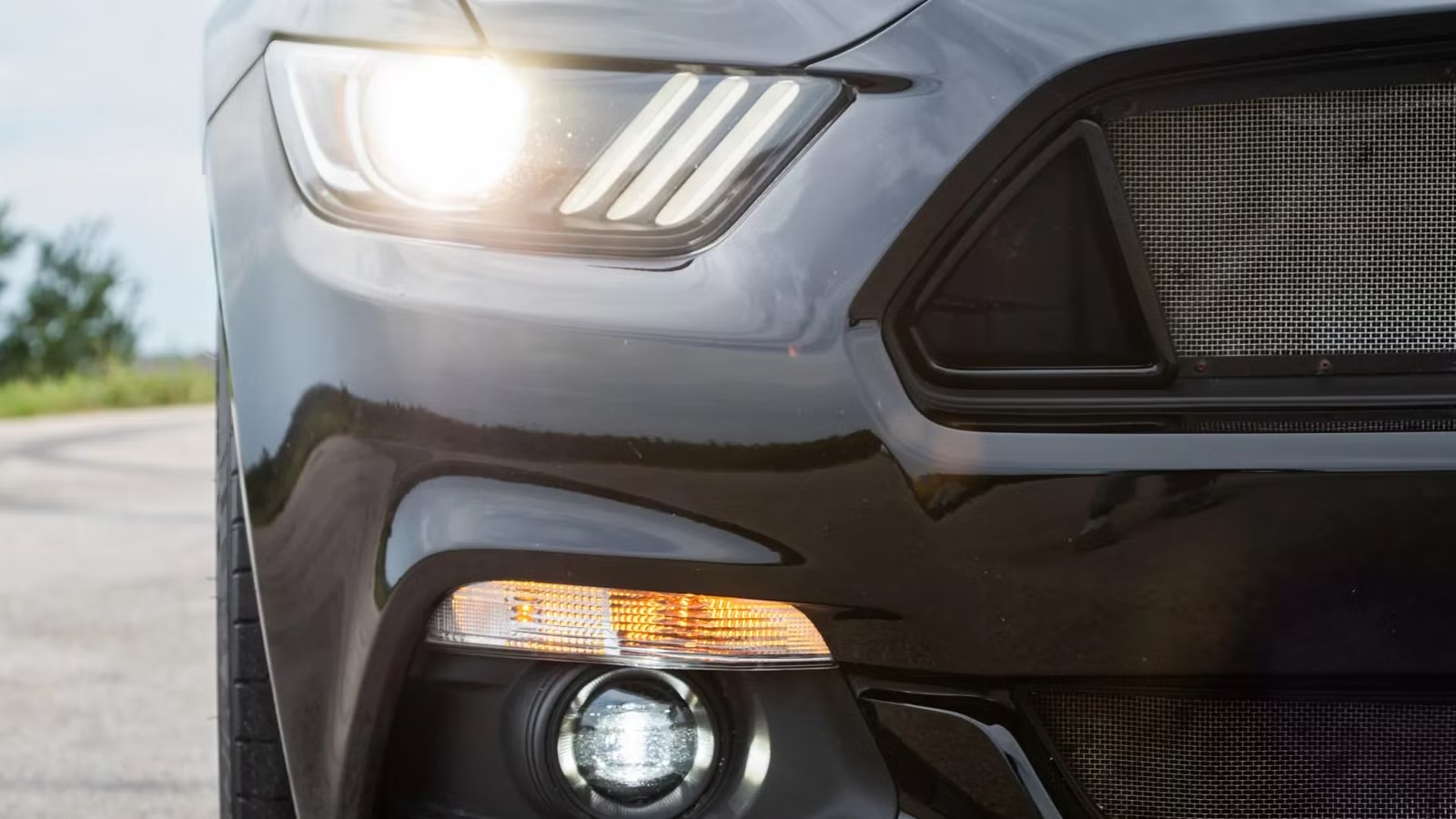
Every generation believes its favorite muscle car represents the formula at its best. The reality is that surviving as an American performance car has rarely been about building the biggest V8 or posting the quickest quarter-mile time. Regulations changed, buyers matured, and global competition forced manufacturers to rethink what a modern muscle car needed to be.

By the early 2010s, America’s traditional performance coupes faced another crossroads. One manufacturer doubled down on nostalgia, another produced one of the sharpest-handling chassis in the segment, while a third quietly re-engineered its icon for a much broader audience. Looking back a decade later, that decision did more than improve one car—it reshaped its future.
American Muscle Cars Couldn’t Stay Frozen In The 1960s
The original muscle-car formula was beautifully uncomplicated: install the biggest engine that fit, send power to the rear wheels and keep development costs under control by borrowing as many existing components as possible. It worked because buyers valued straight-line performance above almost everything else.

That formula became harder to sustain as emissions legislation tightened, crash standards evolved, and fuel economy gained importance. Performance cars could no longer rely on displacement alone. Chassis development, refinement, safety and everyday usability gradually became just as important as horsepower.
By the start of the 2010s, the rivalry between America’s three surviving performance coupes had become less about who built the fastest drag-strip hero and more about which manufacturer best understood where the market was heading. One company recognized that simply celebrating the past wouldn’t be enough.
The Coupe With Lexus Reliability And Aston Martin Presence
This grand tourer delivers exotic styling, refined V8 performance, and exceptional long-term reliability.
It Chose Engineering Evolution Over Nostalgia

Every manufacturer approached that challenge differently. One leaned heavily into retro-inspired styling and ever-larger V8s, building a car that celebrated the golden era of American muscle almost unapologetically. Another invested heavily in chassis development, producing a coupe that many journalists considered the segment’s handling benchmark even if showroom success proved elusive.
A third manufacturer chose a less obvious route. Instead of chasing only higher horsepower or leaning entirely on heritage, its engineers focused on creating a more complete performance car—one capable of long-distance touring, daily commuting and credible track performance without asking buyers to compromise.
That thinking extended far beyond the powertrain. Ride quality, steering precision, suspension design and global usability all became priorities. The objective wasn’t simply to build another muscle car. It was to build one that could compete with established sports coupes on any road, in any market.
Looking back, that philosophy explains why one American icon adapted more successfully than its closest rivals. The biggest engineering decisions weren’t the loudest ones, but they proved to be the most enduring.
The 500-HP Mustang That Became The Benchmark Every American Muscle Car Now Chases
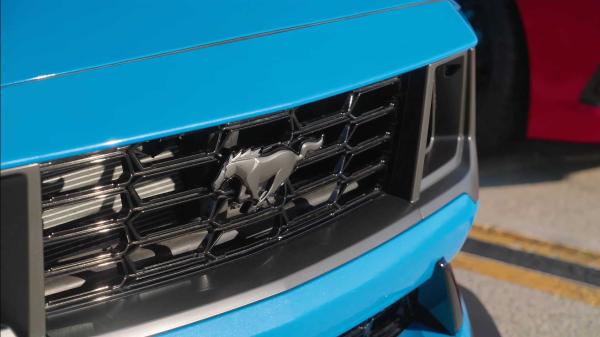
Ford redefined what a modern muscle car was, pushing the genre forward in one fell swoop
Meet The Ford Mustang S550

When the Ford Mustang S550 arrived for the 2015 model year, it represented the most significant engineering overhaul in the model’s history since the original pony car debuted five decades earlier. Ford wasn’t replacing an aging platform so much as redefining what a Mustang could be.
The biggest change sat underneath the body. After decades of solid rear axles, every S550 Mustang adopted an independent rear suspension, fundamentally altering the car’s handling, ride quality and composure without sacrificing the rear-wheel-drive character enthusiasts expected. The move wasn’t universally popular at launch, but it reflected Ford’s determination to broaden the Mustang’s appeal rather than preserve tradition for its own sake.
Ford Mustang GT (2018+) Key Specifications

|
Engine |
Power |
Torque |
Transmission |
Drivetrain |
|
5.0-liter naturally aspirated Coyote V8 |
460 hp |
420 lb-ft |
6-speed manual or 10-speed automatic |
Rear-wheel drive |
The S550 also became the first Mustang officially engineered and marketed for global markets. Instead of remaining a predominantly North American product, Ford developed the car with Europe, Australia and other international markets in mind, influencing everything from suspension tuning to interior refinement.
It Became A Better Sports Car Without Forgetting It Was A Mustang

Ford’s decision to adopt an independent rear suspension wasn’t about chasing headlines. It addressed one of the longest-running criticisms leveled at the Mustang, particularly outside North America. The previous solid axle worked well for straight-line acceleration, but it struggled to match the composure and ride quality of rivals on uneven roads and demanding circuits.
The S550 changed that conversation. Better wheel control over broken pavement, improved mid-corner stability and more predictable responses made the Mustang feel at home on roads that would have unsettled earlier generations. Ford also refined the steering, increased chassis rigidity and improved interior quality, creating a car that could cover long distances without feeling like a compromise.

Those improvements weren’t aimed solely at American buyers. Selling the Mustang officially across Europe, Australia and other global markets meant it had to satisfy customers accustomed to sports coupes from BMW, Porsche and Jaguar. The engineering brief extended well beyond quarter-mile performance, and the S550 emerged as a more rounded driver’s car because of it.
The platform also proved remarkably versatile. The Ford Mustang Mach 1 sharpened the GT formula with track-focused cooling, suspension and aerodynamics. The Shelby GT350 introduced the flat-plane-crank 5.2-liter V8 and quickly earned a reputation as one of the best-handling Mustangs ever built, while the Shelby GT500 demonstrated that the same platform could comfortably support more than 700 horsepower. Those cars weren’t separate success stories—they highlighted how adaptable the underlying S550 architecture had become.
That flexibility ultimately became the platform’s greatest strength. Ford no longer needed separate cars for road, track and drag-strip enthusiasts. The S550 could underpin all three without losing the everyday usability that broadened the Mustang’s appeal in the first place.
Its Rivals Stayed Brilliant—But They Didn’t Evolve At The Same Pace

Saying the Mustang aged better than its rivals isn’t the same as saying its rivals were inferior. Each pursued a different interpretation of the modern American performance coupe, and each excelled in different areas.
The sixth-generation Chevrolet Camaro arguably delivered the sharpest chassis in the segment. Contemporary comparison tests regularly praised its steering precision, balance and track capability, often placing it ahead of the Mustang in outright handling. Yet those strengths couldn’t reverse declining sales, and General Motors ended Camaro production after the 2024 model year, leaving one of America’s finest-driving muscle cars without a direct successor.
The Dodge Challenger chose a different path. Built on the LC platform introduced for the 2008 model year, it embraced retro styling, generous interior space and increasingly powerful HEMI V8s. That strategy proved enormously successful with buyers who wanted traditional American muscle, but as the years passed, the platform’s age became harder to disguise. The Challenger remained devastatingly effective in a straight line, though it gradually fell behind newer rivals in chassis sophistication and overall dynamic polish. It’s also worth separating the Dodge Charger from this discussion. While it shared much of the Challenger’s mechanical foundation, it competed as a four-door muscle sedan rather than a direct Mustang rival, appealing to a different audience with different priorities.
Ford’s approach sat somewhere between those two philosophies. Instead of chasing the Camaro’s single-minded handling focus or the Challenger’s nostalgia-first identity, it invested in continuous development. The independent rear suspension, global engineering program, regular powertrain updates and increasingly diverse model range ensured the Mustang remained relevant as buyer expectations changed.
A Key Moment In Mustang History

The S550 didn’t become an outlier within Mustang history—it became the clearest expression of a strategy Ford had followed for decades. Every major generation introduced meaningful engineering changes rather than relying solely on heritage. The original 1964½ car created the pony-car segment, the Fox-body generation embraced lightweight simplicity during a difficult era for performance, the SN95 and S197 kept the Mustang commercially relevant while many competitors disappeared, and the S550 finally transformed it into a sports coupe capable of competing confidently on a global stage. Each generation evolved without severing the thread that made a Mustang immediately recognizable.
That long-term willingness to adapt is what separates the Mustang from many of its domestic rivals. Chevrolet built an outstanding driver’s car in the sixth-generation Camaro, while Dodge perfected the modern interpretation of old-school muscle with the Challenger. Both succeeded on their own terms. Ford, though, consistently anticipated where the market was heading instead of waiting to react. It evolved the Mustang often enough to stay relevant, yet carefully enough that enthusiasts never felt the car had abandoned its identity.
That’s ultimately why the Mustang aged better than its rivals. It wasn’t because it carried the oldest nameplate or won every comparison test. It was because Ford understood that longevity depends on evolution as much as heritage. More than six decades after creating the pony-car segment, the Mustang remains the benchmark against which every new American performance coupe is measured—not because it resisted change, but because it embraced it at the right moments.
Source: Ford, Chevrolet

Related posts





Latest Post


No Comments