
A California Dealer Is Sitting On 15 Unsold Challenger Demons—And The Asking Prices Haven’t Budged
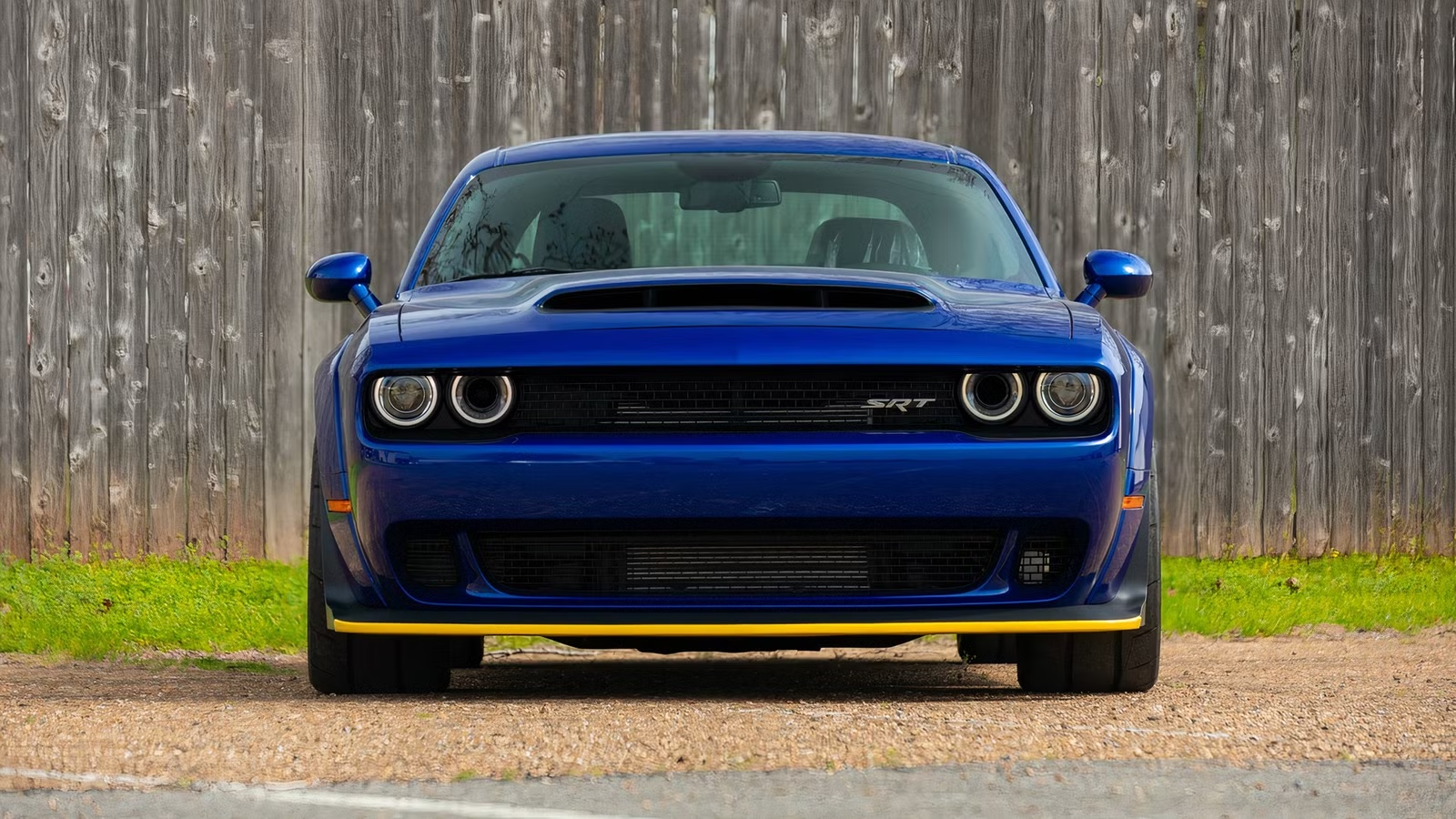
Somewhere on a California dealer lot right now, fifteen Dodge Challenger Demons are waiting for buyers who haven’t shown up yet. The cars never sold at retail, the Challenger has been out of production for over a year, and the asking prices—according to a report published Thursday—haven’t moved. For anyone tracking what discontinued halo muscle cars are actually worth in the real world, this stockpile is about as clear a market signal as you’re going to get.

Fifteen examples of the same discontinued halo trim in one place is genuinely unusual. The Demon was always a limited-production machine—Dodge capped U.S. output at 3,000 units for the 170 model—and dealers who managed to acquire more than one or two were already operating at the edges of normal allocation. A single lot holding fifteen suggests either aggressive pre-discontinuation ordering, a willingness to carry significant floor-plan costs, or a very specific bet that Demon prices would climb once the last Challenger rolled off the Brampton line. So far, that bet hasn’t paid off at the register.
What Fifteen Unsold Demons In One Place Actually Means
The Challenger Demon 170—the final, most extreme version—was rated at 1,025 horsepower on E85, making it the quickest production muscle car ever built when it launched for the 2023 model year. Dodge priced it at $96,666 from the factory, a number that was already aggressive for a Challenger. Dealers, predictably, added markups. Some buyers paid well over sticker during the initial frenzy. The question now is whether those markups still make sense when the car has been out of production and the broader collector market has had time to cool off and recalibrate.

A stockpile of fifteen units at one dealership points to a specific kind of inventory problem: the cars were acquired at a cost that makes discounting painful, so the asking prices hold even as the cars sit. This is a common dynamic with halo-trim vehicles in the period immediately after discontinuation. The dealer is betting that patience pays more than a markdown. Whether that’s the right call depends entirely on whether genuine collector demand—the kind that eventually shows up with a cashier’s check—is building quietly or simply absent.
The Tension Between Legend Status And An Empty Lot

The Demon’s reputation is not in question. The original 2018 Challenger SRT Demon—840 horsepower, the first production car to pull a wheelie from the factory, banned outright by the NHRA—is already a certified collector piece. Values on clean examples have climbed steadily since discontinuation. The 170 carries that lineage forward with even more power, a more refined chassis tune for the drag strip, and the distinction of being the absolute last word in a platform that dates back to 2008.
But reputation and resale value are different things, and the gap between them is exactly what this California lot is testing. Collector cars don’t appreciate on a fixed schedule. The first wave of post-discontinuation enthusiasm can flatten quickly if supply outpaces the number of buyers who are actually ready to commit. Fifteen cars in one location—all presumably priced at or above original dealer ask—represents meaningful supply. If serious buyers were lining up, at least a few of these would have moved by now.
The First American Production Car To Ever Break 1,000 HP Wasn’t A Hypercar
We know that many supercars/hypercars can shoot out 1,000-horsepower, but this pure-American beast was the first production non-hypercar to do it.
Will The Prices Hold, Or Is A Correction Coming?

The honest answer is that this situation could resolve two ways, and the outcome will say a lot about where Demon values are headed. If the dealer holds firm and buyers eventually materialize—collectors who want a delivery-mile example, speculators who missed the first window, or Dodge loyalists who simply want the last and loudest Challenger ever made—then the stockpile quietly disappears and the asking prices get validated. That’s the bull case.
The bear case is a slow bleed. Floor-plan costs accumulate. The novelty of a freshly discontinued car fades as the months stack up. At some point, carrying fifteen units becomes more expensive than taking a loss on a few to move the rest. A single significant price cut on one Demon in that lot would create a reference point that’s hard to ignore—and other asking prices would have to respond. The collector market for recently discontinued muscle cars is not immune to that kind of gravity. The 2018 Demon’s appreciation curve took years to establish. The 170 is still very early in that process, and patience has a carrying cost.
For now, the lot sits full and the prices sit firm. Whether that’s a dealer who knows exactly what they have, or one who’s about to find out the hard way, is the question the next few months will answer.

Related posts

Latest Post



No Comments