
Chevy’s Rare Muscle Car Had Wood Paneling And A Third-Row Seat
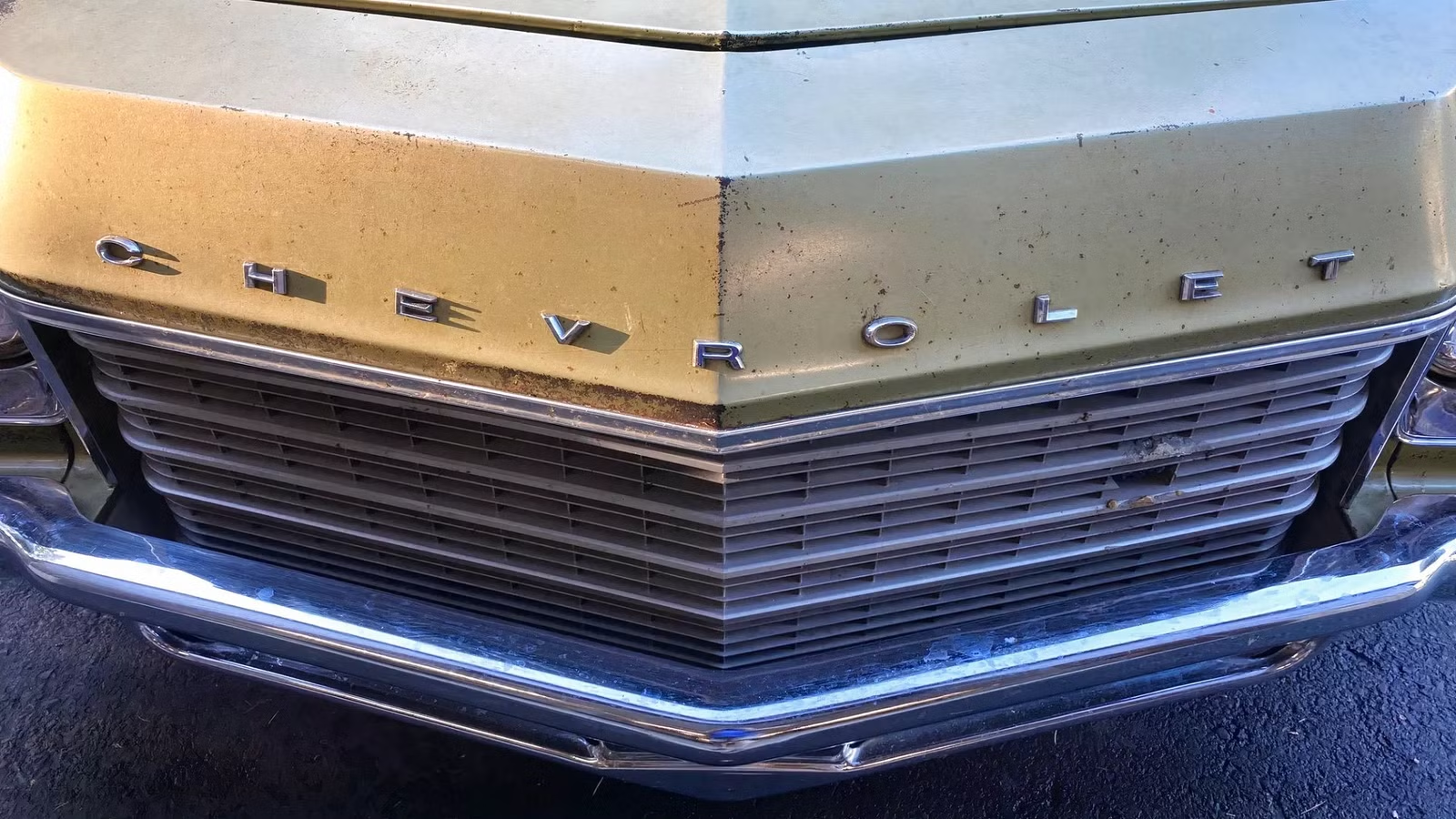
The 1960s and 70s were the golden era of the muscle car. The loud spine-shaking V8 rumble was a thing of glory that the icons all strived for. Nothing about these cars was subtle or gentle. The sole focus of the top contenders was to achieve one thing: straight-line performance. The two ways of achieving that performance are to increase power and reduce weight.

Muscle cars became a symbol of freedom and rebellion, embodying the spirit of the era. These cars were meant for enthusiasts and spirited driving. And going as fast as possible while making the most power and the most noise. Practicality was often an afterthought, to say the least. But what if there was a car that did things a bit differently? Perhaps something that no one would consider?
Performance At The Cost Of Practicality
The muscle cars of the golden era were known for their power and high speeds thanks to big V8 engines. The American muscle came in many shapes and sizes, but most commonly with two seats and two doors. The priority of these cars was raw performance over a spacious, luxurious cabin. The cars were built around massive V8 engines, with stiff chassis and wide tires. Enthusiasts would often strip down the interiors to further reduce weight. Now, that made the cars more engaging to drive, but also increased the harshness of cars already set up for performance handling from the factory.

In the late 60s, General Motors found a unique way to package American muscle. What if the muscle car wasn’t compromised? And if someone wanted to do more than just set the quarter-mile ablaze, GM had a unique idea for their muscle car, but it wasn’t the way you’d want it.
A Unique Experiment From Chevy

1960s Chevy had many models, ranging from sedans to pickups. That expanded from the choice of a suburban driver to that of a muscle car enthusiast. So Chevy looked at this new challenge differently. What if practicality and luxury were followed by performance? A family transporter, a grocery getter, a daily driver with wood grain panels and concealed headlights.
In the late 60s, Chevy introduced a car that would redefine what luxury and performance looked like. A car that could challenge the performance of the Camaro and the Corvette, with the luxury of a Caprice. And no, this car was not another two-seat, two-door monster but something completely out of the ordinary. Yet so subtle that only an enthusiast with a keen eye could spot it.
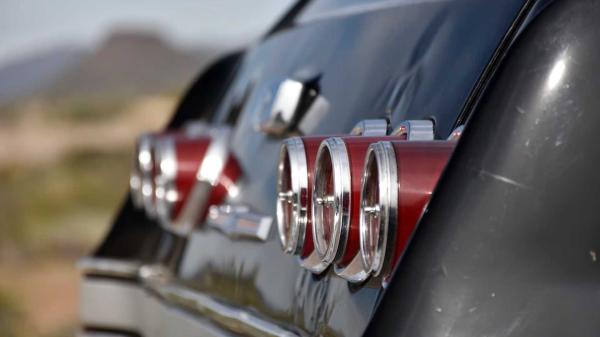
The Wagon That Quietly Hid A 400-Horsepower Muscle V8
A humble ’60s family wagon hid a 400-hp V8 secret under its long hood, turning grocery runs into muscle-era mischief.
The Kingswood Estate: Chevy’s Wagon With A Corvette Engine

In 1969, Chevy introduced the second-generation Kingswood Estate, based on the GM-B platform, as the flagship Chevrolet station wagon. The Kingswood Estate, with its wood-grain interior, wood panels on the sides and back, and an option for concealed headlights, also had a massive engine under the hood: the 427 cubic-inch Turbo-Jet V8.
The Kingswood Estate was Chevy’s top-of-the-line model, available only with V8 engines. The engine was straight out of the Corvette. And had a 0-60 time of 7.7 seconds, which was very quick for a 9-seater family hauler with a rear-facing third row. It was one of the most powerful wagons on the market at the time.
Based on the full-size Caprice, the Kingswood Estate was the flagship wagon sold between 1969 and 1972, a time when the American power wars were at their peak. The Kingswood Estate was the big-body Chevy. It also got massive power. It could not only keep up with the performance cars at the time but also serve as a luxury cruiser.
Fun Fact: Chevrolet offered eight different station wagons in 1969, but the Kingswood Estate was the undisputed king of the lineup.
Not Just Another Grocery Getter

|
Engine |
Power |
Torque |
Transmission |
|---|---|---|---|
|
7.0-liter V-8 |
390 HP |
460 LB-FT |
3-speed auto |
Kingswood Estate 427 (L36) Specs
The Kingswood Estate’s high-output 427 V8 engine was available in two states of tune. The standard power output was 335 hp (LS1) and 390 hp (L36). The 427-cubic-inch Turbo-Jet V8 was the choice for the enthusiast who wanted a powerful yet understated car. For the base model, a small-block 327 V8 was on offer, producing 235 hp, and a stout 396 V8, producing 265 to 325 hp.
Now, because of this car’s unique nature, the 427 Turbo-Jet V8 engine was most often chosen by enthusiasts for the performance-meets-practicality approach of the Kingswood Estate.
Fun Fact: An ultra-rare, high-performance variant of the 427 (L72) was also available via special order. with high compression and solid lifters, producing 425 hp.
The car was used to tow camper vans and boats thanks to the 460 lb-ft of torque and the low-end grunt the engine produced. The Kingswood Estate became the perfect family wagon, blending in with the crowd as an unassuming car for the most part. But when the power was required, the plain-looking family car could leave all the cars on the freeway in the dust.
A Wilder Version Of The Kingswood Estate Was Available On Special Order

390 hp was a lot of power for a wagon in 1969, but for some crazy gearheads, it still wasn’t enough. Luckily for them, Chevy offered an ultra-rare, high-performance variant of the 427 (L72) on special order, and while it was meant for COPO-era performance cars like the Camaro, two 1969 Kingswood Estates reportedly ended up getting the monstrous engine.
Unlike the 390-hp version, the L72 featured a solid-lifter camshaft, 11:1 compression, a large Holley four-barrel carburetor, and rectangular-port cylinder heads, allowing it to produce a brutal 425 hp. One of these unicorns, finished in white with woodgrain paneling, survives today and is part of the GM Heritage Collection.
Fun Fact: The Kingswood Estate could be ordered with a four-speed manual transmission, meaning you could technically buy a three-row family wagon with a stick shift and a big-block 427.
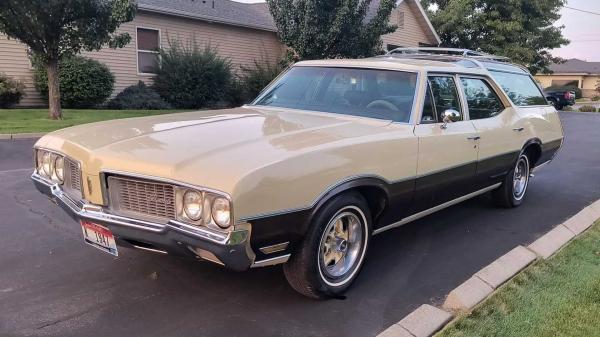
The Muscle-Era Wagon That Quietly Became Legendary
One Oldsmobile wagon refused to be forgotten, offering something no competitor could match — and collectors are still chasing it today.
The Kingswood Estate Faced Stiff Competition

|
Kingswood Estate 427 (L36) |
1969 Pontiac Safari |
1970 Oldsmobile Vista Cruiser |
1969 Ford Country Squire |
|
|
Engine |
427 cubic-inch V8 |
428 cubic-inch HO (High Output) V8 |
455 cubic-inch Rocket V8 |
429 cubic-inch “ThunderJet” V8 |
|
Power |
390 HP |
390 hp |
365 hp |
360 hp |
|
Torque |
460 lb-ft |
465 lb-ft |
500 lb-ft |
480 lb-ft |
The 1969 Kingswood Estate debuted when Detroit giants were locked in a fierce horsepower war. While the war was centered around race cars on the track and muscle cars on the street, manufacturers started stuffing big-block V8s into everything from coupes to full-size wagons, hoping to lure buyers who wanted speed without giving up space. The era between 1969 and 1971 was the absolute zenith of the American “muscle wagon,” and the Kingswood Estate wasn’t the only fast wagon you could get at the time.
In the GM family, the Kingswood Estate faced competition from the nine-seater Pontiac Safari wagon, which used a 428 cubic-inch HO (High Output) V8 and high-performance cylinder heads borrowed from Pontiac’s muscle cars to generate 390 hp. Oldsmobile also had the Vista Cruiser in 1970, which used a gargantuan 455 cubic-inch V8 to generate 365 hp and a massive 500 lb-ft torque.

Ford also didn’t want to be left out of the muscle wagon party. In 1969, the Blue Oval brand offered the Country Squire with a 360-hp 429 cubic-inch “ThunderJet” V8 from 1969 to 1971, then upped the ante in 1970 by equipping the Torino Squire with the legendary 429 cubic-inch “Cobra Jet” V8.
In other words, if the Kingswood Estate wanted to stand out, it had to do more than carry the kids and groceries; it had to bring the kind of muscle that made a wagon feel downright rebellious, and so it did.
The Resurgence Of The Kingswood Estate

The Kingswood estate went on sale for $3,565 for the six-passenger version and $3,678 for the nine-passenger version in 1969, with an additional $400 for the 427 V8 engine option. That being said, the car with the 427 engine configuration was mostly optioned by enthusiasts. The regular version sold in greater numbers. That made the performance version of the Kingswood Estate truly unique and rare. Over time, as these cars began to vanish, they became a faint memory of a bygone era.
Kingswood Estates Market Values
|
Model |
Year |
Price |
Transaction |
Miles |
Condition |
Site |
|---|---|---|---|---|---|---|
|
Kingswood 427/L36 4-door wagon |
1969 |
$80,300 |
Sold |
19k |
Original |
Mecum |
|
Kingswood Wagon |
1971 |
$36,300 |
Sold |
NA |
Semi-Original |
Barret-Jackson |
|
Kingswood Wagon |
1972 |
$17,525 |
Sold |
89k |
Original |
Bring a Trailer |
|
Kingswood Wagon |
1971 |
$33,000 |
Sold |
NA |
Original |
Mecum |
But that changed when the Kingswood Estate sold for $80,000 at an auction. The station wagon has seen a resurgence in the market, as evidenced by its sale price. The 427 (L36) engine demands a premium of more than twice that of an example with the standard engine. It also displays an appreciation for a well-kept historical icon of its time.
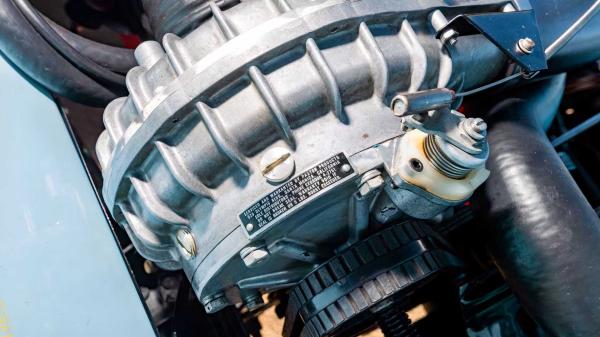
The First Factory Supercharged Muscle Wagon Ever Sold
It’s an exceedingly rare option that turned a family hauler into a proper sleeper wagon.
Wood-Paneled Wagons Are Dead, But Their Spirit Lives On Today

If there’s one thing that triggers nostalgia and childhood memories among car enthusiasts, particularly the older guys, it’s the mere sight of a wood-paneled wagon from the 1960s and ’70s. Woodies hit you right in the gut because they are the ultimate rolling pieces of pure, unadulterated Americana. These nostalgia-inducing lumber-laden land yachts represent a bygone era of uncompromised craftsmanship and endless summers, and seeing one in the wild today feels like catching a glimpse of a mythical beast.
Woodies survived long after the end of the Kingswood Estate’s production run in 1972, but with the minivan craze peaking and the SUV boom exploding in the 1990s, the writing was on the wall by the turn of the century. Many enthusiasts agree that the eighth-generation Buick Roadmaster Estate of the ’90s was the last true full-size American woodgrain wagon, even though it used fake wood to achieve the popular look.
Modern Wagons Have Taken The Woodie Formula To Nuclear Levels

|
2026 Audi RS6 Avant Performance |
2026 BMW M5 Touring |
2026 Porsche Taycan Turbo S Cross Turismo |
|
|
Engine |
Twin-turbo 4.0-liter V8 with 48-volt hybrid assist. |
4.4-liter V8 BMW M TwinPower Turbo combustion engine plus a high-performance electric motor. |
Dual electric motors with all-wheel drive. |
|
Horsepower |
621 hp. |
717 hp. |
938 hp. |
|
Torque |
627 lb-ft. |
738 lb-ft. |
818 lb-ft. |
|
Transmission |
8-speed Tiptronic. |
8-speed automatic. |
1-speed front axle and 2-speed rear axle. |
|
)-60 MPH |
3.3 sec |
3.5 sec |
2.4 sec |
|
Top Speed |
190 mph |
190 mph with the M Driver’s Package |
155 mph |
The Kingswood Estate had a lot more power than its body style and proportions led you to believe, and when equipped with the rare 425-hp L72 427, it had enough power to surprise some muscle cars in stoplight-to-stoplight battles. However, its performance pales in comparison to modern super wagons.
While modern performance wagons don’t offer wood-paneling or third rows, they do make up for it by giving enthusiasts enough power to embarrass genuine supercars, and, unlike the Kingswood Estate, they can handle themselves in the corners with sports-car-rivaling finesse. We’re talking monsters like the Porsche Taycan Turbo S Cross Turismo, which rockets to 60 mph in under 3 seconds, the Audi RS6 Avant Performance with its 621-hp twin-turbo V8, and the physics-defying BMW M5 Touring, to name a few. Noticeably, Detroit does not build a single, traditional full-size performance wagon, with the last proper one being the Hemi-powered Dodge Magnum SRT8 in 2008.
These modern super wagons make their old wood-paneled predecessors look like low-tech artifacts from a different millennium. However, they probably wouldn’t exist today had it not been for monsters like the Kingswood Estate 427 pushing the boundaries of what wagons could achieve decades ago. The Kingswood Estate truly remains a brilliant concoction of American practicality and performance at its finest.
Source: Classic.com, Classic Cars Fandom, Bring a Trailer

Related posts

Latest Post


No Comments