
Chrysler Said It Couldn’t Be Done Until A Chicago Dealer Built 640 Of Them
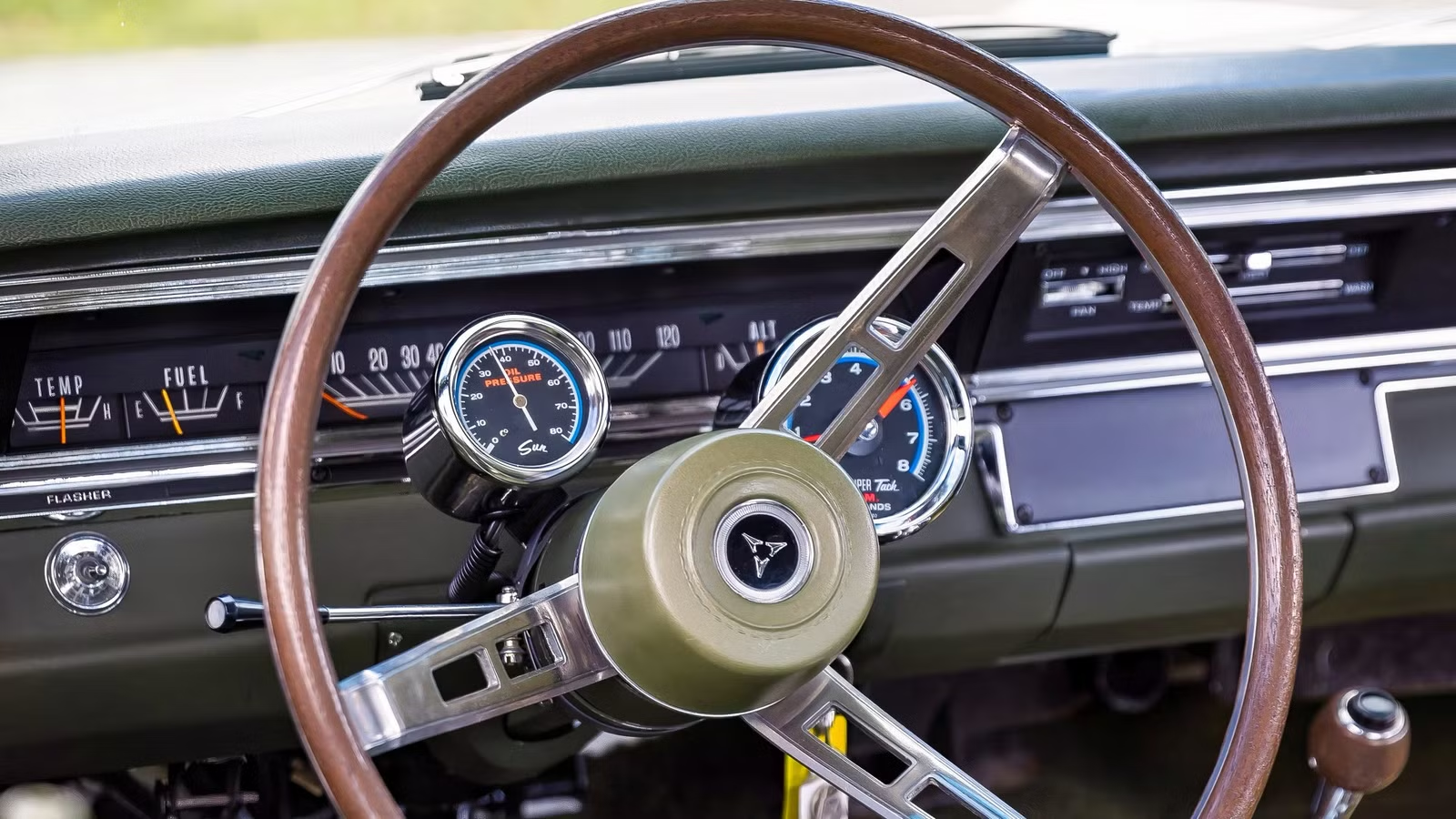
Chrysler’s engineers looked at the math and said the idea flat out couldn’t be done. A Chicago dealer looked at the same math, shrugged, and built it anyway. That single act of defiance didn’t just prove the factory wrong; it pushed Chrysler into building 640 copies of the very idea it had just laughed out of the room. What came out of that fight stripped away almost every comfort feature a car owner takes for granted, all so one engine could fit where engineers swore one never would.
Why The Factory Called The Math Impossible

Back in 1967, with the muscle car wars heating up across every factory floor, Chicago dealer Mr. Norm’s Grand Spaulding pitched Chrysler on something simple. Drop a real performance engine into a compact platform. Norm Kraus was the guy pushing it, and he wanted exactly what Ford and GM already had sitting on their own lots: real muscle in a smaller package, not just a badge and a stripe kit. It sounds like a reasonable request today. At the time, it sounded like a headache nobody at Chrysler wanted to deal with.
The Idea Chrysler Turned Down

Chrysler’s engineers shut the idea down fast. There was no room, they said, for a big engine and a compact chassis to share the same space, and that was supposed to be the end of it. Kraus had asked for a 383-cubic-inch V8. What showed up instead was a small 273 V8, nowhere near what he had asked for, and that gap between what was promised and what actually arrived is exactly what set him off. Not exactly the kind of answer that sends anyone back to their desk satisfied.
So the dealer built it himself. He dropped a 383 into a 1967 Dart first to prove a B-block would fit, forcing Chrysler to offer a factory 383 GTS for 1968. Not satisfied, Mr. Norm raised the stakes in 1968 by stuffing a massive 440 big-block into a limited run of roughly 48 dealer-modified Darts dubbed the GSS. Word of these giant-killers got back to Chrysler fast. Even the brand’s own general manager, Bob McCurry, came around once he saw the finished cars with his own eyes, and proof like that from a Chicago dealer was hard for the people at headquarters to ignore. That was all it took, and it did not take long before the factory started building its own version of the same idea, this time with its own name on it.

The Chrysler Muscle Car That Had More Power Than A Camaro Z/28
This forgotten luxury heavyweight quietly packed more raw power than the legendary muscle cars that dominated the era.
Why This Was A Racing Machine More Than A Street Machine

Once Chrysler got serious about building this thing for real, the engineering problem was brutal and simple at the same time. Cramming a massive big-block V8 into a chassis that was never designed to hold one meant something had to give, and comfort was the first thing on the chopping block, followed quickly by almost everything else.
What Had To Go To Make Room For The Engine

Every feature that didn’t directly help the car go fast got cut loose, and what rolled out the other side looked less like a street car and more like an NHRA Super Stock racer wearing license plates. That wasn’t an accident either. NHRA’s homologation rules required a minimum production run before any car could compete in Super Stock, and that single rule is exactly why this stayed a real production vehicle instead of staying a one-off prototype locked away in a dealer’s back lot, gathering dust as a what-if. Chrysler needed real cars sitting in real driveways, not one fast prototype nobody outside the dealership would ever see.
The biggest sacrifice of all was the clutch pedal, because this car only ever came with an automatic. The clutch linkage simply could not fit in an engine bay already packed full with a big-block V8. A three-speed automatic went in every single example instead, paired with a 3.55 rear gear as standard and a 3.91 ratio for buyers who wanted to lean harder into drag-strip duty. Power steering, air conditioning, and power brakes never showed up either, which made even a trip to the grocery store feel like an endurance event behind the wheel, never mind an actual drag strip.
The Dodge Dart GTS 440 M-Code Was Born From That Challenge

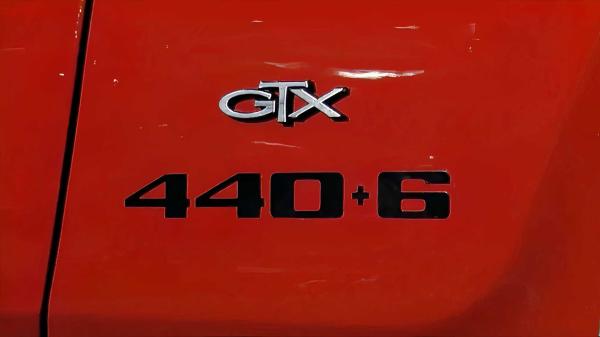
The car at the center of all this is the Dodge Dart GTS 440 M-Code, built by Dodge as a Chrysler corporation project, and it stands as one of the rarest muscle cars in American history. The whole thing is a mechanical oddity from the ground up, built entirely around the challenge of squeezing a massive big-block V8 into a compact chassis that was never meant to carry one, and somehow making the math work anyway.
What Made The M-Code Package Different

|
Displacement |
Power |
Torque |
|
440 Cubic Inches |
375 HP |
480 LB-FT |
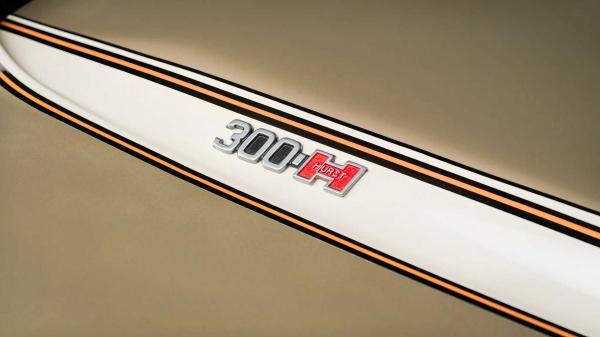
That engine was the 440 cubic-inch RB-series V8, rated at 375 horsepower and 480 lb-ft of torque, sending power through a 727 TorqueFlite three-speed automatic. Look for the A13 code on the fender tag, the factory’s internal marker for the conversion package, and an M stamped into the fifth spot of the VIN. Production ran in batches between December 1968 and May 1969. The Dart GTS was a factory warranty product, with Hurst Performance handling the actual engine installation rather than Chrysler retooling its own line for such a low-volume build. Buyers who wanted in paid around $3,650 for the privilege, real money in 1969 for a car that gave up nearly every comfort feature in return. Despite everything about it screaming drag strip, Dodge never openly marketed this car as a race-only build, and plenty of buyers took it straight to the track anyway.
Mechanical Workarounds That Made It Possible

Getting that engine to fit took a revised oil pan, new motor mounts, and a unique K-member, along with bespoke exhaust manifolds that had to be built from scratch just to clear the cramped engine bay. The drivetrain itself sat slightly offset to leave room for the steering linkage and brake master cylinder, and the chassis needed extra reinforcement to handle that much power in such a small car. Once it all came together, curb weight landed at approximately 3,200 pounds, which says everything about how tightly this package was engineered, and how little patience the factory had for anything that didn’t earn its place under the hood.
The Ultra-Rare Chevrolet Muscle Car Collectors Have Been Hunting For Decades
A factory-built muscle car so rare that even seasoned collectors still argue over how many were ever made.
640 Examples Of A Concept That Won’t Work

Here is the thing. The same brand that called this concept impossible turned around and built 640 of them anyway. That was a bold number for the era, built specifically to clear NHRA’s production minimums and aimed squarely at a gap in the market nobody else in Detroit was chasing quite as aggressively.
What It Was In The Market, Then And Now

Finding one today is a completely different story. Surviving examples are scarce and getting harder to track down every year, with patched inner fenders—the scar tissue left by decades of header swaps—serving as one of the easiest ways to spot a real one. Most of the survivor gap comes down to how these cars actually lived their lives, not how they were built. They were built for racing, and racing means crashes, modifications, and plenty of cars that simply never made it to today in anything close to original condition. The ones that survived mostly got lucky, not pampered, and that distinction matters more than people realize when they’re shopping for one today. A clean, honest example is worth chasing down, even if it takes years to find one.
Stack it against the Yenko Nova and the COPO Camaro and the M-Code comes out looking like the underdog on paper. Both rivals kept their four-speed manual gearbox and power-assisted front disc brakes, comforts the M-Code never got. But that gap is precisely the point. The Yenko and the COPO Camaro were built to sell, while the Dart GTS 440 M-Code was built to win, and Dodge stripped out anything standing between the engine and that single goal, sales brochures be damned.
The Mopar Unicorn That’s Eluded Collectors For Generations
Picturing a unicorn sipping from the Holy Grail doesn’t even come close to how rare this Mopar muscle car is.
How Is The M-Code Dart Still Commanding Mopar Money Today

There’s really only one answer here. Racing pedigree and a tiny production run are the two things that send collectors into a frenzy over a car this rare, and the M-Code Dart checks both boxes at once, which is exactly why prices keep climbing whenever one comes up for sale, slowly but steadily, year after year.
The Legacy Of A Car Built To Be Impossible

Genuine exhaust manifolds alone now go for around $3,500 to $6,500, which gives some sense of what the complete car commands. The highest recorded auction sale for the Dart M-Code sits at approximately $81,000, with present-day sales averaging closer to $70,000, and a comparable example sold for $69,300 back in 2013. Prices have trended upward over the long run, even with some natural movement along the way, and a handful of surviving examples means buyers need deep pockets just to get in the conversation, never mind actually winning the bidding once the gavel actually starts moving.
Outside hardcore Mopar circles, almost nobody knows this car exists, and that obscurity is part of what makes it so valuable to the people who do. It stands as a symbol of rarity, raw performance, and an experiment pushed about as far off the beaten path as a factory ever dared to go. The whole thing started as a wild engine swap fantasy that turned into reality, and decades later, it remains one of the strangest ideas Detroit ever turned into a real, drivable production car. That’s exactly why it still matters, and why the right collector will always find a way to track one down eventually.
Sources: Classic.com, Mecum, Bring A Trailer, Hagerty

Related posts





Latest Post


No Comments