
A century of ‘weird but speedy-looking’ Spykers
From 1900s 4×4 pioneers to 2000s supercars, this is the Dutch brand’s tumultuous history

Spyker claims to be back in business again, after years of legal issues and false starts.
Backing has come from a “fintech ecosystem” that aims to “integrate a sports car with blockchain products”, which might well ring some alarm bells, but solid evidence emerged in the forms of the “entirely new” C8 Preliator XXV Coupé at Pebble Beach and a parade of 22 old C8 Spyders at the Dutch Grand Prix.
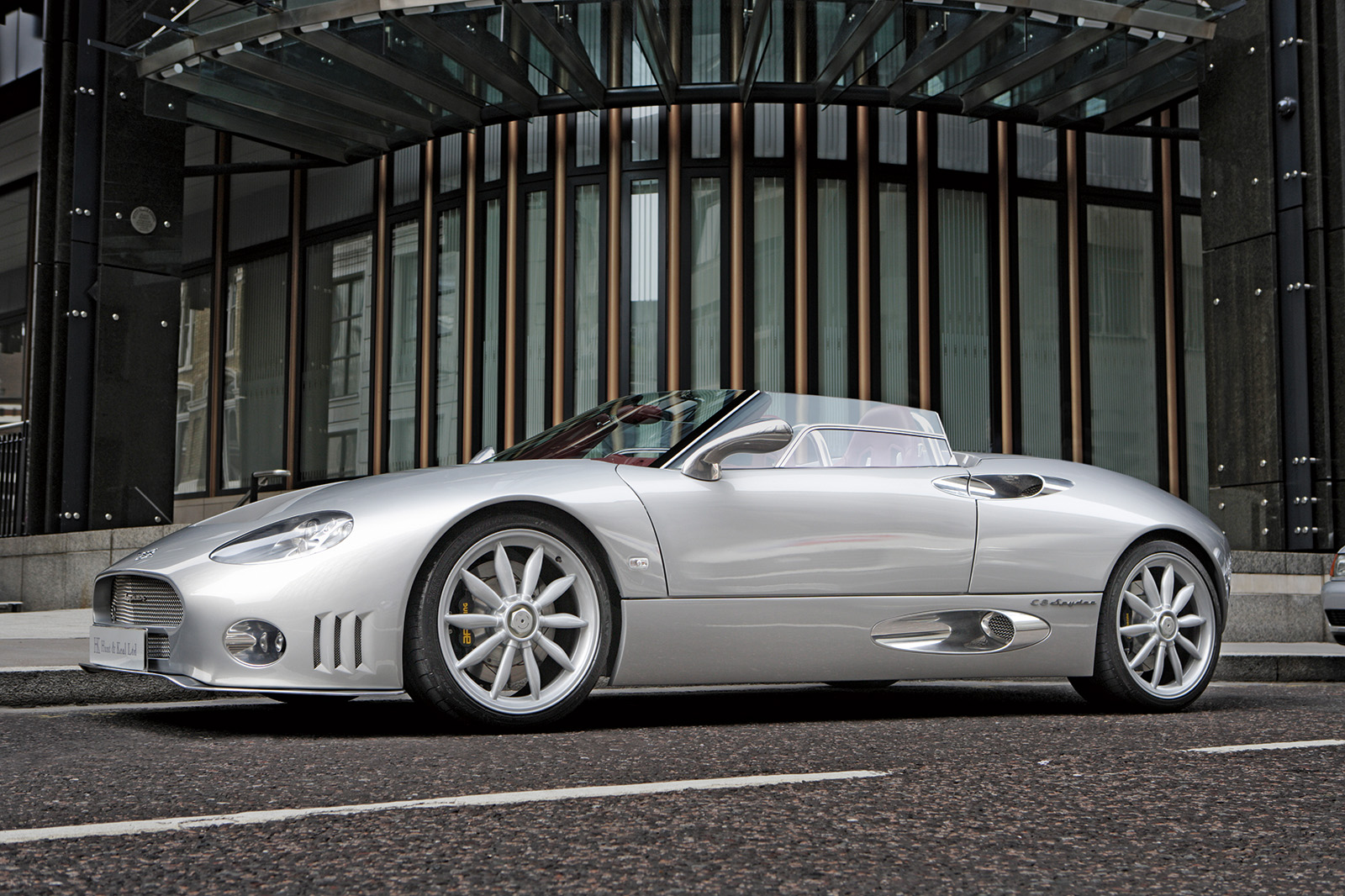
It’s now over a decade since the quirky Dutch brand last delivered a new car to a customer, yet less than 30 years since it announced itself at Goodwood with a droopy prototype. Our first experience of a C8 came in 2004: “The cabin is more Spirit of St Louis than supercar.

The first impression is that it’s over the top, but it’s also beautifully detailed without any elements borrowed from mainstream parts bins. “The flexible Audi V8 accelerates cleanly from 1500rpm in sixth with a distinctly American soundtrack, and the [manual] gearbox is slick and smooth.
“The C8 delivers a fresh experience, borrowing nothing from Ferrari or Lamborghini. But for all its character there is still a lot of development needed. If Spyker can make the steering more communicative, boost front-end grip, reduce high-speed lift and improve the gear ratios, then it will have created a very special car.”
This wasn’t our first experience of a Spyker, however, because this brand actually dates back to the very earliest days of motoring. At London’s 1903 motor show, we marvelled at the 20hp tourer’s “sarcophagus-shaped bonnet which has no retaining screws or clips but jams down tightly and securely into a grip joint taking it all round” and “gear-striking arrangement that is particularly foolproof, inasmuch as the gear cannot be changed from one speed to another until the clutch has been taken out.
“Indeed, we think we may say that the details of the Spyker car have been very closely considered.” Later that year, the Dutch amazed us again by producing what we then called a “double-driving six-cylinder car” and now see as the first 4×4.
In September 1907, a Spyker completed the Peking to Paris, an insanely gruelling 9300-mile rally – although it took a fortnight longer than the winner, and driver Charles Godard was “disembarked from the car by Mr Spyker on reaching Germany”, because he’d lied about his financial backing to secure use of the car, then sold spare parts and lied to shipping firms and banks to secure loans for his onward travel!
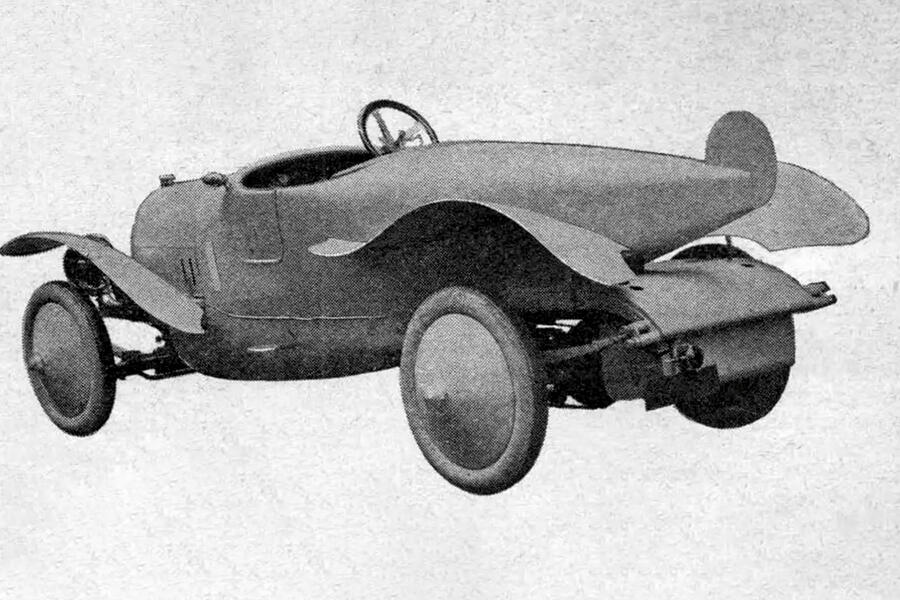
Pity poor Jacobus Spyker: just six months earlier, his elder brother and business partner Hendrik-Jan had drowned in the stormy sinking of a British ferry. This tragedy rapidly led to bankruptcy, and the firm passed into new ownership. The outbreak of the Great War saved struggling Spyker, as it transitioned to military aircraft manufacturing – and in 1919, it showed off what it had learned by creating the special Aerocoque sports car.
“While unorthodox in outline, it is a type that will make a strong appeal to those who have become enamoured of speed and of aeroplane design in their capacity as RAF pilots,” we said. “The body resembles an aeroplane fuselage, while the mudguards follow as closely as feasible a ‘wing’ outline.”
This “weird but speedy-looking” special was appropriately bought by Major Hawker. It seems he wasn’t a fan, though, as within months a dealer was advertising the car for sale in Autocar – alongside a grand prix winner rebodied as a four-seat tourer. It was an Itala, incidentally another brand recently resurrected.
We got to test a Spyker ourselves in 1921. Hefty import tax pushed the 70bhp five-seat tourer up to £2600 (£113,700 now), “for which naturally a great deal will be expected”. Happily, “even the first few yards of driving proves that the Spyker is a fine car to handle, having that silky smoothness which one expects from an expensive six-cylinder, but also unusually light steering for a car of its size, and a very good clutch.
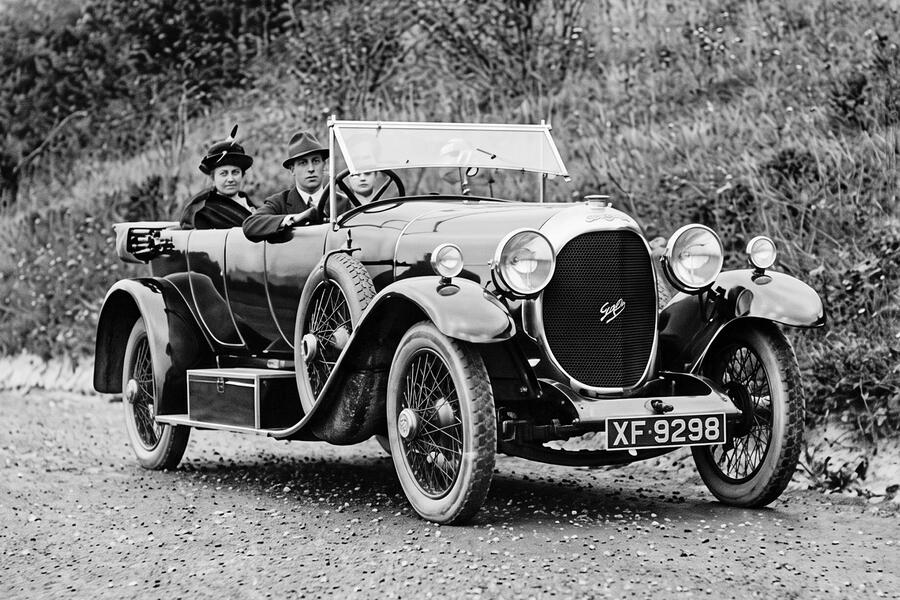
“The acceleration and power are extraordinary, notwithstanding a total weight considerably more than would be ordinarily expected. “The springs are exceptional, the body rolling smoothly over the worst of the rough surfaces.
Moreover, the car corners well, as the springs do not permit the body to roll unduly.” We hope this latest Spyker revival effort bears fruit – and fruit as juicy as that we enjoyed 105 years ago.

Related posts


Latest Post


No Comments