
10 Harley-Davidsons Collectors Are Quietly Buying
Harley-Davidson collecting doesn’t begin and end with prewar motorcycles and expensive restorations. The company also built café racers, sporting twins, distinctive touring bikes, and early CVO models that tell very different stories. Some were departures from what Harley buyers expected, while others introduced hardware or styling that became familiar later. These ten motorcycles offer reasons to look beyond the usual classics, particularly when their original equipment has survived decades of customization.
10
1971 Harley-Davidson FX Super Glide

Willie G. Davidson combined a Big Twin engine and frame with a lighter Sportster front end to create the original Super Glide. The result helped establish Harley’s factory-custom business, but its most memorable feature was behind the rider. A sweeping fiberglass boattail enclosed the seat and rear section. It gave the 1971 motorcycle a silhouette that later Super Glides wouldn’t retain.
That bodywork is central to the original bike’s appeal today. A first-year Super Glide stripped of its boattail loses the feature that makes it immediately recognizable. Factory paint and surviving trim help tell the rest of the story. For a collection built around Harley design, this is a more consequential motorcycle than its relatively familiar mechanical layout might suggest.
9
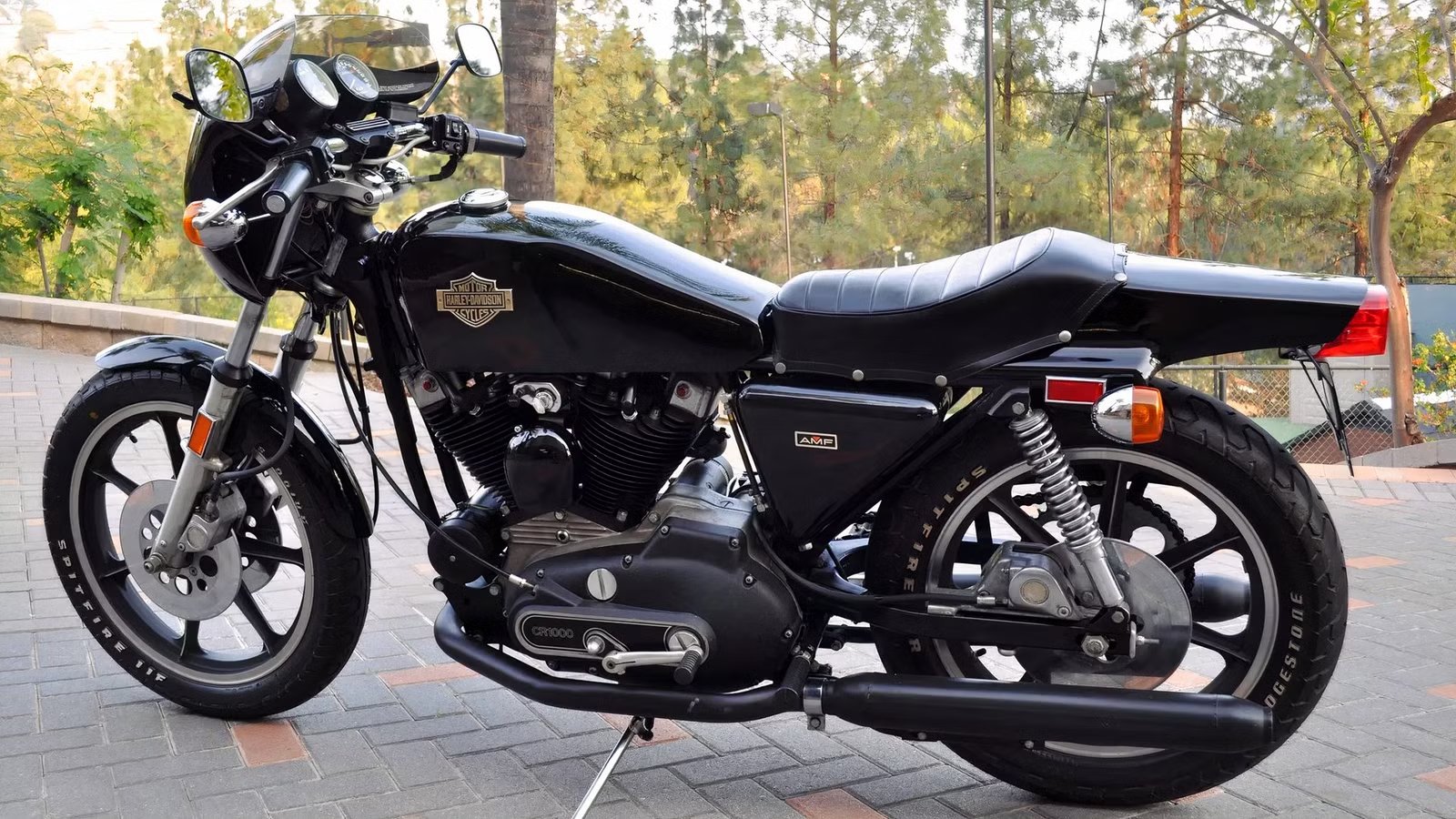
1977 Harley-Davidson XLCR


The XLCR put a black bikini fairing, low handlebar, and solo tail around Harley’s Ironhead Sportster engine. Willie G.’s café racer looked considerably different from the company’s cruisers and touring motorcycles. Its stance promised a sporting Harley without disguising the V-twin underneath. The engine, exhaust, and bodywork were all prominent parts of the design.
For collectors, much of the XLCR’s appeal comes from how far Harley took the café-racer styling. The fairing, solo tail, and distinctive exhaust gave it a coordinated appearance straight from the factory. Those pieces are worth looking for because a replacement exhaust or altered tail can change the bike’s profile considerably. With its original equipment intact, the XLCR remains one of the easiest Sportsters to recognize.
8
1983 Harley-Davidson XR1000

Harley drew on its XR750 flat-track racer to develop aluminum cylinder heads for the Sportster-based XR1000. Each cylinder breathed through its own carburetor on the right side of the bike. The exhaust pipes emerged on the left, giving the engine a noticeably different appearance from the familiar Ironhead. Those changes put the XR1000’s racing ancestry into the hardware, where a collector can see it up close.
It also gives a collector something specific to investigate. The heads, intake equipment, and distinctive exhaust belong to an unusual factory configuration. An ordinary Ironhead wearing XR-style bodywork isn’t the same proposition. The XR1000 earns its place through the engine itself, bringing a piece of Harley’s racing development into a production road motorcycle.
7
1985 Harley-Davidson FXRT Sport Glide

The FXRT paired Harley’s FXR chassis with a frame-mounted fairing and hard luggage. For 1985, its Evolution Big Twin added another reason to consider this particular version. The motorcycle offered wind protection and carrying capacity in a package separate from the larger FL touring family. It was a practical sporting-tourer interpretation of the Harley formula.
The fairing and luggage are essential to understanding the FXRT. Remove them and the motorcycle loses the touring equipment Harley designed around the FXR chassis. The brackets and associated fittings matter alongside the larger painted pieces. A complete Sport Glide shows how the factory equipped this platform for longer journeys, while retaining the exposed engine and twin-shock rear suspension.
6
1991 Harley-Davidson FXDB Sturgis

Harley introduced the Dyna chassis with the 1991 FXDB Sturgis, using a rubber-mounted Evolution V-twin and twin rear shocks. The Sturgis name tied the new model to the South Dakota rally. Its dark finish suited the stripped-down Big Twin styling. For collectors following the Dyna’s development, the FXDB is the first production model in the family.
Later Dynas can offer more displacement and newer equipment, but they cannot supply that first-model connection. The FXDB represents the beginning of a platform that developed a substantial following of its own. Its appeal depends on preserving the features identifying it as a Sturgis. A heavily customized example may still be enjoyable, though less of the original motorcycle’s story remains visible.
5
1999 Harley-Davidson FXR3

Harley brought the FXR back for the beginning of its Custom Vehicle Operations program. The FXR3 therefore connects two different parts of the company’s history: the established FXR chassis and the early development of CVO. An Evolution engine powered the motorcycle. Special paint and factory-selected custom equipment supplied the more conspicuous differences.
The Evolution engine is an important part of that combination. Harley’s Twin Cam era was beginning, yet the returning FXR carried the older engine into this new factory-custom program. The FXR3’s appeal therefore goes beyond its paint. It puts an Evolution-powered FXR and early CVO equipment in the same motorcycle, giving enthusiasts of either a reason to take notice.
4
1998 Harley-Davidson XL1200S Sportster Sport

The Sportster Sport approached performance through the brakes and suspension as well as the engine. Adjustable suspension and dual front discs separated it from less sporting versions. The 1998 model also used twin-plug cylinder heads. It offered a distinct factory specification beneath bodywork that could easily pass for an ordinary Sportster at a glance.
That understated appearance makes the XL1200S one of the less obvious selections here. Its identity comes from equipment that can disappear during a custom build, particularly the suspension and braking components. The engine specification matters, too. A standard 1200 fitted with Sport decals doesn’t reproduce the complete motorcycle Harley sold.
3
2003 Harley-Davidson FXSTDSE Screamin’ Eagle Softail Deuce

The standard Deuce already had unusually recognizable sheet metal, including its stretched-looking tank and distinctive rear fender. The Screamin’ Eagle version added a Twin Cam 103 engine and extensive factory detailing. It carried Harley’s custom treatment well beyond a different handlebar and wheel choice. The Deuce’s underlying shape remained the center of the package.
For a collector interested in early CVO styling, this offers a different subject from the program’s touring motorcycles. Its appeal comes from seeing the engine, finish, and model-specific components together. Individual replacement accessories cannot necessarily recreate that specification. The motorcycle rewards a close look at the details that originally separated it from the regular Deuce.
2
2006 Harley-Davidson VRSCR Street Rod

The Street Rod took Harley’s liquid-cooled Revolution V-twin in a more sporting direction. Mid-mounted foot controls changed the riding position, while an inverted fork and greater cornering clearance supported the different brief. The engine retained the V-Rod family’s double-overhead-cam architecture. Its hardware and ergonomics made it a substantial departure from a conventional air-cooled cruiser.
The Street Rod put the rider’s feet beneath the body rather than stretched out toward the front wheel. Combined with its taller stance, that made it an unusual member of the V-Rod family. For a collector, the original foot controls and suspension are part of the appeal. Swap them for a lower setup and forward controls, and the bike loses much of what Harley changed to create the VRSCR.
1
2007 Harley-Davidson FXSTSSE Screamin’ Eagle Softail Springer

The Screamin’ Eagle Softail Springer combined Harley’s exposed springer front suspension with a Twin Cam 110 engine. CVO paint, wheels, and detailing completed the factory treatment. It offered a particularly visible contrast between traditional front-end styling and a larger contemporary powerplant. The suspension remained the feature that identified the motorcycle from across a parking lot.
This is a collector’s Harley with plenty of mechanical equipment on display. The front suspension, wheels, engine finish, and paint all contribute to its appearance. Preserving those pieces together keeps the original factory combination recognizable. It closes the list with a motorcycle whose appeal is easy to see without needing a claim about what its next auction result might be.
Source: Harley-Davidson, Bring a Trailer, Mecum Auctions, Iconic Auctioneers

Related posts

Latest Post


No Comments