
Living with an MG IM5: Tesla pretender or usurper?
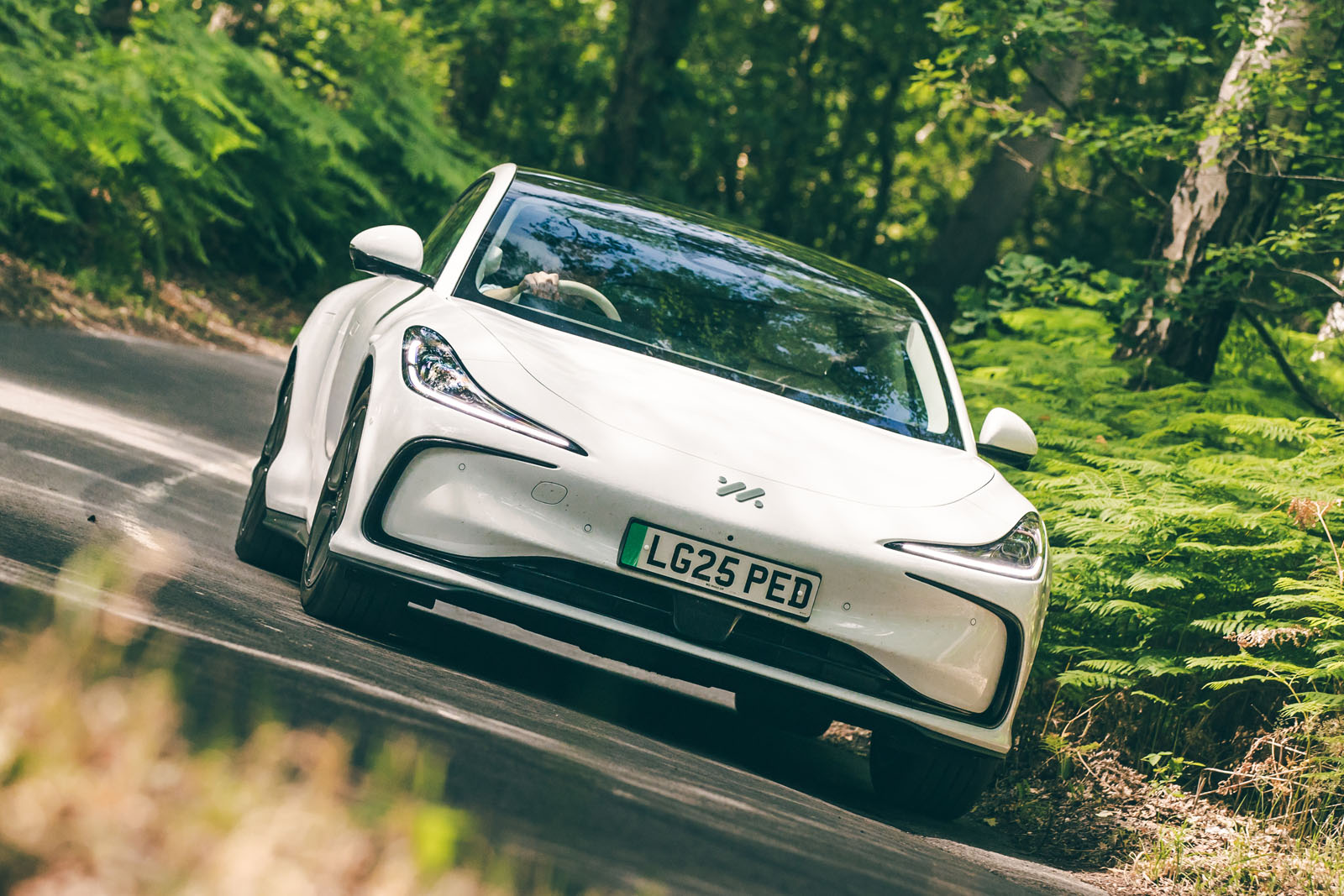
The boot isn’t huge, either, compared with Volkswagen’s ID 7. MG quotes a 457-litre capacity, and while it’s fairly deep, its aperture is narrow – and the steeply raked rear prevents you from stacking luggage too high. On a recent trip to see my parents, several boot-bound items had to be moved to the back seats.

On the subject of rear seats, the IM5’s are comfortable, with good knee room and ample head room, even with that sloping roofline. The only downside is that you can’t slide your feet under the seats in front, because of the underfloor battery, which means your knees are quite perched – but the large panoramic roof, plush carpets and lounge-like ambience take your mind off it.
As a long-distance electric saloon that doubles as a surprisingly nimble town car, the IM5 continues to impress.
Update 7: Is it really that similar to a Tesla Model 3?
Car design has changed dramatically over the past few decades. In the 1990s it was all about smooth lines, with cab-forward silhouettes dominating the automotive scene. These were followed by more complex designs, featuring defined body lines and smaller glass areas, as showcased by the ‘Flame Surfacing’ of Chris Bangle’s early-2000s BMWs.

Then, in the 2010s, large front grilles, LED headlights and sharper creases became the norm – and, inside, physical switchgear slowly gave way to minimalism and touchscreens. I think it’s fair to say that car design has never been so radical, transformative and, above all, divisive as it is in 2026. You only need to look at the Jaguar Type 01 and the Ferrari Luce to see that.

Related posts





Latest Post



No Comments