
The Rarest V8 Engine Chevrolet Ever Put In A Production Car
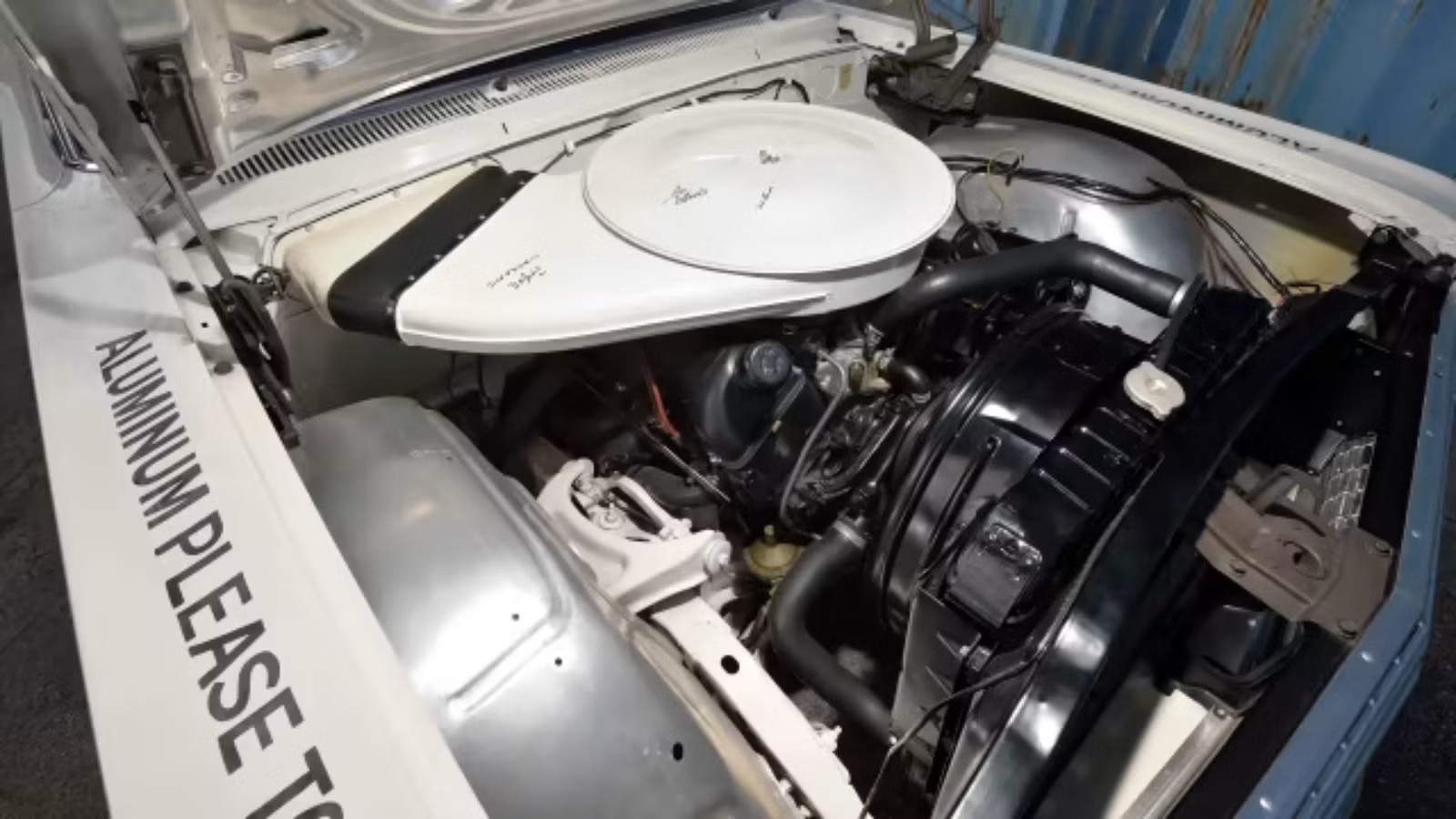
Chevroletis very much a mass-market brand. Yet every so often, it produces something so extraordinary it barely seems to belong in the same lineup. One of those outliers is the engine we’re going to talk about here — built in tiny numbers and legendary for its sheer brutality. This ultra-rare powerplant sits at the heart of one of Chevrolet’s most elusive vehicles ever to roll off a production line. Muscle Cars That vehicle is the Impala Z11, and it remains one of the most talked-about muscle cars among serious collectors and enthusiasts.
The 1963 Chevrolet Impala Z11 Is A One-Year Only Special Designed For Motorsports
 48 autotech Engine |
Transmission |
Drivetrain |
 109 autotech Power |
Torque |
|
7-liter V8 |
4-speed manual |
Rear-wheel drive |
430 hp (claimed) |
575 lb-ft |
When it comes to classic Chevrolets, the Impala Z11 is a true holy grail car. It was designed for motorsports, specifically drag racing and stock car racing. It retains the classy and understated look of the stock 1963 Impala, but under the skin it’s something very special. It carries a massive, high-output V8 engine (more on that shortly), paired with a close-ratio 4-speed manual transmission. To cope with the extra power, engineers fitted a reinforced chassis and heavy-duty suspension. It’s also significantly lighter than a standard Impala, thanks to the removal of all non-essential equipment — no sound deadening, no radio — and the extensive use of aluminum throughout its construction, including the hood, fenders, and bumpers.
That combination of enormous power, a race-tuned transmission, and aggressive weight reduction allowed the Z11 to turn in quarter-mile times in the higher end of the 10-second range — a genuinely remarkable figure for a car from the early 1960s.
Exactly how rare is the Impala Z11? It was produced for the 1963 model year only, and just 57 examples were ever built. That production figure alone makes it one of the rarest Chevrolets ever assembled.
It Has The Super-Rare Mystery Mark II Engine

You might be wondering exactly what the super-rare engine powering the Z11 actually is. Perhaps fittingly for something this scarce, it’s called the Mystery Mark II. It’s a proper big-block 7.0-liter V8, with a factory-claimed output of 430 hp and 575 lb-ft of torque — figures that are widely regarded as conservative. Many experts believe the Mystery Mark II actually produces well over 500 hp, which would fully explain its astonishing performance for the era. The engine traces its roots to the earlier 409 cubic inch (6.7-liter) W-Series unit, but the original design was heavily reworked to create the monster that ended up under the Z11’s hood. Engineers raised the deck height, fitted a forged steel crankshaft and aluminum cylinder heads with oversized ports, and pushed the compression ratio to a very aggressive 13.5:1.
Because the Impala Z11 was the only car ever built around the Mystery Mark II, the total number of engines produced matches exactly the number of Z11s ever made. That makes it arguably one of the rarest muscle car engines ever built, period. While there are muscle cars rarer than the Z11, they typically shared their engines with other models. The Mystery Mark II being exclusive to a single vehicle was genuinely unusual even by the standards of 1960s performance cars — and it’s a big reason the engine carries as much legend as the car it powers.
The Impala Z11 Is A Proper Collector’s Car That Sells For Big Prices

Because the Impala Z11 is such a unicorn, it’s no surprise that examples command massive sums when they surface on the market. As one benchmark, one Z11 sold for $298,000 at auction — a figure that dwarfs the average value across all versions of the 1963 Impala. Even the finest examples of the more common Impala SS performance variant rarely push past $80,000. If you’re fortunate enough to own an Impala Z11, you’re sitting on an extraordinarily collectible car that some believe could reach seven-figure territory as the supply of known survivors stays fixed.
Other Super-Rare Chevrolet Engines That Were Put In Production Cars

The Mystery Mark II may be the rarest engine Chevrolet ever put in a production car, but it isn’t the only big-block monster you’ll encounter only in tiny numbers. Chevrolet produced quite a few engines like these during the golden era of American V8 power, and they typically ended up under the hoods of the brand’s most special vehicles.
COPO 427 Iron Block V8

|
Displacement |
Power |
Torque |
Units Produced |
|
7 liters |
425 hp |
460 lb-ft |
1,105-1,388 |
The clue as to why the COPO 427 Iron Block is so rare is right there in its name. This was an engine that appeared exclusively in COPO specials — including the Yenko Camaro, the COPO Chevelle, and the COPO Nova. Because it was limited to those high-performance COPO builds, it’s estimated that fewer than 1,400 Iron Block 427s were ever produced. That easily ranks it among the rarest big-block V8s ever made, even accounting for the fact that it powered more than one model.
L88 427 V8

|
Displacement |
Power |
Torque |
Units Produced |
|
7 liters |
430 hp (claimed) |
460 lb-ft |
216 |
The L88 is a big-block V8 that found its way into a car not normally associated with big-block power: the Chevrolet Corvette. Specifically, it powered the L88 Corvette built from 1967 to 1969. These cars were intended for racing use, which explains the engine’s extraordinary output. Chevrolet rated it at 430 hp, though many believe the true figure could be as high as 550 hp.
ZL1 427 V8

|
Displacement |
Power |
Torque |
Units Produced |
|
7 liters |
430 hp (claimed) |
450 lb-ft |
71 |
The all-aluminum ZL1 engine is one of the most infamous powerplants Chevrolet ever produced. Only 71 were ever built, with all but two installed in examples of the Chevrolet Camaro ZL1 — a car that went on to become one of the most celebrated muscle cars ever made and is now among the most sought-after collector pieces from the era.
Like the Mystery Mark II, the ZL1 was conceived as a racing engine, and it carries the same kind of yawning gap between official and real-world output figures. Chevrolet’s factory claim was 430 hp, but the true number is widely believed to be closer to 560 hp — making the ZL1 an absolute force of nature for its time.
Sources: Bring A Trailer, Chevrolet, Classic.com

Related posts


Latest Post


No Comments