
The Inline-Four Cruiser That Wants To Be A Cut Above American Cruisers
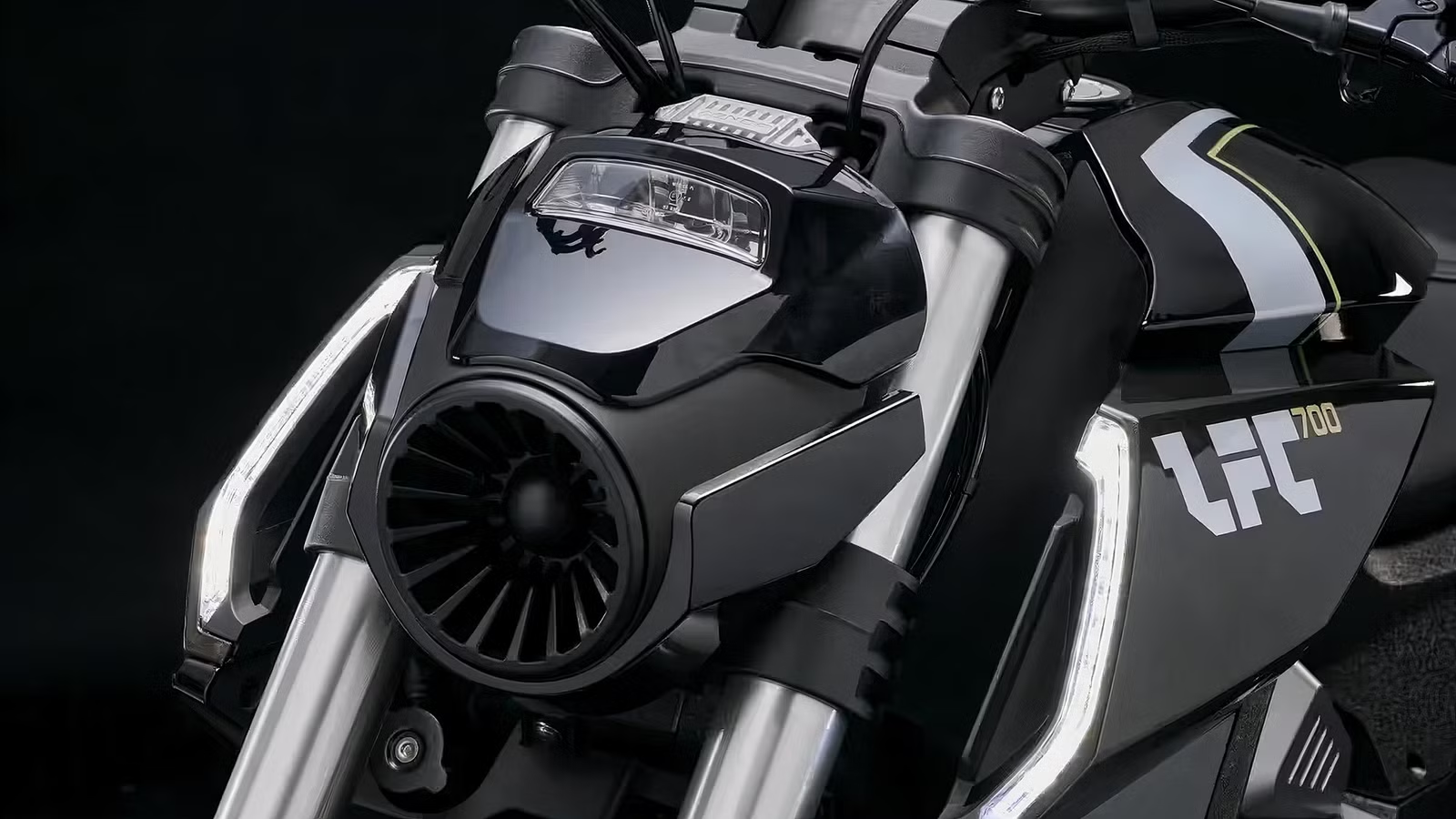
There was a time when the cruiser motorcycle market was full of weird, distinct bikes because riders were willing to spend extra cash on engineering that stood out. Today, that variety is practically dead, replaced by Kaizen efficiency, ruthless parts-bin sharing, and aggressive corporate cost-cutting. Volume manufacturers now build one basic engine and frame, dressing it up in different bodywork to cover four different categories and keep their profit margins intact. Yet the door hasn’t closed completely on genuine lunacy; tucked away from mainstream dealerships sits a machine that looks like an extra from the Mad Max set, built on bespoke tooling, and priced squarely within reach of everyday working riders.
The Majority Of The Cruiser Market Has Trapped Itself In Corporate Blandness

The modern cruiser market has essentially split into two camps. At the top end, American and European heritage brands control the premium space. Their loyal buyers are willing to pay a nostalgia tax for the badge, and there is genuinely impressive design and engineering at this end of the market. Even then, those expensive models increasingly share switchgear, electronics, and engine internals across multiple products to keep institutional shareholders happy.
Down in the middleweight bracket, things are not as good. Volume brands refuse to spend the money required to develop a dedicated cruiser from scratch. Instead, they drop mild, commuter-grade parallel-twin engines into budget frames, add forward foot controls, and call it a day. That leaves middleweight buyers stuck with an annoying compromise: spend big money on a heavy domestic bike, or settle for an uninspiring, parts-bin commuter twin adapted to become a cruiser.

Fixing this problem doesn’t mean pretending platform economics don’t exist; it comes down to what a manufacturer chooses to invest in from day one. Chinese bikemaker Benda is a key example. It has been knocking it out of the park with products like the Napoleon Bob, and it took a gamble where legacy brands wouldn’t. While it does share this engine with its own naked roadster, the crucial difference lies in the architecture itself, and how it’s applied. Rather than just bolting forward foot controls onto a standard commuter chassis, Benda poured capital into taking a unique approach. Today, that revives a formula the American cruiser market hasn’t seen brand new since the Kawasaki Eliminator 1000 left showroom floors back in 1988.

The $10,899 Benda LFC700 Defies Every Modern Cruiser Rule

The $10,899 Benda LFC 700 breaks standard cruiser rules by running a 676 cc inline-four engine inside an integrated cast-aluminum chassis, paired with a massive 310-section rear tire. It is a genuine alternative to traditional domestic cruisers because it delivers unbelievably smooth highway running, solid thermal management, and mechanical ambition instead of rehashed retro styling. By ditching the standard parts-bin formula, it proves that a middleweight cruiser does not have to be an underpowered, budget-built compromise designed purely around corporate accounting sheets — although it certainly offers some of the best value in the cruiser segment.
A High-Revving 84-HP Inline-Four Completely Rewrites Cruiser Dynamics

What makes the LFC700 unique is its 677 cc inline-four engine. Nobody can know whether it is practical or has long-term durability yet, but it sure gets enthusiasts excited! This is a short-stroke design with an 11.4:1 compression ratio and liquid cooling. It generates 84 horsepower at 10,300 RPM and 44 pound-feet at 8,600 RPM. It also has a six-speed manual gearbox with a slipper clutch, and it uses a chain to drive the wheel. It is completely incongruous: your ears report a sport bike while your eyes see a cruiser, and it is wholly amazing.
Massive Rear Tire Dominates Stance But Penalizes Suspension Travel And Weight

Suspension-wise, you get quality stuff from KYB, with 43 mm inverted forks at the front offering 3.9 inches of travel and a horizontal monoshock hidden under the seat for the rear that offers a mere 1.4 inches of travel. This is definitely not a cruiser built for easygoing weekend adventures. That atrocious rearward suspension travel figure is because of the 310-section rear tire. It is mounted on an 18-inch rim, whereas the front has a 130-section tire on a 19-inch rim.
Dual 320 mm front discs with radial four-piston fixed calipers and a single 260 mm rear disc with a two-piston caliper bring sport bike-like braking, but you need that because of the 661-pound heft. You would think that the 27.3-inch seat height would make it easy to handle that weight, but this motorcycle is 30 inches wide, not to mention a 91-inch overall length with a massive 67.7-inch wheelbase.
Basic Electronics Break The Chinese Stereotype
The LFC700 is quite a simple motorcycle under the skin: it has dual-channel ABS and traction control. There is a 5-inch TFT display, but it does not have Bluetooth or navigation. It offers a five-volt USB-A charging port. Everything else comes down to its distinctive styling, with the turbine headlamp, bar-end mirrors, and the stretched-out low-slung look from the side. This is a pretty basic feature set and could use at least Bluetooth and navigation as standard features. It gets some truly fancy big-bike features for a low price like the Rebel 1100 does in other markets, as shown in the video.
The $11,499 Honda Fury Is Its Only True Conceptual Rival

The LFC700 is a middleweight motorcycle with a middleweight price, and at this price, you will not find something quite like it. Instead, we will have to go the route of looking at something that offers the same visual impact for a similar price. There is only one motorcycle that fits the mold, and that is the $11,499 Honda Fury, a classic in the making. It is a production motorcycle with complete chopper looks, but it does have practical touches like shaft drive, disc brakes at both ends, and dual-channel ABS.
Of course, it is as far as possible from the Benda’s smooth inline-four engine with its long-stroke V-twin that generates most of its torque very low down in the rev range. This is also a liquid-cooled and fuel-injected powerplant, which means it will be reliable. It is not quick and does not have the chassis dynamics to excite an enthusiast, but it plays its role to perfection, just like the LFC700 does.
Source: Keeway America

Related posts

Latest Post


No Comments