
Oldsmobile Built 54 Factory W-30s And Sold 93 Kits For Any L69 4-4-2
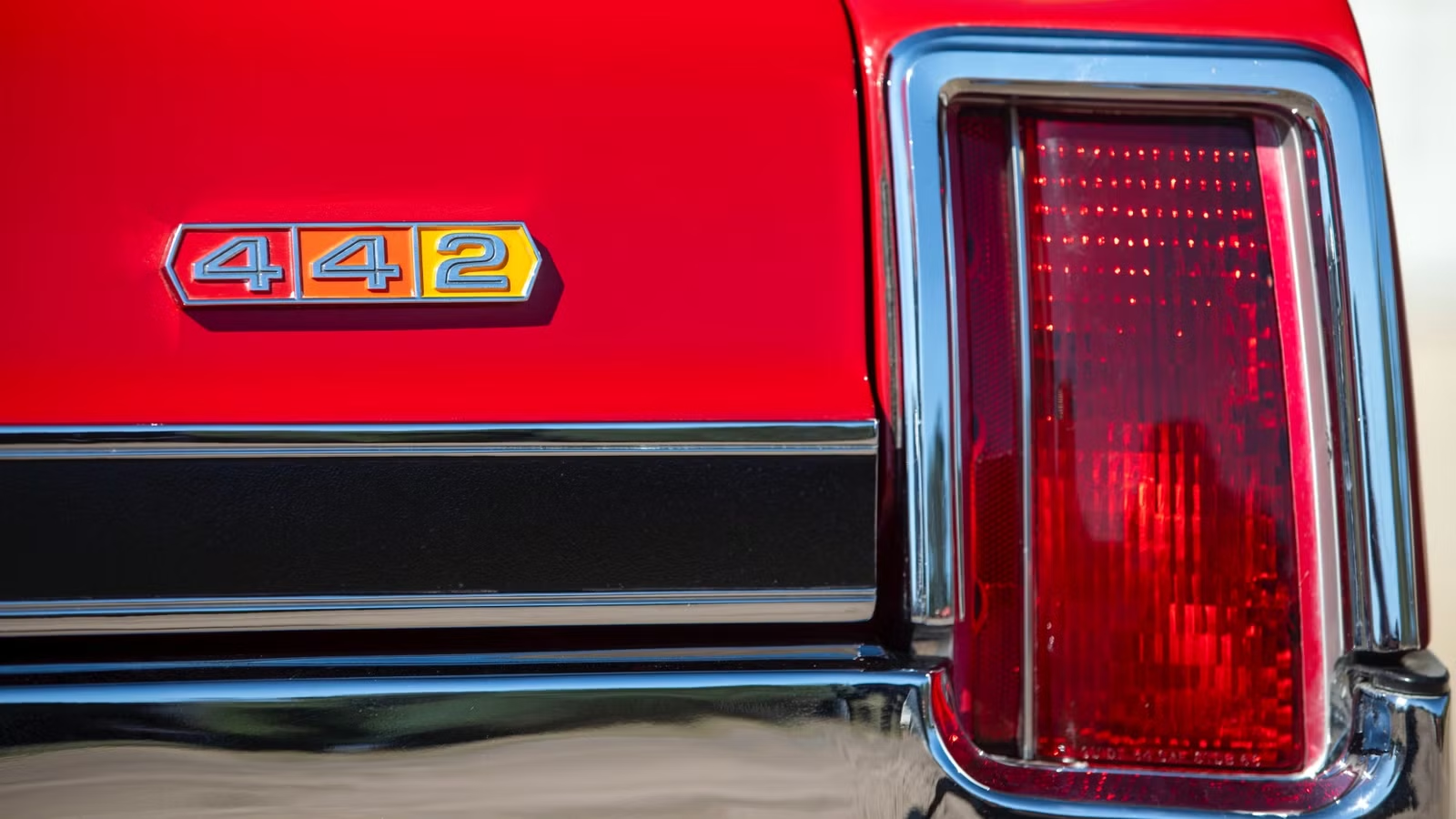
Old-school Olds fans will tell you that a genuine factory-built W-30 4-4-2 isn’t just one of the rarest Oldsmobiles ever made. It’s also one of the coolest.
Those arriving later to the party might ask what exactly W-30 and 4-4-2 mean, while also wondering why we’re being so careful with words like “genuine” and “factory-built” when talking about this car.
So let’s start at the beginning.
Oldsmobile Wanted To Win At The Drag Strip

When Pontiac introduced the GTO in 1964, it didn’t just create an American icon. It also sent a clear message that reverberated through the rest of General Motors: stuffing big power into midsize cars was a play that could work. Oldsmobile wasn’t far behind Pontiac, though, and was already at work on the 4-4-2.
At that point, the three-digit code represented an options package available for Oldsmobile’s midsize F-85 and Cutlass models, and the name was refreshingly literal: four-speed manual, four-barrel carburetor, dual exhaust. The name stuck, though the logic behind it started to bend. In ’65, additional transmission options compromised the first four, which instead evolved into referencing its 400-cubic-inch V8. By ’66, there was an optional L69 engine with three two-barrel carburetors, challenging the integrity of the second four. (The dual exhaust stayed, protecting the sanctity of the two.)
But just as a BMW 330i no longer tells you what’s under the hood by looking at the trunk badge, the 4-4-2 name had quickly transcended its roots, and the car was clearly there to win arguments about quarter-mile times, not badge integrity. With the L69, it was making 360 horsepower, and Oldsmobile wanted something that wouldn’t just impress leaving a stoplight, but could compete in NHRA drag racing. Meet the W-30.
The First W-30 Was A Different Kind Of Muscle Car

For 1966, drivers who wanted to go as fast as possible right off of the Oldsmobile lot had the option of buying the W-30 high-performance variant, which was the first of what would later become celebrated as Oldsmobile’s W-Machines.
The W-30 started with the 400-cubic-inch L69 V8 triple-carb setup and built from there. Its Outside Air Induction system fed air from the front bumper to the carburetors, with the battery relocated to the trunk to make room for the induction plumbing. The factory package also included a 308-degree camshaft, beefier valve springs, and carefully selected engine components assembled to precise specifications. The W-30 had a four-speed manual and drag-focused rear gearing.
Despite all that extra work, Oldsmobile still advertised the W-30 at 360 horsepower, the same as the regular L69. Less than five dozen were sold.
Just 54 Left The Factory, But Oldsmobile Sold 93 More Kits

If you’re wondering why Oldsmobile went to all the trouble of building such an elaborate performance package, only to produce 54 examples, the answer is racing. The W-30 was developed to meet NHRA production requirements, allowing Oldsmobile to compete in stock drag racing classes with equipment that had actually been offered on production cars.
But those 54 factory-built examples weren’t the end of the story.
Oldsmobile also sold 93 of the Outside Air Induction setups through its parts network as what the publication calls “Trac Pac” kits. These could be installed on other L69-equipped 4-4-2s, giving owners access to the W-30’s distinctive bumper-fed intake system without having purchased one of the original factory cars.
And here’s where things get complicated. A kit sold wasn’t necessarily a kit installed, and a car equipped with authentic W-30 hardware wasn’t necessarily born with it. Six decades later, distinguishing a factory original from a period conversion or a more recent recreation can get murky.
What Makes A Genuine 1966 W-30?

The reason it’s so challenging to pin down an authentic W-30 is that its most distinctive elements were also available in Oldsmobile’s factory parts kit. You got both the form and function of the induction setup, likely including the relocated battery, so the familiar scoops and trunk-mounted battery aren’t enough to settle the question.
There are a couple of clues, though. Oldsmobile didn’t build any factory W-30 convertibles, so a softtop with W-30 equipment, while impressive, isn’t one of the original 54. Assembly location matters, too. Regular 4-4-2s were built at several plants, but all 54 factory W-30s came from Lansing, Michigan, in June 1966.
Unfortunately, those details can only establish that a car might be authentic. Cylinder-head castings, engine identification markings, and component dates can also be checked against known factory specifications, but these clues are generally better at ruling out impostors than proving originality.
Proving A W-30’s Authenticity Takes Expertise

Considering that a confirmed factory example can fetch north of $100,000 at auction, getting this right isn’t a trivial matter. A collector serious about finding the real thing should lean heavily on original documentation and professional expertise.
Factory build sheets, original sales paperwork, and records tracing a car’s ownership can help establish its history, particularly when compared against the physical evidence. A W-30 authenticated by Oldsmobile specialists Curt Anderson and Mike Richards sold for $104,500 at Mecum in November 2025, with its documented history helping establish its credentials.
For something this rare and nuanced, it really is time to call in the pros.
Rarity Alone Doesn’t Command Value

All that said, it’s important to remember that being one of the original 54 W-30s isn’t the only thing that makes these cars speak to us. A 1966 4-4-2 that looks the part using equipment offered by Oldsmobile itself is still something special.
There’s nothing wrong with a period-installed Trac Pac kit or a more recent conversion, as long as it’s presented honestly. You may or may not care about the factory pedigree, but the real point here is knowing which version of the story you’re paying for.
Sources: The Oldsmobile FAQ, Mecum Auctions, Classic.com

Related posts





Latest Post


No Comments