
Honda Once Built A Sports Car That History Forgot
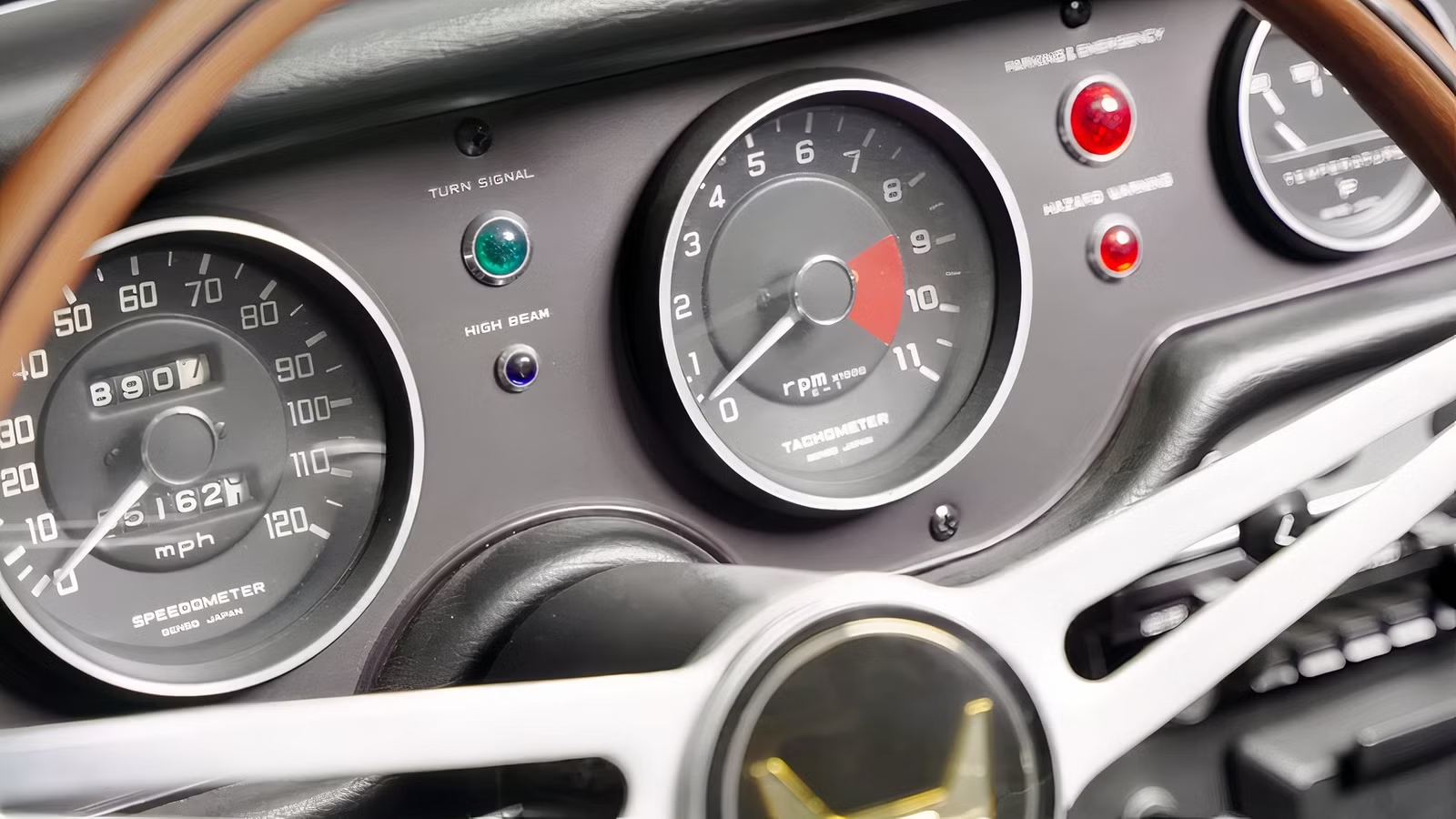
Every great automotive legacy has a forgotten first chapter. Honda‘s is no different. Today the brand feels like a permanent fixture — Civics crowd every parking lot, Accords rack up six-figure mileage without complaint, and the NSX and S2000 still spark arguments about which generation was best. That kind of staying power makes the company’s origins look inevitable in hindsight. They weren’t. When Honda entered the car business in 1963, it didn’t ease in with a sensible commuter or a safe family sedan. It arrived with a tiny, open-top machine that looked charming, sounded furious, and carried an enormous burden: proving that a motorcycle company could build a real automobile on its own terms.

That first sports car mattered far more than its sales total suggests. It arrived in a rush, packed strange engineering, and disappeared almost as fast as it came. Later Hondas from the same family sold better, reached more markets, and took most of the glory, so this effort slipped out of memory. That is a shame, because the car tells a bigger story about risk, ambition, and the odd little experiment that launched Honda’s automotive identity.
Before Becoming A Car Company, Honda Needed A Statement
Before Honda built cars, it built its name on motorcycles, speed, and stubborn confidence. Even then, Soichiro Honda did not want to rush into four wheels without proper research, testing, and production readiness. That caution did not last, though. Japan’s Ministry of International Trade and Industry moved toward a bill that could lock new companies out of the auto business, so Honda suddenly had a reason to move fast. The company no longer had the luxury of waiting for a perfect first car. It needed something now, and it needed that something to hit like a starter pistol.

That’s exactly why Honda’s first big automotive statement was not a sensible family car. A halo model could grab attention, flex engineering talent, and make dealers believe the company meant business. It could also separate the firm from rivals that already owned the practical side of the market.
The company signaled that intent in 1962 when it unveiled the Sports 360, the larger Sports 500, and the T360 truck at the 9th Japan National Auto Show. The truck gave Honda an entry point, the sports car gave Honda a face, and the larger version existed because the company saw only limited domestic demand for a tiny sports car and wanted something that could work around the world. From day one, Honda envisioned its automotive efforts as a global journey.
Even the color told a story. Soichiro Honda wanted a vivid red, but Japanese regulations at the time banned red and white body colors because officials thought they could confuse those cars with emergency vehicles. Honda fought the rule, pushed the argument in public, and won approval. That sounds like a minor footnote, but it reveals a great deal about the company’s mindset — it wanted its first sports car to shout, not quietly clear its throat.
The S500 Was Honda’s First Production Sports Car

The car was the Honda S500, and it hit the market in October 1963, two months after the T360 truck. That made it Honda’s first production sports car and its first passenger car. The moment the world realized Honda was already building cars was this — and the company achieved that milestone with a sports car. What better way to announce your arrival in the four-wheeled world?
On paper, the S500 looked almost absurd. It used a 531cc inline-four with dual overhead cams and produced about 44 horsepower — which sounds modest until the rest of the picture comes into focus. That power arrived high in the rev range, and the whole car weighed very little. Honda wanted sharp throttle response, a distinctive exhaust note, and mechanical intensity throughout. The S500 wore roadster clothes, but it thought like a racing motorcycle that had somehow acquired four wheels and a registration plate.
That approach shaped the S500’s place in Honda history — both the S500 and S600 were cars that influenced how the company thought about sports cars long after the originals disappeared. The car set the tone early: front engine, rear drive, two seats, low weight, and a strong connection between driver and machine. Later Honda icons would express that idea with more polish and far more power, but the original blueprint was already on the page in 1963.
A Motorcycle In A Sports-Car Body

|
Engine |
Power |
Torque |
0-60 MPH |
Top Speed |
|
531cc DOHC inline-four |
44 hp |
33.2 lb/ft |
~17-18 sec |
~81-86 mph |
We’ve heard the “motorcycle in a sports-car body” line applied to many cars, but with the S500, it actually fits. Honda engineers channeled advanced motorcycle thinking into a roadster — the little four-cylinder needed to spin hard to make its power, and the automaker later used S500-based specifications while developing an automatic transmission, including a target engine speed of 8,000 rpm. In 1963, that was wild territory for any production car.
Then came the genuinely unusual part: chain drive to the rear wheels. The setup originated from packaging constraints — the earlier Sports 360 had to fit within strict mini-vehicle dimensions, and the chain layout freed up space between the rear tires for the spare wheel. That clever arrangement also helped concentrate mass closer to the car’s center, which improved dynamic behavior. In plain terms, Honda used chain drive because the engineers found a smart solution and appreciated how smart solutions drove.
The S500 also served as a rolling laboratory. Honda later noted that the car adopted the industry’s first anionic electrodeposition undercoating material, a water-based process charged with negative current. That’s nerdy in the best possible way — Honda treated its first proper car as a test bed for ideas in design, manufacturing, and materials. That habit never really left the company, and it’s one reason enthusiasts still hold Honda in high regard.
What It Cost And Why It Vanished So Fast

Honda priced the S500 at 459,000 yen. At Japan’s fixed 360-yen-to-the-dollar exchange rate of the period, that came out to roughly $1,275 in 1963 dollars — a figure that, adjusted for inflation, represents a modest entry price by today’s standards.
The manufacturer also promoted the launch with a massive newspaper campaign that invited readers to guess the price. More than 5.7 million entries came in, setting a record for that kind of advertisement. The final price surprised the market because it undercut industry norms for comparable cars. The little roadster arrived with a brass band, a confetti cannon, and the sort of buzz most startups would trade dearly to generate.
But buzz does not guarantee a long life, especially when the product sits at the sharp edge of an engineering experiment. Honda executives already knew the company had moved into cars earlier than some thought wise, and even Honda’s internal history admits the work still needed time. The sports-car market in Japan also remained small, which pushed Honda to think globally almost from the start. In other words, the S500 had to serve as a brand statement, a technical test bed, and a sales product all at once — a lot to ask of a machine barely larger than a modern appliance crate.

The S500 also vanished because Honda replaced it almost immediately. Production of the S600 began in March 1964, only months after the S500 reached customers. That quick handoff created one of the car’s strangest footnotes — even its production total remains fuzzy. Many English-language sources cite a little over 1,300 built, while some Japanese and Honda-linked accounts argue that many orders shifted to the S600 and the real total sat much closer to 500, prototypes included. Either way, the verdict stays the same — the S500 flashed into view, then got eclipsed by its own younger siblings.
S500 Vs. S600 Vs. S800

The S500 laid down the formula, the S600 sharpened it, and the S800 spread it. The pioneer offered buyers 531cc and about 44 horsepower in a roadster body. The S600 then bumped displacement to 606cc and power to 57 horsepower while keeping the rev-happy attitude, and soon added a coupe variant. It looked similar to its predecessor but felt less like a rough draft and more like a finished sentence. That is why the S600 often lands in the enthusiast sweet spot — it preserved the early car’s mechanical intensity without feeling quite so fragile or provisional.
Honda then widened the idea’s reach. S600 exports began to Australia and Thailand, and the S800, launched in 1966, pushed the line further with a 791cc four-cylinder producing 70 horsepower. The automaker later expanded S800 exports to North America, Europe, and other markets, finally giving Honda the worldwide presence it needed to sustain its ambitions.

The comparison between the three family members explains why history remembers the later cars more clearly. The S600 looked like the version Honda should have launched first, and the S800 looked like the version ready to meet the world. The S500, by contrast, was the purest expression of the original idea — which also made it the least settled. Enthusiasts usually love first drafts only after the polished version becomes famous. The S500 followed that rule almost perfectly.
The First Serious Wave Of JDM Sports Cars

The S500 also deserves more respect because it arrived during the first serious rise of Japanese sports cars. Nissan had already launched the Datsun Fairlady 1500 as its first full-fledged sports car, and Prince had already offered the Skyline Sport as a low-volume luxury coupe with Italian styling. Those cars proved Japan could build something sporty and stylish. Honda brought a different flavor to the same party. Where the Prince leaned elegant and the Fairlady leaned familiar, the Honda leaned mechanical and restless. It felt less like a copy of European taste and more like a company trying to invent itself in real time.
Toyota joined the compact branch of that movement with the Sports 800 in 1965. It was a compact, lightweight two-seat sports car that quickly became popular with younger drivers. It also earned respect in long-distance racing because of its reliability and fuel economy. That car and the early Honda sports cars showed one side of Japan’s sports-car future — small, clever, efficient, and light on their feet. Doesn’t that sound familiar today? Kei cars, anyone?

Then the movement went upscale. Toyota unveiled the 2000GT prototype in 1965 and launched the production car in May 1967. Mazda launched the rotary-powered Cosmo Sport on May 30, 1967, with 110 hp and a top speed of 115 mph. Those two cars changed how the world looked at Japanese performance machines — suddenly, Japan was building halo cars, technology showcases, and rolling declarations of national ambition.
That bigger wave is also part of the reason the S500 slipped through the cracks. It lacked the Fairlady’s longer roadster story, the Sports 800’s cult charm, the 2000GT’s movie-star glamour, or the Cosmo’s space-age headline engine. Even within Honda’s own family, the S600 and S800 had better timing and broader reach. But the S500 still matters because it lit the fuse and revealed Honda’s basic character early.
Source: Honda

Related posts


Latest Post



No Comments