
Used Cruisers With More Power Than The Honda CBR650R
Cruiser motorcycles have long carried a reputation for style over speed — big, lazy engines thumping out torque at low revs, built for stress-free miles rather than stopwatch glory. That reputation is increasingly hard to defend. Today’s cruiser market has quietly become a horsepower war, with some models packing enough punch to embarrass dedicated sport bikes off the line. Using the Honda CBR650R E-Clutch and its 94 horsepower as our baseline, we’ve rounded up 10 cruisers that clear that bar — some by a comfortable margin, and a couple by a staggering one.
2024 Harley-Davidson Breakout 117
Output: 101 Horsepower

The Breakout 117 retains classic Harley-Davidson styling with a generous helping of chrome and the look of a hardtail, but it is actually quite a modern motorcycle beneath the surface. The heart is an air-cooled, pushrod behemoth displacing nearly two liters, with modern touches like fuel injection, four valves per cylinder, and a ride-by-wire throttle. Traction control and ABS are standard fitments, although there are no ride modes and the ABS cannot be switched off. The front suspension consists of conventional forks, while the rear uses a monoshock with tool-free preload adjustment. This is a Harley that has to go as well as it shows.
2024 Harley-Davidson Low Rider S/ST
Output: 103 Horsepower

Running the same Milwaukee 117 engine as the Breakout 117, the Low Rider siblings offer more of a classic cruiser aesthetic compared to the Breakout’s chopper styling. The Low Rider S is the quintessential cruiser, while the Low Rider ST adds a fairing and hard panniers for touring duties. Both sport inverted front forks, dual front disc brakes, and a hidden monoshock rear suspension unit. The ST gains a 2.14-inch screen displaying additional information such as gear indicator, clock, trip meter, range, and engine revs. ABS and traction control are standard across the pair.

2024 Harley-Davidson Road Glide/Street Glide
Output: 105 Horsepower

The Milwaukee 117 returns in yet another state of tune in the Road Glide/Street Glide, here producing 105 horsepower and 130 lb-ft of torque. The Glide twins are positioned as long-distance tourers, which is why they come standard with hard luggage and a comprehensive safety package including linked brakes, ABS, and traction control. Hill hold assist and a tire pressure monitoring system are also present. A large 12.3-inch TFT display keeps the rider informed, and the only real decision is whether you prefer the fork-mounted batwing fairing of the Street Glide or the frame-mounted sharknose fairing of the Road Glide.
2024 Indian 101 Scout
Output: 111 Horsepower

The most powerful Scout in the lineup shares its engine with the rest of the Scout range, but Indian has turned the wick up to 111 horsepower. It commands a premium over its siblings, though the extra spend brings genuine hardware upgrades: fully adjustable suspension at both ends, inverted front forks, radial Brembo brake calipers, and a second 320 mm front brake disc. The electronics package is equally thorough, with keyless ignition, ABS, traction control, and cruise control all standard. App connectivity adds remote access to bike health, geolocation, and navigation, among other features.
2024 Harley-Davidson CVO Road Glide/Street Glide
Output: 115 Horsepower

The CVO Harleys represent the pinnacle of the range, and the CVO Road Glide and CVO Street Glide are no exception. They receive the larger Milwaukee-Eight VVT 121 engine — displacing nearly two liters — with variable valve timing and liquid-cooled cylinder heads, good for 115 horsepower. Inverted front forks carry radially mounted four-piston Brembo fixed calipers. Harley’s full electronics suite is on board, including cornering ABS and traction control, hill hold assist, electronically linked brakes, and TPMS. A 12.3-inch touchscreen TFT display handles all rider information, and a 500W Rockford Fosgate audio system rounds out the premium experience.
2024 Harley-Davidson Sportster S
Output: 121 Horsepower

The Revolution Max 1250T is as modern an engine as they come, with liquid cooling and variable valve timing combining to produce 121 horsepower. Like any contemporary sport bike, it also serves as a stressed member of the chassis. You get the same comprehensive electronic safety suite seen on the CVO Road Glide, with the addition of wheel lift mitigation and enhanced lift mitigation. Suspension is fully adjustable, and the front brake features a monobloc radial caliper — though Harley fitted only a single front disc, which feels like a missed opportunity at this performance level. Even so, the Sportster S is a thoroughly modern motorcycle, and not just by Harley standards.
2024 Indian Challenger
Output: 122 Horsepower

The Challenger is Indian’s answer to Harley’s Road Glide, and it makes an interesting case for itself by offering more power than the considerably more expensive CVO Road Glide. Indian kept the Challenger’s character grounded with twin analog dials for primary instrumentation and a separate 7-inch TFT display below for navigation and utilities. Connected technology is on board, as are cruise control, hard panniers, keyless ignition, ride modes, rear cylinder deactivation, and a 100W audio system with a dynamic equalizer. Inverted front forks carry radially mounted Brembo brake calipers, and the rear shock is fully adjustable.
2024 Suzuki Boulevard M109R
Output: 123 Horsepower

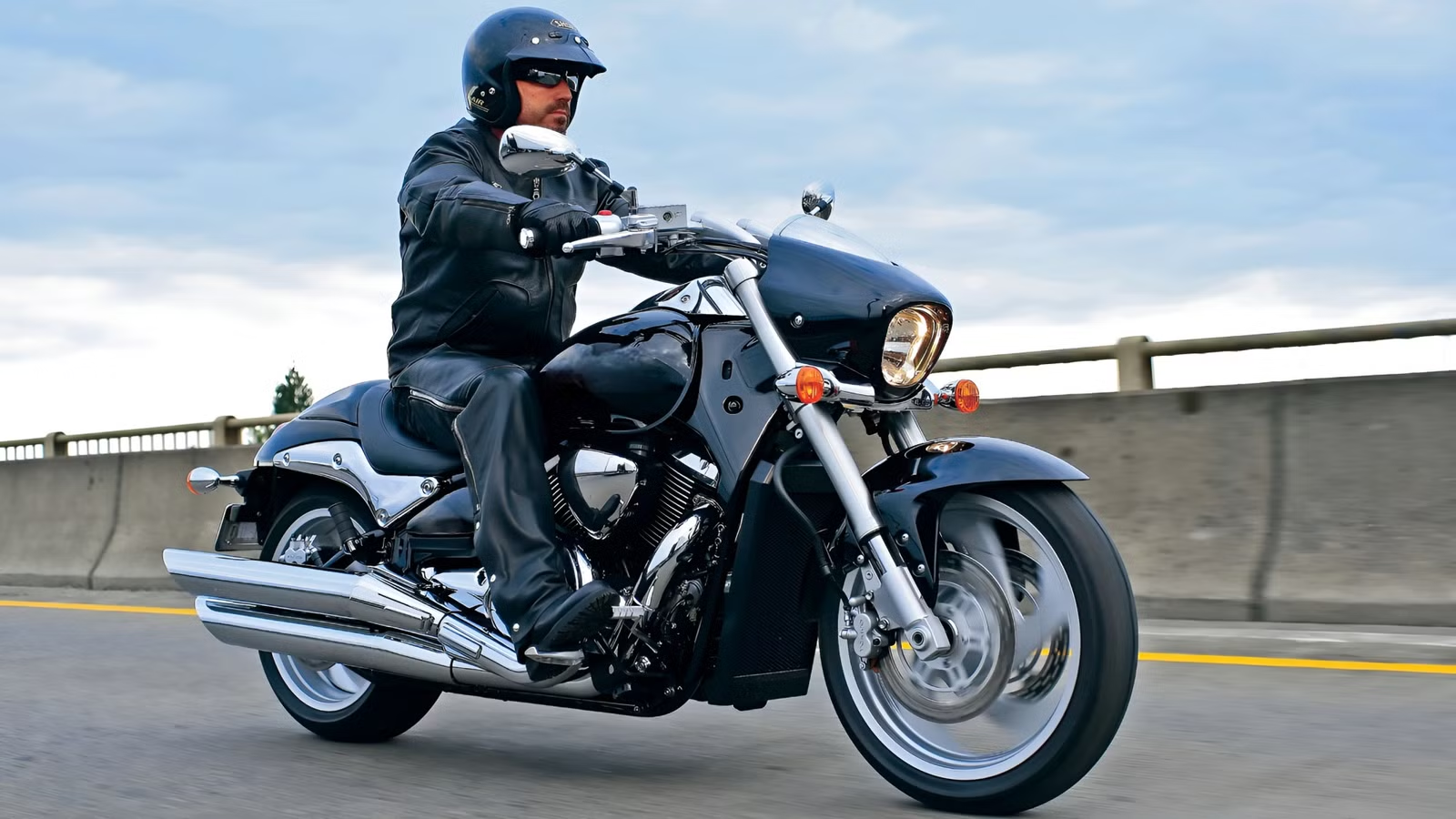
The Boulevard hasn’t changed dramatically since its launch nearly two decades ago, but then there isn’t much that needs changing. It has one of the torquiest engines in its class, with peak torque arriving at 3,200 rpm and peak power a full 3,000 rpm higher in the rev range. Drive goes to the rear wheel via shaft, while stopping power comes from brakes borrowed from the GSX-R1000 of that era. It does show its age with a traditional instrument cluster featuring a digital tachometer and a five-speed wide-ratio gearbox, and Suzuki does not list ABS on its official website. All that said, if you want a performance cruiser on a budget, the Boulevard remains a compelling option.
2024 Buell Super Cruiser
Output: 175 Horsepower

We now enter the realm where cruiser power outputs shame most sport bikes on the planet. The Super Cruiser’s extraordinary horsepower figure has a straightforward explanation: it is based on the popular Hammerhead. Roland Sands was tasked with designing it, with a brief to use as much of the Hammerhead’s architecture as possible to keep costs in check. The result is a compelling power cruiser that promises to be unlike anything else in the segment. Keep an eye on Buell’s website for the latest on its production status and availability.
2024 Triumph Rocket 3 Storm
Output: 180 Horsepower

It’s easy to make big horsepower when you have the largest displacement engine fitted to any production motorcycle in the world. But the Rocket 3 is no one-trick pony — the most recent generation shed significant weight, making it leaner, meaner, and capable of giving plenty of sport bikes a genuine run in acceleration. Spec it with luggage and wind protection, and it becomes a surprisingly capable tourer, and it handles corners with more composure than its size suggests. Ultimately, though, it always comes back to that massive three-cylinder engine and its breathtaking horsepower and torque figures.
Sources: OEMs, Visordown.com, Motorcycle.com, and Motorcyclenews.com.

Related posts

Latest Post


No Comments