
The Forgotten JDM Sedan That Shared Its Engine With The R34 Skyline
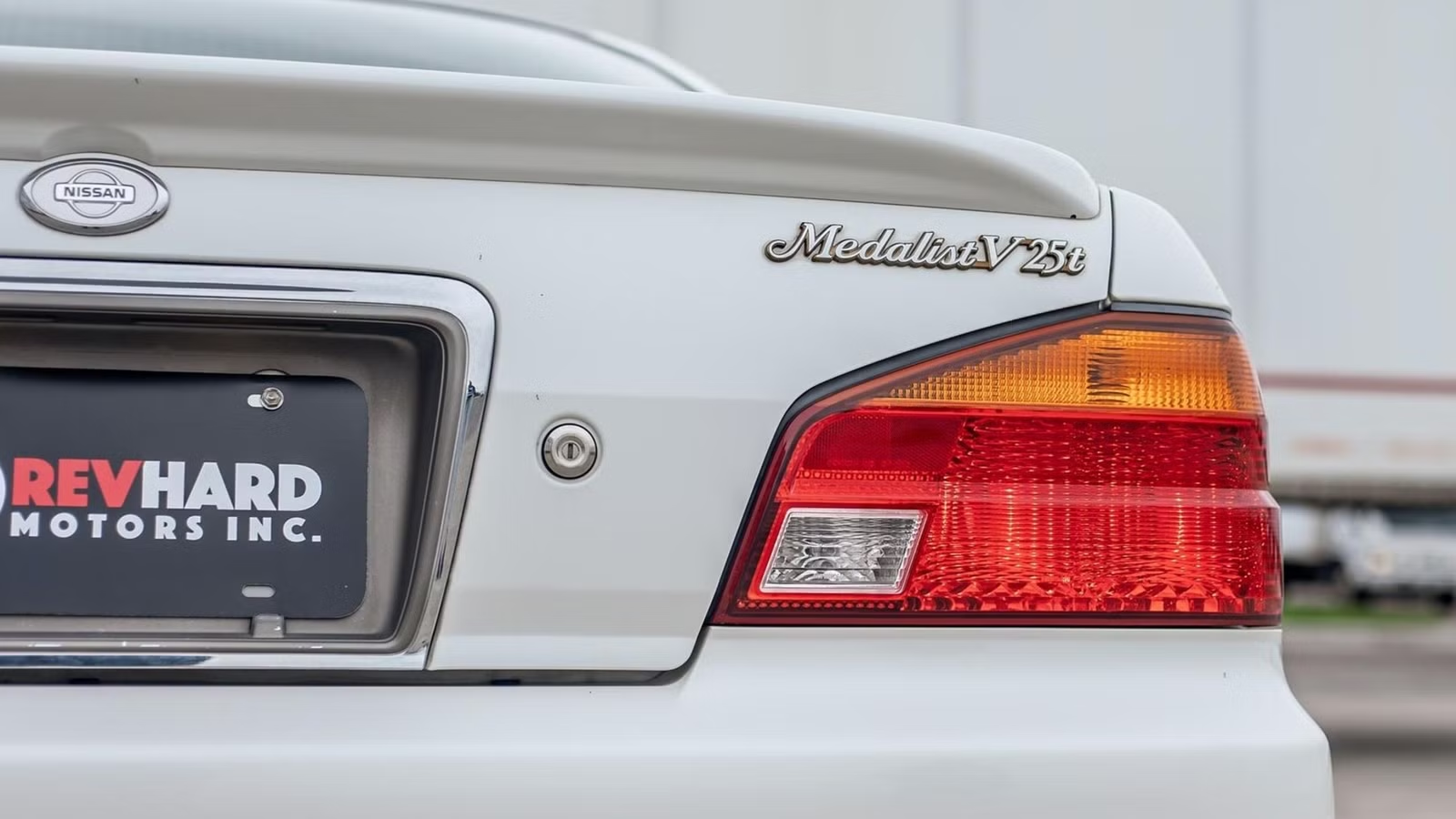
The classic Japanese domestic market scene over the last decade has been on a sharp rise. The legendary sports cars that used to be affordable for JDM enthusiasts have transitioned from high-performance machines into investments and financial assets. Vehicles originally built to deliver attainable speed and performance for regular folks have been stored away by global speculators in climate-controlled garages with price tags that defy reality.

For modern JDM enthusiasts, the narrative seems to have been completely turned on its head. If you want a 1990s platform with a turbocharged straight-six engine and a genuine motorsport pedigree, you have missed the boat. The doors are locked, the JDM tax has been paid, and the gatekeepers have won.
But as it goes, automotive history is rarely a straight line; there are always parallels. Besides the loud, bright poster cars that dominated American streets, video games, and magazines, a manufacturer was building an identical mechanical twin that was cruising the streets, totally undetected. It wore a plain suit, but underneath carried the same performance. A car reserved for the mature and understated.

The Broken Reality Of The Modern JDM Market

To understand how a genuine high-performance icon managed to hide in plain sight. It is important to understand how the JDM collector market has become detached from its roots. The absolute poster car of this era, the Nissan Skyline GT-R, has transformed from a regular, usable street car into a performance art piece. What was once a sub-$20,000 sports coupe has now become an elite collector’s piece, leaving a whole generation of enthusiasts on the sidelines.
As buyers turned away from the two-door sports coupes, they gravitated towards the high-performance executive sedans of the late 1990s that were used for drifting. The Toyota Chaser Tourer V (X100), powered by the 2.5-liter 1JZ-GTE twin-turbo inline six, quickly became the primary alternative. It offered four doors, a long wheelbase, and a massive engine-tuning space.
Well, predictably, the same thing repeated, and the market reacted with identical volatility. The “drift tax” hit the Chaser quite hard, and the untuned stock version of the car slotted itself in the premium price territory. The enthusiasts constantly find themselves in the situation of finding an underrated car, watching its value skyrocket again, then doubting the price all over again. The fundamental joy of driving a front-engined, rear-wheel drive car with robust tunability was becoming hard to find.
5 Japanese Cars That Doubled In Value Over The Past 5 Years
Five iconic Japanese performance cars have seen their market values double since 2021, transitioning from street heroes to blue-chip assets.
The Corporate Strategy That Hid A Sports Car Chassis From The Public Eye

Nissan had a unique corporate strategy for its domestic market in the late 1900s. Nissan didn’t just sell cars through a unified dealer network; they had distinct competitive dealer channels targeted at completely different social demographics. If you were a young enthusiast in Tokyo looking for sharp handling, aggressive styling, and a car with a touring car racing pedigree, you walked straight into Nissan’s Prince Store Channel. This was the spiritual home of the skyline.
Every component of the Skyline was calibrated to exclude youthful performance and street presence. However, if you were a corporate professional and mid-level executive seeking comfort, stability, and quiet success without drawing unwanted attention from law enforcement or the flashy crowd, you went to Nissan’s Motor Store channel, and you would have been treated not with a loud, aggressive sports coupe but a highly composed executive sedan.
To satisfy the market demand for such sedans, Nissan did something brilliant and unique: they took the sharpest, most robust rear-wheel-drive platform components, wrapped them in an anonymous, elegant executive body shell, and quietly made a monster with hidden performance without telling anyone.
These Rare JDM Sports Cars Set The Collector Market On Fire In 2026
The best Japanese performance cars are now treated with the same reverence as rare Ferraris or air-cooled Porsches.
The Nissan Laurel: Skyline In A Salaryman’s Suit

The car born to satisfy the dual nature of the Japanese market was the Nissan Laurel, with the C33, C34, and C35 generations built from 1982 through 2002. Underneath its conservative sheet metal, the Laurel wasn’t just inspired by the contemporary, the Nissan R32, R33, and R34 Skylines. It had the same DNA with similar mechanics underneath. They shared the same RB-series engine family, the RB20DET and the RB25DET.
Nissan Laurel Club S C35 Generation
|
Engine |
Transmission |
Power |
Torque |
|---|---|---|---|
|
2.5-Liter Single-Turbo |
4-speed automatic |
280 HP |
268 IB-FT |
By utilizing a shared rear-wheel-drive platform architecture. Nissan gave the Laurel an elite chassis foundation. The multi-link rear suspension design and the front steering geometry were identical to those of the Skyline. This layout provided a completely different dynamic to a regular commuter car; it possessed a natural balance, predictable weight transfer, and the sharp front-end bite of a pure sports car.
As it was designed for the Motor Store, it was disguised as an incredibly plain-looking three-box sedan. To a casual viewer, it would have looked like an executive luxury cruiser and nothing more. It achieved its purpose with great precision, performing without a hint of flash; it was a complete mechanical paradox with the heart of an apex predator hidden in a crisp white collar.
This Cheap Sports Car Won’t Stay Affordable Much Longer
The Z32 Twin Turbo remains surprisingly attainable while rivals have climbed to unreachable heights.
Inside The Laurel’s Club S Series: The Ultimate Sleeper

While the early generations established the formula, it was the C35 generation, produced from 1997 to 2002, that represents the absolute peak of Laurel’s hidden capabilities. For buyers who still wanted a subtle edge, Nissan introduced the Top-Tier Club S series, specifically the legendary Club S Turbo and Club S Type X variants.
These high-spec variants completely dropped the pretense of being a standard luxury cruiser. They used the iconic RB25DET Neo engine which had a 2.5-liter, single turbo straight-six featuring variable valve timing and solid lifters. There was a Gentlemen’s Agreement in Japan during that era. Which meant cars had a 280 ps (276 horsepower) cap. So the engine was capped, but it had lots more performance to offer thanks to its high ceiling.
To complement this powerhouse of an engine, Nissan added a subtle, aerodynamic body kit that sharpened the body lines while maintaining an understated look. They added a revised sports-tuned suspension to reduce body roll while retaining enough ride compliance for daily driving. To make this subtle yet brutal powerhouse stop at the tap of the driver’s foot, they upgraded the multi-piston breaking hardware borrowed directly from Nissan’s performance parts bin. To make the Club S drive and feel like a grand touring car that can be parked in the executive’s parking lot.
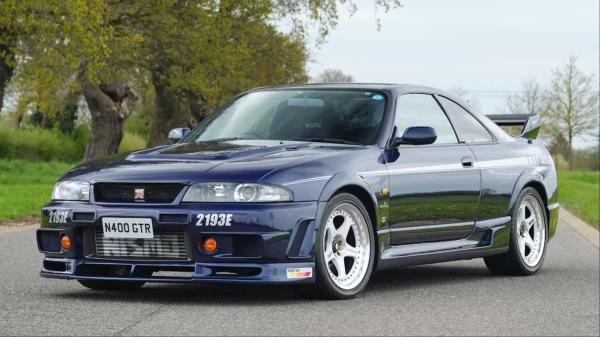
R33 Nissan Skyline GT-R Guide: Specs, History, And Buying Advice
This underrated Godzilla sits between the raw R32 and tech-heavy R34, quietly building its own identity as one of the most usable GT-Rs ever built.
The 25-Year Window Is Closing On JDM’s Best-Kept Secret

The reason the Laurel represents such a massive opportunity for enthusiasts right now is its positioning in the global import market under the United States 25-year import exemption rule, and, crucially, the peak C35 generation: that window opened in 2023 and will phase through its final generation by 2027.
Because the Laurel spent decades operating outside the mainstream radar, its current market valuation remains grounded in reality compared to the R34 Skyline and the Toyota Chaser Tourer V. The Laurel is more attainable. With a highly accessible price, the median price hovering around $22,000, the Laurel provides an affordable way to afford an unmodified, pure inline-six rear-wheel-drive platform from the golden era of Japanese engineering.
That being said, the door to this era of cars is closing rapidly as the demand for 1990s cars grows globally. For drivers who prioritize mechanical purity, historical engineering ties, and the feel of driving a wolf in sheep’s clothing over super flashy nameplates, the Nissan Laurel is more than just an alternative. It is the last open door to the era of classic JDM performance and driving experience before the market recognizes it and locks it away forever.
Source: JDMbuysell.com, Cars&Bids

Related posts





Latest Post


No Comments