
The New Tesla Roadster Is Finally Here, And It’s Cleared For Takeoff
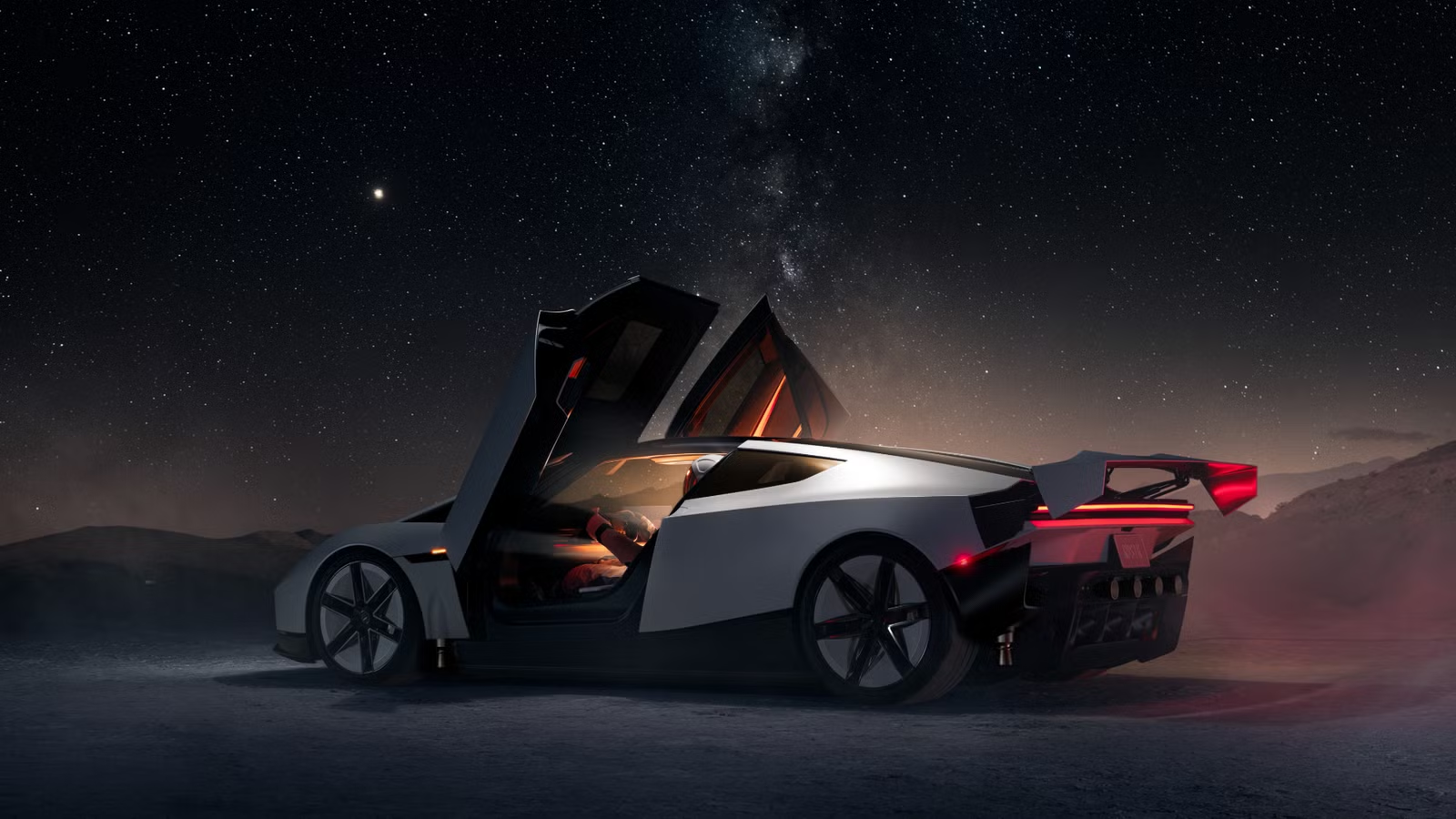
Tesla CEO Elon Musk discussed the second-generation Tesla Roadster over a decade ago, after the first generation went out of production. The Gen 2 Roadster was slated to appear as early as 2014, then pushed to 2019 and later to 2020. Only in October 2026 did the electric sports car prototype appear, and it’s nothing we expected.
The New Tesla Roadster Looks Flight-Ready

The earlier Gen 2 prototype Roadster looked similar to other Tesla cars, but the new Roadster is nothing like it. It’s sharp, angular, and redesigned to look more like the Cybertruck. Tesla’s head engineer, Franz von Holzhausen, said the Roadster was inspired by fighter aircraft and vintage supercars. That inspiration also appears in the Ano White paint, inspired by aerospace, and the gold-glazed windows that mimic the copper coating on spacesuit visors.
There are dual triangular headlights up front and a simple lightbar out back, complemented by rear diffusers with four exhaust-tip-like openings that are actually nozzles for part of the cold-gas thruster system. More on that later. The rear end also features a pop-out, adjustable wing as part of the active aero downforce package. Tesla says the car is designed using first principles engineering, with extensive use of lightweight materials, including magnesium, titanium, and carbon fiber.
The interior is on par with other Teslas. The bare dashboard features a single center screen flanked by two smaller auxiliary displays. A new version of Tesla’s yoke steering will be paired with steer-by-wire like on the Cybertruck, along with brake- and throttle-by-wire. The standard Roadster will be a two-seater, with both seats practically sitting on the floor and shaped like a bench seat.

The Tesla Roadster Might Actually Fly (Or At Least Jump)

At the reveal, Tesla didn’t mention the electric powertrain; there was no mention of the motors, horsepower and torque figures, battery size, or driving range. That remains a complete mystery, but the company did reveal something that may be less important than the powertrain yet far more impressive: the air thruster system.
Musk claimed the new Roadster would have rocket thrusters and could fly. During the reveal, a Roadster jumped over the entire Tesla lineup while doing a barrel roll, then landed. That’s not exactly flying, but it did launch into the air and land cleanly, which still counts as far as cars go.
They aren’t real rocket thrusters; instead, the system uses cold-gas or compressed-air thrusters fed by a pair of carbon-fiber air tanks that can store up to 600 liters of air. That air can be directed through 10 nozzles around the car to jump, accelerate, or turn. They can also be refilled, and we assume an on-board air compressor will do that.

The four thrusters on the rear diffusers also help the car achieve at least 0-to-60 mph in 1 second. Still, it remains to be seen how long the air thrusters can be used, but presumably they’ll come in handy for initial acceleration. The run to the claimed 230-mph top speed will probably be made on electric power.
The Roadster also features a multi-mode suction system, much like the McMurtry Spéirling. A large fan under the car draws air to generate downforce, as shown during the reveal, where a Roadster drove up a ramp and up an inverted point. A graphic during the livestream also claimed the system was generating over 4,000 pounds of downforce.
Not All Roadsters Will Fly, Though

There’s a catch with the air thruster system: not all Roadsters will get it. According to the company’s customer-facing website, the rear thruster system for acceleration is listed as “limited release,” and the one that makes the car jump and roll is listed as “invite only.” The full air-thruster setup will also eliminate passenger accommodations and will not be street legal.
Tesla also didn’t mention the price, but Musk said the car would enter production in 2028. Reservations are open on Tesla’s website.
2028 Tesla Roadster Gallery

Related posts

Latest Post


No Comments