
Audi Patent Adds Vibration, Fake Turbo Lag To EVs On Purpose
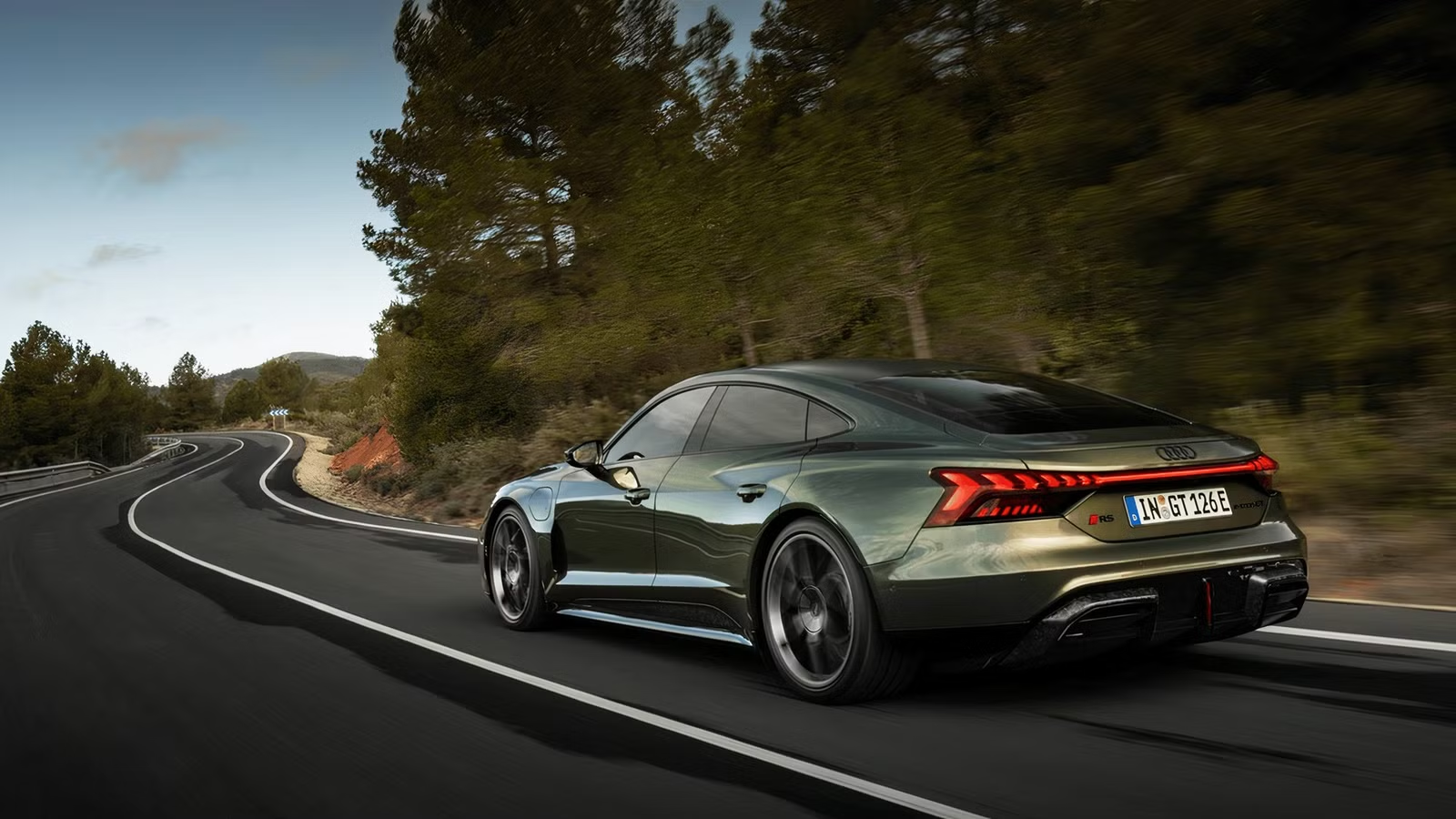
Audi just filed a patent with the German Patent and Trade Mark Office that does the opposite of what every EV engineer has been chasing for the last decade. Instead of isolating the cabin from motor noise and vibration, the filing describes deliberately piping mechanical feedback straight into the driver’s seat.

The patent, dated this week, lays out a system that pumps powertrain vibrations into the cabin, cuts back on sound deadening so you hear more of the motor’s whine, and even lets the electric motor decouple so it can spin and rev at a standstill. Audi is betting that some of us would rather feel an EV than float through it.
The Tech Behind Audi’s Anti-Smoothness Patent
The patent describes a physical connection running from the powertrain directly to the cabin, transmitting vibration straight to the driver and passengers rather than engineering it out. Pair that with reduced sound deadening, and occupants get more of the motor’s natural whine instead of silence. Audi also envisions a simulated neutral mode that lets the motor decouple and spin freely while the car sits still, essentially giving an EV something to rev like a gas engine idling at a stoplight.
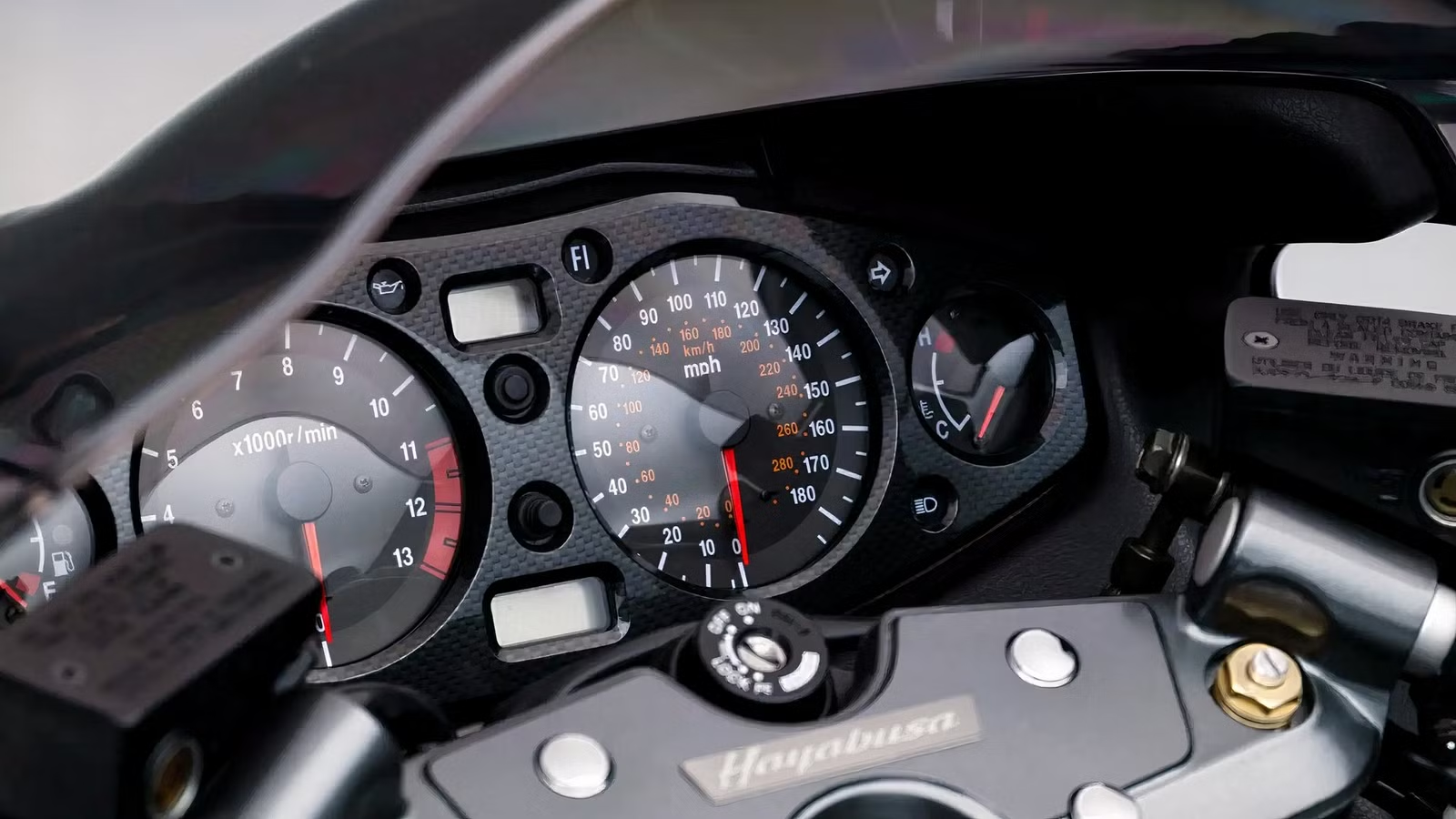
Then there’s the software side. Audi’s filing describes synthetic turbo lag, a deliberate software delay that holds back instant torque to mimic the old boost-building feel of a turbocharged engine. It’s a strange thing to patent on purpose, but it tracks with everything else here: Audi thinks the instant, flat-torque delivery that makes EVs so quick off the line is also part of what makes them forgettable.
Scents, Screens, And Other Ideas In The Filing

The patent doesn’t stop at noise and vibration. Audi has also sketched out a scent-delivery system tied to drive mode and throttle input, with a calming smell for cruising and something more evocative when you bury the pedal. There’s also a windshield projection system capable of displaying graphics during spirited driving. Whether that’s useful or just distracting at speed is a fair question, and one Audi hasn’t answered yet.
None of this is confirmed for production. It’s a patent filing, which means it’s a wish list of ideas Audi wants to protect, not a spec sheet for the next RS e-tron. But patents like this tend to signal where an automaker’s engineers are actually spending their time, and Audi clearly isn’t satisfied with building another silent, friction-free EV.
Audi Isn’t The First To Chase EV Engagement

Hyundai N got here first with a fake dual-clutch transmission and ICE-inspired synthetic audio in its N performance EVs, simulating gear shifts and engine notes that don’t technically exist under the hood. Porsche, Mercedes-AMG, and Ferrari have all followed with their own engagement-focused EVs, each trying to solve the same problem from a different angle. What Audi’s patent adds to that conversation is specificity: real mechanical vibration transmission, decoupled motors for faux-revving, and turbo lag written into the control software, rather than just a speaker playing a soundtrack.
It’s a tacit admission from the industry that effortless, silent power isn’t enough for drivers who grew up wanting a manual, a Hemi burble, or a Mopar rumble at idle. Audi’s patent is the most literal attempt yet to put that feeling back under warranty.
A patent is not a production promise, and Audi has a long history of filing ideas that never make it past the lawyers. But this one is worth watching, because it’s a direct bet that the EV-soul problem is solvable with engineering rather than nostalgia. If even one of these systems makes it into a future RS model, it’ll be proof that gearheads don’t have to choose between an electric motor and something that feels alive.

Related posts





Latest Post


No Comments