
Pontiac GTO: LS1 Or 400-HP LS2—Which One Should You Buy?
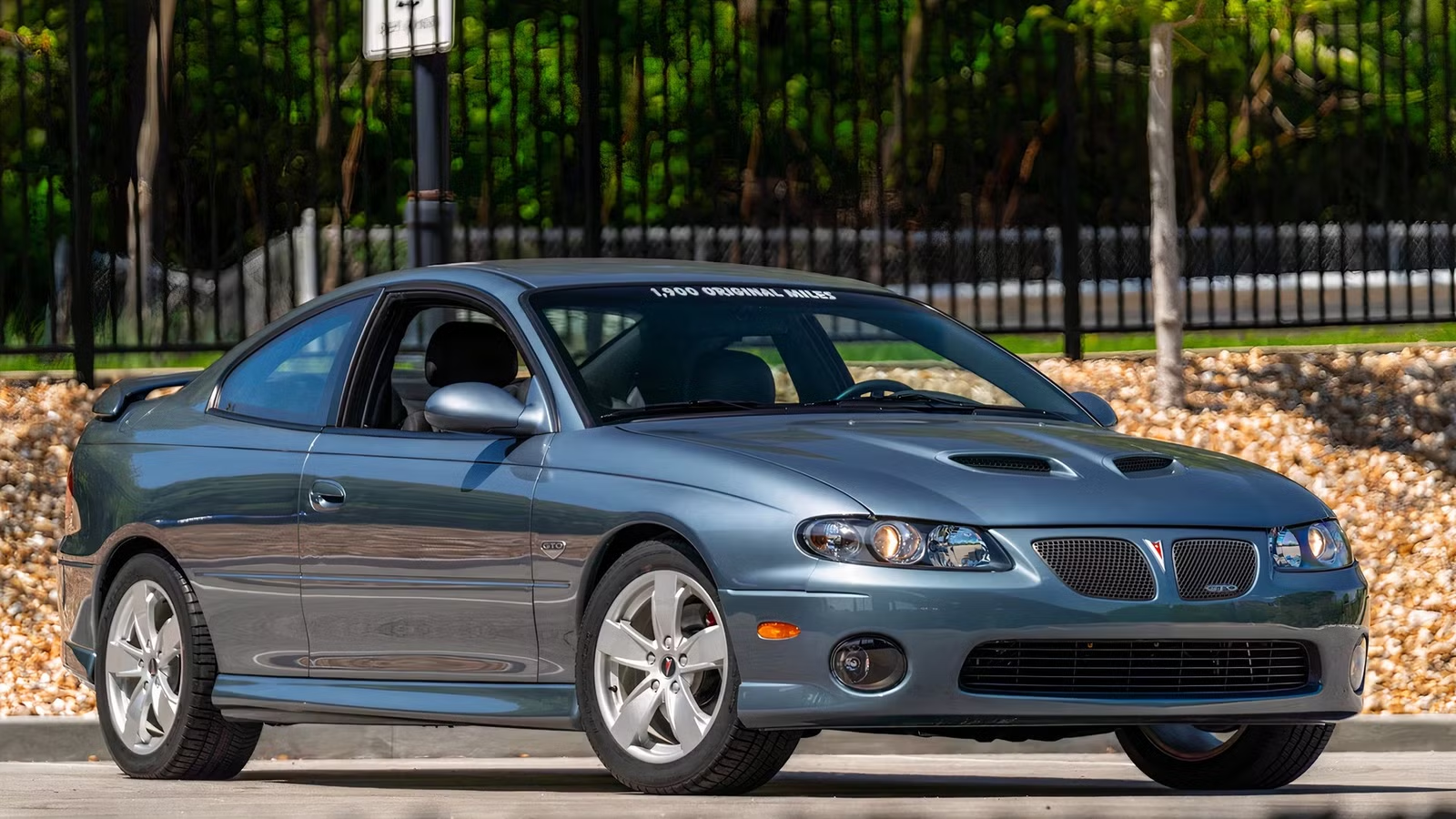
Buying a Pontiac GTO should be easy: find a clean one, choose your transmission, and enjoy the V8. Then two nearly identical cars show up, the newer one costs several thousand dollars more, and suddenly 50 horsepower has a cover charge. Bigger V8s are hard to argue with, but this decision requires more than displacement.
The final GTO has become a desirable modern classic. The question is whether the 2005–06 car’s extra 50 horsepower and factory upgrades earn their premium over a 2004 LS1. Completed GTO auctions give you real cars to compare—and the engine badge doesn’t always settle it.
Pontiac’s 2004 specifications list a 5.7-liter LS1 with 350 horsepower and 365 lb-ft of torque. For 2005 and 2006, the GTO got the 6.0-liter LS2 with 400 horsepower and 400 lb-ft. That’s 50 more horsepower, another 35 lb-ft, and roughly 14 percent more peak power. These are factory crankshaft ratings, so do not compare them directly with a seller’s rear-wheel dyno numbers.

The LS names will be familiar to Chevrolet Corvette fans, but the gearbox matters too. All three model years offered a four-speed automatic or six-speed manual. Pontiac’s 2006 brochure put both LS2 versions below five seconds to 60 mph. The manual adds involvement, provided you actually want to shift it every day.
What Changed For 2005—And What 2006 Added

The big non-engine upgrades arrived for 2005. Pontiac increased the front brake rotors from about 11.7 inches to 12.6 inches and added red GTO-branded calipers. Hood scoops, exhaust outlets on opposite sides, and optional 18-inch wheels also joined the package. Those changes carried into 2006, so they aren’t reasons by themselves to pay extra for the final year. Inspect the actual car, because two decades leave plenty of time for owners to swap parts.
The LS2 also brought electronic throttle control, while Pontiac’s later brochure describes high-strength driveshaft and constant-velocity joint hardware. That gave the stronger engine useful supporting hardware, but age and condition still matter. An LS2 badge doesn’t undo hard launches, worn suspension bushings, or neglected maintenance.
For 2006, Pontiac retained the same 400-hp LS2 and made minor refinements. These included dark-background taillamps, quicker power-seat movement, and a center-console power door-lock switch. None added horsepower. Test all equipment rather than assuming the final-year car is automatically the better one.
The color palette changed too. Brazen Orange Metallic and Spice Red Metallic arrived for 2006, while Yellow Jacket and Midnight Blue Metallic disappeared. If you want orange, you need a 2006; if you want a yellow LS2, you need a 2005. Color can justify shopping longer, but it shouldn’t make you overlook mismatched panels or questionable repairs.
How Much More Should You Pay For An LS2 GTO?

Comparable LS2 cars usually cost more, but roughly $15,000–$25,000 is still a useful shopping range for driver-quality cars, with nicer examples advertised above that. Start with mileage, condition, and transmission. Current market listings include a 2006 automatic at $19,995 and a 2006 manual at $29,500, but those are asking prices, not proof that a manual transmission automatically commands nearly ten thousand dollars more.
Completed sales of cars that are actually driven, before buyer fees, make better comparisons than delivery-mileage auction headlines. A 23,000-mile 2004 automatic sold for $14,750 in June 2026, while a 36,000-mile 2004 manual brought $20,750 in September. A 46,000-mile 2006 manual sold for $17,501 in February. These aren’t matched cars, which is exactly the point: an LS2 badge doesn’t magically put every later GTO above every LS1.
What Those Prices Actually Buy You

The cheaper car can stop looking cheap once you inspect what comes with it. The 23,000-mile automatic had separating front-seat stitching and lifting door trim, while the 36,000-mile manual had cracked tires requiring replacement and split rear-seat seams. Mileage is useful, but it does not include an upholsterer.
A modified 2005 manual sold for $15,251 with 78,200 miles. It had an aftermarket camshaft and older tires, while its claimed clutch replacement wasn’t backed by documentation. The 46,000-mile LS2 manual came with reports of clutch replacement and front-brake service at 40,000 miles. Ask for invoices before treating previous work as money already saved.
That modified 2005 also shows why you shouldn’t use one interesting sale to set the value of a stock LS2. Keep modified cars separate from original ones, and keep unusually low-mileage collector examples out of the same category as cars you actually plan to drive. Classic-car price trends can help with the bigger picture, but somebody else’s garage ornament shouldn’t set your weekend-driver budget.
Compare cars with the transmission you actually want, then add the repairs waiting behind the purchase price. A $19,000 LS1 and a $22,000 LS2 start $3,000 apart. If the LS2 immediately requires $2,000 in tires, alignment, clutch or transmission work, or hard-to-find trim, that gap is effectively $5,000 before taxes and fees. That’s repair math, not a rule for what an LS2 should be worth.
When The LS2 Is Worth It—And When The LS1 Wins

Once the cars are genuinely comparable, roughly $3,000–$5,000 more for the LS2 deserves consideration for the extra factory performance and later hardware. That’s a recommendation, not a measured market average. The LS2 also suits buyers who specifically want the 400-hp factory GTO for its collector appeal. A stock, documented manual is especially tempting, but nobody can promise future appreciation.

Buy the LS1 when it’s simply the better car, leaves more money for repairs, or gives you the transmission you want. A clean, serviced 2004 six-speed can make more sense than a tired LS2 automatic if three pedals matter to you. Service records and original trim matter as well. Fifty extra horsepower loses some charm when it comes with accident repairs, unresolved faults, or a mismatched cabin.
Choose Your Gearbox, Then Check The Mods

Manual buyers should budget for the clutch and hydraulics rather than treating the six-speed as a free upgrade. Tick Performance sells a complete GTO clutch-hydraulic upgrade package because there’s more to servicing the system than replacing the friction disc. Ask what was replaced, who performed the work, and whether invoices support it. A healthy automatic may also suit heavy traffic better while leaving more money for repairs.
Modified cars need another layer of checking. Ask for the parts list, installation invoices, tuning information, and any original equipment that came off the car. Have a shop confirm the emissions equipment and local registration requirements. A modest, documented exhaust change is easier to judge than an undocumented cam-and-blower setup, and extra power may need supporting fuel, cooling, and drivetrain work. Do not pay finished-car money for someone else’s unfinished project.
The Ownership Costs That Can Undo A Cheap Deal

A healthy LS engine is a good start, but 2004–06 GTOs now have more than two decades of wear to account for. Look underneath for leaks, cooling-system problems, worn mounts, suspension movement, and neglected fluids instead of stopping at what you can see through the wheel spokes. On a normal test drive, listen for driveline vibration, differential noise, and clunks as the load changes. Wheel hop under hard acceleration is another concern, but you do not need the seller launching the car to confirm it.
Tires can hide another expensive problem. NHTSA’s 2004–06 GTO tire-wear investigation found out-of-spec negative camber was the main contributor, with strut contact present in some cases. The investigation closed without finding a safety-related defect trend. In other words, it wasn’t a recall saying every GTO rubs its tires. Check both inner shoulders, wheel-and-tire clearance, and alignment records regardless of model year or the presence of aftermarket wheels.
Where A Cheap GTO Starts Getting Expensive

Don’t stop inspecting when you leave the engine bay. Check the rear-seat seams, front bolsters, headliner, door-panel edges, armrests, console pieces, and every switch. These aren’t failures every GTO will develop, but auction cars have shown separating seat stitching and lifting trim even at low mileage. GMPartsGiant currently lists a genuine 2004 door-trim panel and 2004 armrest insert as discontinued. A damaged panel can mean sourcing used stock, repairing what is there, or paying an upholsterer to reproduce it. Get parts and labor quotes before making an offer, confirm the correct side, model-year fit, and interior color, and check lamps, bumper attachments, and exterior moldings too. A mechanical repair can have a clear parts list and a completion date, while one missing interior piece keeps a supposedly resolved GTO unfinished.
The transmission deserves the same scrutiny. On a manual, check consistent clutch engagement and pedal return, smooth gear selection cold and warm, and any grinding or slipping during sensible driving. On an automatic, check engagement into Drive and Reverse, shift quality once warm, and service documentation. Delayed engagement or engine speed rising without matching acceleration needs diagnosis. Factory power ratings don’t tell you what a worn gearbox will cost, and a fresh clutch claim should include its hydraulic-system details.
Then ensure the car’s history matches the metal. Have an independent shop compare the VIN, title, mileage records, and service invoices, then inspect paint thickness, panel alignment, repair seams, and the underside for collision damage or corrosion. A clean history report helps, but it can’t certify every unreported repair. Have the shop scan for faults and investigate warning lights, unexplained wiring changes, or recently cleared readiness monitors. Test the air conditioning, windows, locks, seat mechanisms, audio controls, and both keys, then obtain quotes for every immediate repair and locate any missing GTO-specific parts before agreeing on a final price. Keep some money in reserve after the purchase, because storage-aged tires and fluids still need attention on low-mileage cars. The LS2 earns its premium when the rest of the GTO backs it up. If it doesn’t, take the cleaner LS1. Fifty extra horsepower won’t stitch the rear seat back together.
Sources: Bring a Trailer, Auto-Brochures, NorCal GTO Club, Classic.com, Cars & Bids, Tick Performance, BMR Suspension, NHTSA, GMPartsGiant.

Related posts



Latest Post


No Comments