
The BMW X5 Years Worth Buying And The Ones To Avoid
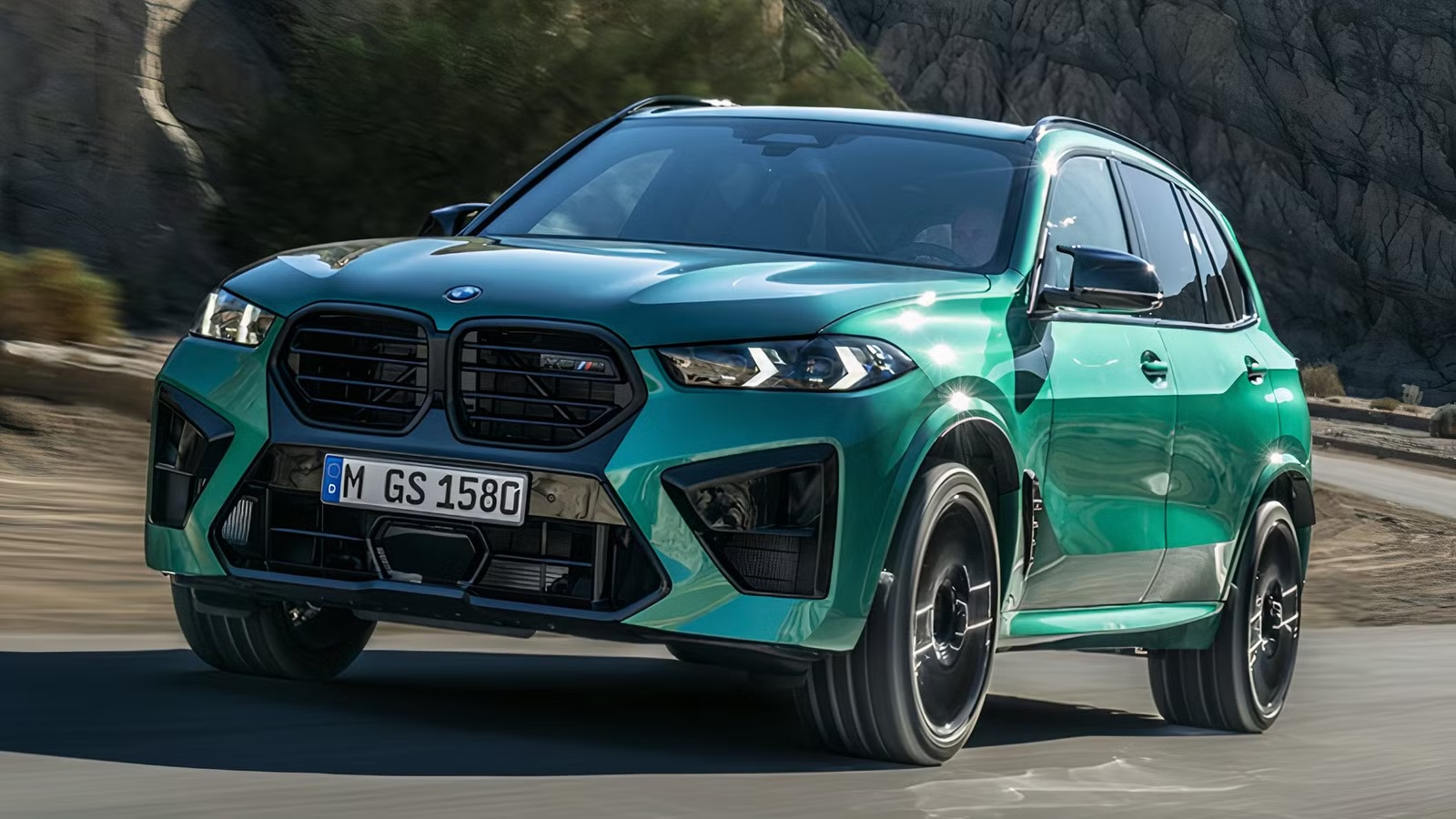
A used BMW X5 can deliver excellent performance, genuine luxury, and family-friendly practicality for less than the price of a new economy crossover. That sounds like a bargain until a neglected cooling system, air suspension, or turbocharged V8 generates a repair estimate worth half the vehicle’s purchase price. The X5’s problem is not that every generation is unreliable. It is that the safest engines and the riskiest ones often share the same body, interior, and tempting used price. If you want the driving experience without inheriting someone else’s repair bills, the model year, engine, and maintenance history all matter.
How The BMW X5 Model Years Were Evaluated
Performance Alone Does Not Make An X5 Worth Buying

Every X5 generation includes powerful and desirable configurations, but the quickest model is rarely the smartest long-term purchase. This evaluation considers engine durability, cooling system design, transmission performance, transfer case problems, suspension complexity, electronics, recalls, and potential repair costs.
Naturally aspirated and turbocharged inline-six engines generally provide the strongest ownership case. BMW’s V8 models can be thrilling, but their tightly packaged engine bays, additional heat, turbochargers, and complicated supporting systems make major repairs more likely to become financially painful.
An “Avoid” Year Is A Warning, Not A Guarantee

A carefully maintained X5 from a higher-risk year may be better than a neglected example from a recommended year. Service records, current condition, mileage, and previous repairs must remain part of the decision.

However, certain combinations consistently expose you to more risk. Those include older BMW V8s, first-year redesigns, aging plug-in hybrids, neglected diesels, and vehicles equipped with air suspension or active chassis systems that no longer function correctly.
The 2000-2006 E53 X5 Is Old But Relatively Simple
Buy: 2004–2006 X5 3.0i

The strongest first-generation choice is a late-production X5 3.0i powered by BMW’s naturally aspirated M54 inline-six. It produces 225 horsepower and 214 lb-ft of torque, which is modest by modern standards but adequate for the E53’s purpose.
The M54 can accumulate substantial mileage, but its cooling system should be treated as a collection of scheduled wear items. The expansion tank, water pump, thermostat, radiator, and plastic hose fittings can fail with age. Oil leaks from the valve cover and oil filter housing gaskets are also common.
A documented cooling-system overhaul matters more than unusually low mileage. You should also inspect the transfer case, driveshaft components, front suspension, window regulators, door handles, and aging electronics.
Avoid: 2004–2006 V8 Models

The 4.4i and 4.8is deliver the character and performance missing from the six-cylinder model, but the N62 V8 can turn an inexpensive X5 into a costly project. Valve-stem-seal wear may cause oil consumption and exhaust smoke, while leaks from the coolant-transfer pipe, alternator bracket gasket, valve cover, and timing cover can require extensive labor.
Earlier M62-powered V8s also faced timing chain guide and VANOS concerns. Add optional self-leveling suspension, aging electronics, and two decades of previous ownership, and no E53 V8 qualifies as a low-risk recommendation. Buy one because you specifically want the V8 experience, not because it appears inexpensive.
The 2007–2013 E70 Requires Careful Engine Selection
Buy: 2009–2010 xDrive30i

The 2009–2010 xDrive30i is the safest gasoline-powered E70 model to start with. Its naturally aspirated 3.0-liter N52 inline-six produces 260 horsepower and 225 lb-ft of torque while avoiding turbochargers and high-pressure direct-injection equipment.
That simplicity does not make it maintenance-free. Electric water pumps can fail, and oil leaks can develop around the valve cover, oil-filter housing, and oil pan. Suspension bushings, panoramic-roof drains, electronic parking brakes, and transfer cases also deserve inspection.
The six-speed automatic should shift smoothly when cold and warm. Despite BMW’s old lifetime-fluid language, documented transmission and transfer-case fluid service is a valuable sign of attentive ownership.
Avoid: 2007–2010 V8s And 2011–2013 xDrive50i Models

The N62-powered 4.8i and xDrive48i carry many of the same oil-leak, coolant-leak, and valve-stem-seal concerns found in the first-generation V8.
BMW replaced that engine with the twin-turbocharged N63 in the 2011 xDrive50i, but the added performance brought additional risk. Early N63 engines became associated with oil consumption, timing chain wear, injector trouble, turbocharger-related failures, valve stem seals, and excessive heat.
BMW introduced a Customer Care Package addressing several N63 components, but the completed campaign work does not make every early engine trouble-free. The 2011–2013 xDrive35i is more defensible, although its turbocharged N55 still raises concerns about the water pump, charge pipe, gaskets, and fuel system.
The 2014–2018 F15 Offers The Used-Market Sweet Spot
Buy: 2016–2018 xDrive35i

If you want modern comfort without paying G05 prices, the 2016–2018 xDrive35i provides one of the best balances in the X5 lineup. Its turbocharged 3.0-liter N55 inline-six produces 300 horsepower and 300 lb-ft of torque, while its ZF eight-speed automatic is generally a strong transmission when properly serviced.
Expected N55 trouble spots include the electric water pump, thermostat, plastic charge pipe, valve cover gasket, oil filter housing gasket, and oil pan gasket. None should be ignored, but these problems are generally easier to justify than internal V8 repairs.
Test for transfer-case shudder during tight, low-speed turns. All four tires should match in size, model, and tread depth, as differences in rolling circumference can place additional stress on the AWD system.
Avoid: xDrive50i And Neglected xDrive40e Models

The F15’s updated N63TU V8 improved upon the original N63, but improved does not mean inexpensive. Cooling lines, injectors, turbochargers, oil leaks, valve seals, and heat-damaged components can still generate substantial repair bills.
The xDrive40e plug-in hybrid presents a different concern. It combines a turbocharged four-cylinder engine with a high-voltage battery, electric motor, charging equipment, hybrid controls, and additional cooling circuits. A well-maintained example with warranty coverage may work, but it is difficult to recommend when minimizing long-term repair exposure is the priority.
The xDrive35d’s diesel engine can be durable, but short-trip use and neglected emissions equipment can lead to expensive repairs to the DPF, EGR, SCR, and DEF systems.
The 2019–Present G05 Is Best With B58 Power
Buy: 2021–2023 xDrive40i

The 2021–2023 xDrive40i is the strongest overall used X5 recommendation. Its turbocharged B58 inline-six delivers the performance expected of a BMW while building a stronger reputation for durability than the brand’s V8 alternatives. It is paired with the proven ZF eight-speed automatic.
These models are not immune to trouble. Transfer-case shudder, cooling-system leaks, air-suspension failures, driver-assistance faults, infotainment bugs, active grille-shutter problems, and 48-volt electrical issues can still appear.
For lower long-term exposure, look for an xDrive40i with conventional suspension and a sensible options list. Additional chassis technology improves the driving experience, but every air spring, compressor, sensor, and active component eventually becomes another possible repair.
Approach 2019 Models, V8s, And Plug-In Hybrids Carefully

The 2019 X5 launched the G05 generation, making it more vulnerable to first-year software, electronics, and production problems. A well-documented 2019 xDrive40i is not an automatic rejection, but a later example offers a stronger starting point.
The xDrive50i and M50i use increasingly refined versions of BMW’s twin-turbo V8, yet refinement does not eliminate the cost of repairing a heat-intensive engine packed tightly inside a luxury SUV.
The xDrive45e and xDrive50e offer strong performance and useful electric driving, but their high-voltage batteries, charging systems, and additional cooling hardware increase long-term uncertainty. Models from 2024 onward are also too new to judge confidently. Recent brake-system and other safety campaigns make a VIN-specific recall check essential.
The Right X5 Is Usually The One With An Inline-Six
These Four Versions Deserve To Make Your Shortlist

The 2004–2006 E53 3.0i is the strongest old-school choice, while the 2009–2010 E70 xDrive30i offers the simplest second-generation gasoline powertrain. The 2016–2018 F15 xDrive35i provides the best value-oriented combination of modern equipment and manageable risk. If your budget allows it, the 2021–2023 G05 xDrive40i is the strongest overall purchase.
None should be mistaken for a Toyota-level ownership proposition. These are still complicated European luxury SUVs, and their repair costs reflect that.
Never Buy A Used X5 Without A Specialist Inspection

A pre-purchase inspection should include a cold start, a cooling-system pressure test, a full diagnostic scan, an underbody inspection, and checks for oil or coolant leaks. The technician should test the transmission, transfer case, suspension, air suspension if equipped, panoramic roof, cameras, driver-assistance equipment, and every electronic feature.
You should also confirm that the tires match and check the VIN for incomplete recalls. Most importantly, do not spend your entire budget on the purchase price. The best used BMW X5 is not necessarily the newest or fastest one you can afford. It is the one with the right engine, complete maintenance records, and enough money left in reserve to keep it working properly.
Sources: BMW, NHTSA, RepairPal, MotorWeek, Fueleconomy.gov, Car and Driver, Edmunds

Related posts




Latest Post



No Comments