
The Motorcycle That Looks Expensive But Is Surprisingly Affordable Used
Some motorcycles are built to look expensive, and they usually are. Forged wheels, monobloc brake calipers, single-sided swingarms, paint that costs more per gallon than most people spend on gas in a month — such components carry flagship prices. So that combination puts plenty of genuinely special machines out of reach for the average rider on day one.

New-bike pricing only tells half the story, though. In the American used market, that same premium hardware turns up years later for a fraction of the original sticker, once somebody else has already absorbed the worst of the depreciation, quietly making a former flagship look like a realistic buy.
The Power Cruiser Club Doesn’t Come Cheap Today
Nowhere does that gap show up more dramatically than in the power cruiser segment, a category invented almost entirely to marry superbike hardware with cruiser proportions. Ducati still sells it at a price that reflects exactly that: the current Diavel V4 and XDiavel V4 both start north of $28,000 before a single option gets added. That’s not an outlier, either. It’s the going rate for a bike wearing this much brand prestige and this many premium components straight from the factory floor. It’s the same story for bikes like the Triumph Rocket 3 GT or Harley-Davidson Breakout.
But The Used Market Can Hide Gems


Spending that kind of money on a largely depreciating asset is hard to justify for most of us. After all, we’re talking about our hard-earned money that could be very well used in more practical purchases. So does that mean you give up on your power cruiser dream? Well, no. As mentioned earlier, you let depreciation do its thing and pick up a used bike where that’s half the original money. A certain feet-forward Ducati is a prime candidate today.
The Ducati XDiavel S Is A Steal In The Used Motorcycle Market

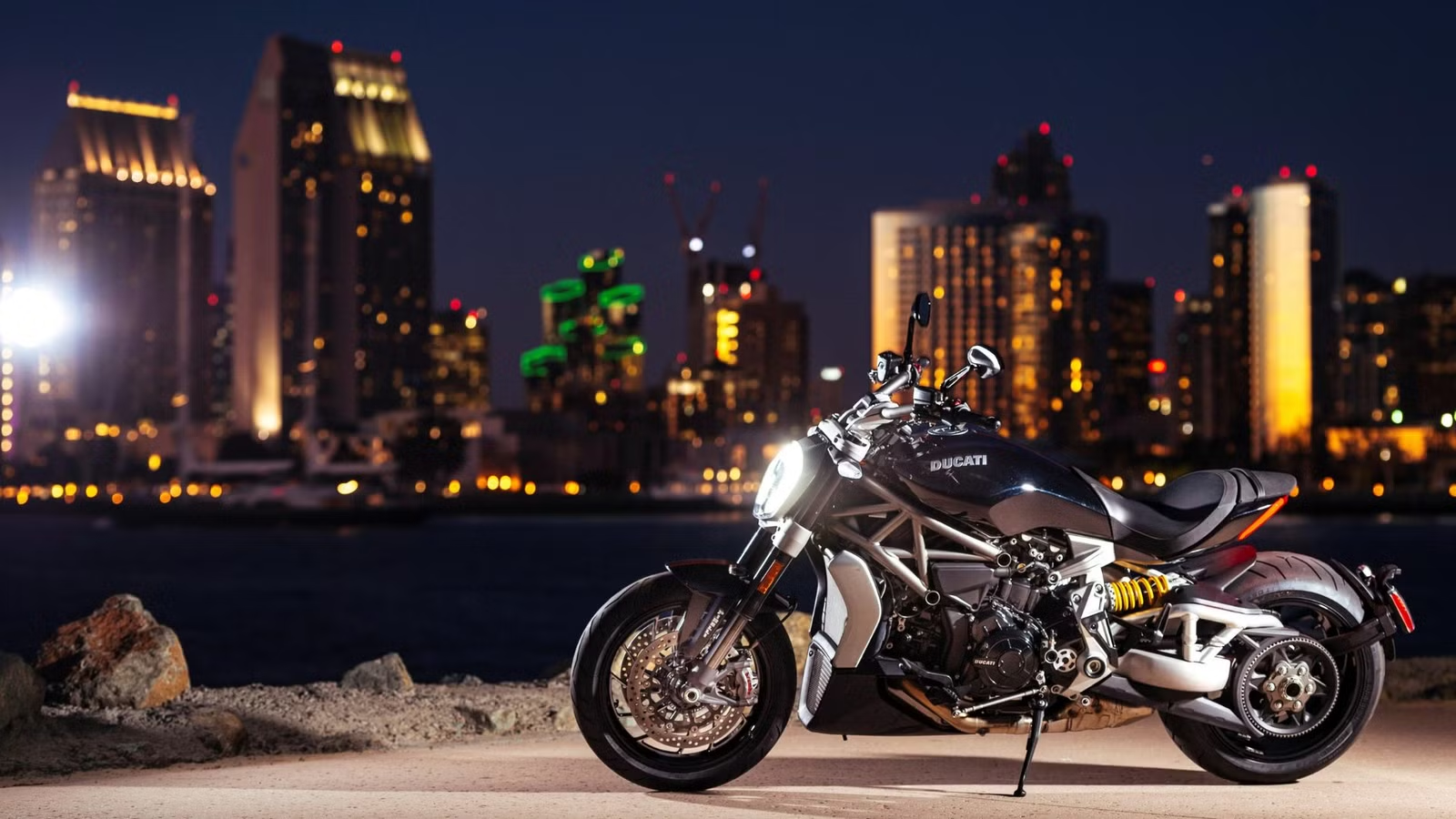
We’re talking about one of the most striking cruiser bikes ever to wear the Ducati label. The Ducati XDiavel S arrived for the 2016 model year as Ducati’s answer to a question nobody had really asked — what happens when you drop a superbike engine into a proper, feet-forward cruiser riding position? Ducati had already dabbled in roadster-type cruiser territory with the standard Diavel. Then, the XDiavel pushed things further into the cruiser side, with a low seat, forward-mounted footpegs, and a stretched-out stance that looked more at home beside a Harley than a Panigale.
It stuck around for the better part of a decade, through steady updates and a handful of special editions, before Ducati quietly pulled the V-twin version from the U.S. lineup after 2023, clearing the runway for an all-new, V4-powered XDiavel in 2025. That means every XDiavel S left on American roads today is a leftover from that first, arguably more characterful generation — and the only way to get one now is secondhand.
From $23,495 New To Under $12,000 Today

Here’s where the price beat actually lands. A 2017 XDiavel S carried an MSRP of $23,495, and by the time the model wrapped up in 2023, that figure had climbed to $27,395 — genuinely flagship money, on par with a well-equipped small car. Fast forward to today’s used listings and the picture looks completely different. Clean 2017 and 2018 examples are turning up in the $10,500 to $12,000 range, while newer 2021 through 2023 models, some with only a few thousand miles on the clock, are trading for $16,000 to $20,000. That’s a motorcycle that once wore a $25,000-plus window sticker, now realistically within reach of a rider who never even considered a Ducati before.
Exquisite Italian Craftsmanship That Screams Superbike Prestige

The XDiavel S looks expensive before you notice a single badge. Its basic proportions do most of the work. Ducati gave it a long wheelbase, a tiny visual rear section, an enormous rear tire, and a low seat. The seat height is just 29.7 inches, which sounds familiar in cruiser territory, but the rest of the chassis is anything but conventional. The riding position is feet-forward, yet the steering geometry, suspension, and available lean angle are far more sporting than the average cruiser. Then there is that 240/45 ZR17 rear tire, which is still absurd by motorcycle standards, and the XDiavel uses it as part of the bike’s identity rather than hiding it.
The “S” Model Touches That Elevate Its Look

The S trim isn’t just a badge — it’s where the visual upgrades live. Machined alloy wheels replace the standard cast alloys, the engine wears a gloss black finish set off by exposed billet aluminum covers, and the whole package carries a level of finishing that still looks current years later. A front daytime running light, a distinctive LED headlight design, and a full-color TFT dash round out a cockpit that wouldn’t feel out of place on a bike twice the price.
Single-Sided Swingarm And Clean Rear End Architecture

Ducati’s single-sided swingarm does more than hold the rear wheel in place — it puts the wheel itself, and the belt running to it, fully on display. Paired with integrated taillight and turn-signal housings and a stubby, almost floating tail section, the rear end looks less like a mass-production part and more like something rolled straight off a concept-bike stand.

At the heart of it is the Testastretta DVT 1262, a liquid-cooled L-twin using Desmodromic Variable Timing to adjust intake and exhaust valve timing on the fly. In its original tune, that’s good for 152 horsepower and 95 lb-ft of torque. The variable timing does real work, too: it keeps the engine tractable and smooth at low RPM for effortless stoplight-to-stoplight cruising, then opens up higher in the rev range for the kind of top-end pull Ducati twins are known for.
Belt Drive Simplicity

The XDiavel S also holds a small but genuine footnote in Ducati’s history: it was the brand’s first modern production motorcycle to use a belt final drive. That’s a detail borrowed straight from the cruiser world, and it does what it’s supposed to do — no chain to lube, adjust, or replace, just quiet, low-maintenance power delivery that suits long highway stretches far better than a sport bike chain ever would.
Race-Grade Electronics And Hardware

The electronics package reads like it was lifted from a superbike, because much of it was. A Bosch six-axis IMU manages cornering ABS and Ducati Traction Control, while Ducati Power Launch handles launch-control duties for anyone brave enough to use it off the line. Stopping power comes from Brembo Monobloc M50 radial calipers biting down on a pair of massive 320mm front discs — hardware that wouldn’t feel out of place on a Panigale, let alone a cruiser. It’s the kind of braking setup most cruiser riders never get to experience firsthand, and on the XDiavel S, it came standard.
Why The Used Market Is Sitting On A Deal

None of this explains why the XDiavel S specifically has become such a bargain, though. Plenty of Ducatis depreciate. This one depreciated into a different category entirely. The real factor here isn’t age — it’s the fact that Ducati stopped building it. Once a model gets discontinued, there’s no new-model pricing left to prop up used values, and no dealer incentive pulling shoppers toward a fresh unit instead of a two- or three-year-old one. Every XDiavel S left in the country is now competing purely against other used XDiavel S bikes, not against a showroom full of brand-new ones, and that alone has pushed prices down faster than ordinary depreciation would.
Out-Styling Rivals At A Fraction Of The Cost

Stack that against the competition, and the value gets even clearer. A used Harley-Davidson Breakout typically trades somewhere in the $10,000 to $18,000 range, and a used Triumph Rocket 3 often costs more, commonly landing in the low-to-mid $20,000s even secondhand. Neither one comes close to matching the XDiavel S on electronics, brakes, or outright performance. For similar or even less money, a used XDiavel S buyer walks away with more technology, more horsepower, and a design pedigree that still turns heads — the rare case where the used-market math actually works in the buyer’s favor.
Source: Ducati

Related posts



Latest Post


No Comments