
Porsche’s GT3 Bergsport Revives A Racing Tradition That Predates The Nurburgring
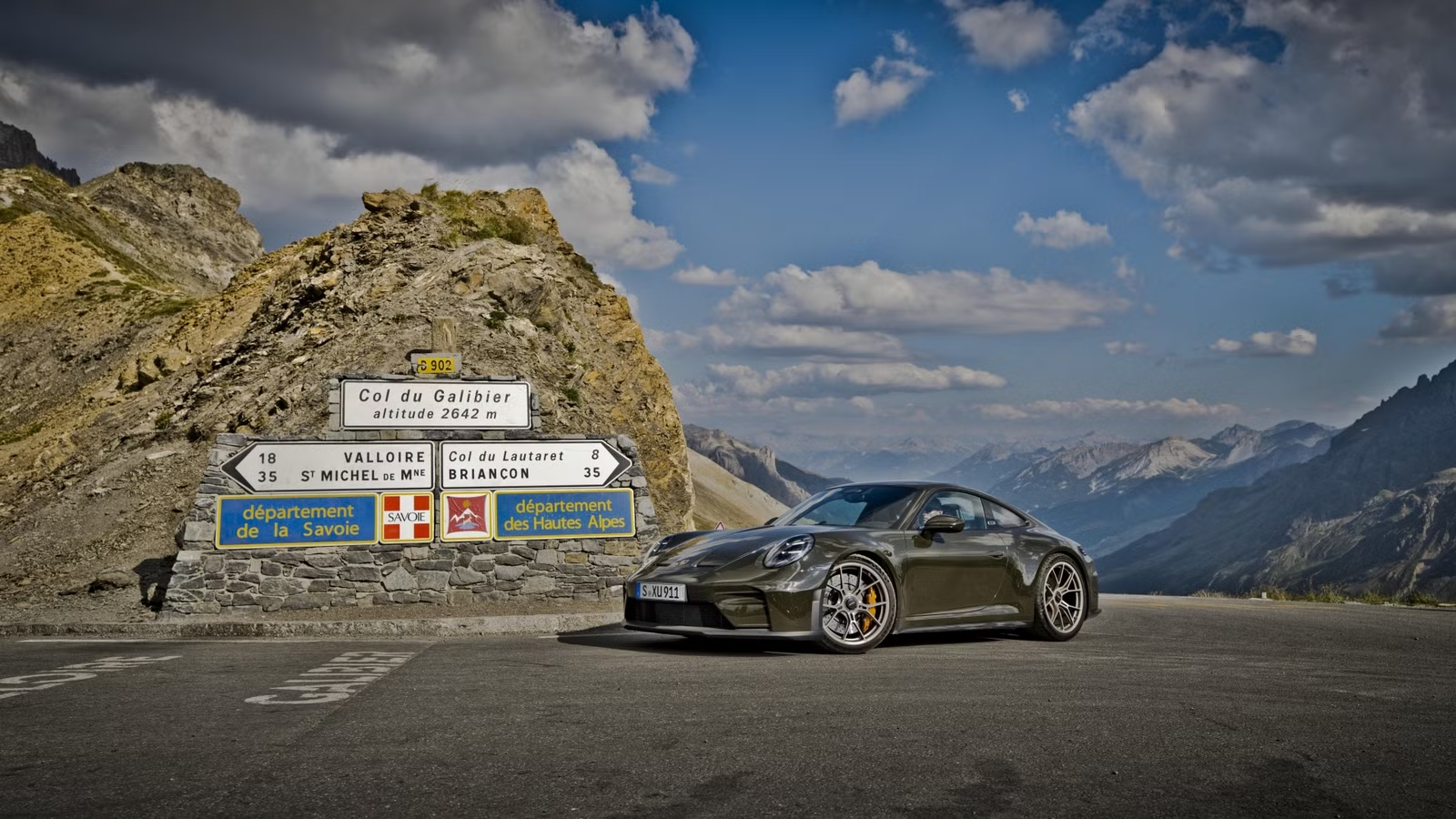
Before Porsche ever turned a lap at the Nürburgring, it was climbing mountains. The brand’s earliest motorsport identity was forged on narrow Alpine roads, where purpose-built hillclimb machines called Bergspyders attacked elevation changes that no circuit could replicate. On September 3, 2026, Porsche returned to that origin point with the debut of the 911 GT3 Bergsport at the Arosa ClassicCar event — the same 4.5-mile course, rising roughly 1,385 feet, where those original racers once competed.

Only 100 examples will be built, and not one is headed to the United States. Sales are locked to Austria, France, Italy, and Switzerland — the four countries whose Porsche regional teams jointly developed the car. That geographic restriction is not an accident. It is the entire point.
What the Bergsport Actually Is

The GT3 Bergsport is built on the 911 GT3 with Touring Package, fitted with the Lightweight Package, a six-speed manual gearbox, and forged aluminum wheels. The naturally aspirated 4.0-liter flat-six carries over from the standard GT3, producing 502 horsepower and 346 pound-feet of torque sent to the rear wheels. Porsche also specifies a front-axle lift system — practical for the steep switchbacks and tight driveways that define Alpine driving — and a 23.8-gallon fuel tank sized for long touring days rather than track stints.
The mechanical choices are deliberate. A high-revving naturally aspirated engine and a manual gearbox suit the rhythm of hillclimb driving: short bursts of acceleration, precise throttle modulation on camber changes, full driver engagement at every corner. This is not a car chasing a lap record. It is a car built to reward the driver who knows what to do with a mountain pass.
Heritage Design Rooted in the Bergspyder Lineage
The name Bergsport connects directly to Porsche’s Bergspyder racers — lightweight, purpose-built machines from the 1960s that were engineered specifically for European hillclimb competition rather than circuit racing. Those cars defined an era of Porsche motorsport that predates the brand’s famous Nürburgring association, and the Bergsport is Porsche’s road-legal acknowledgment that this chapter of its history deserves recognition.
The visual identity reinforces that connection. Porsche developed a bespoke color called Valleygreenmetallic through its Paint to Sample Plus program, exclusive to this run of 100 cars. Inside, buyers receive Valleygreen leather with decorative stitching patterned after mountain peaks — a detail found nowhere else in the current 911 lineup. The combination of a unique exterior color and bespoke interior treatment gives the Bergsport a coherent identity that goes beyond a badge and a sticker package.
Why Porsche Locked This Car to Four Countries
The geographic restriction reflects how the Bergsport was made. Porsche’s Austrian, French, Italian, and Swiss teams developed the edition jointly, which is why the allocation stays within those borders. It is a reward for markets that share a direct cultural and geographic connection to Alpine motorsport — regions where the hillclimb tradition is not nostalgia but living memory.
Arosa, the Swiss mountain resort hosting the world premiere, has its own place in Porsche’s history. The Arosa ClassicCar event runs on the same course where Bergspyder racers competed decades ago, making it the natural venue for a car built to honor that legacy. Deliveries are scheduled to begin in winter 2027/2028, and with only 100 units split across four markets, most of those cars are likely already spoken for by buyers with existing relationships at regional Porsche offices.
For American enthusiasts, the Bergsport joins a short list of GT3 specials that Europe gets to keep. Whether gray-market imports eventually surface is an open question, but Porsche’s track record with ultra-limited regional editions suggests the majority will stay close to where they were built — and where they were always meant to be driven.
The Bergsport is not trying to out-perform the GT3 RS or compete with the Manthey package cars. It is doing something more specific: reminding the people who live near these roads that Porsche’s motorsport story started here, on grades and hairpins that no circuit can replicate. That is a narrow brief, but Porsche has executed it with enough specificity — the paint, the stitching, the manual gearbox, the Arosa debut — to make the point land.

Related posts



Latest Post


No Comments