
Mopar’s Cheap And Underrated ’70s Muscle Car That Punched Way Above Its Weight
The muscle car wars of the early 1970s were fought mostly with cubic inches. Big-block Chevelles, GTO Judges, and 440-powered Mopars dominated the conversation, and for good reason — they were fast, loud, and impossible to ignore. Yet one small-block underdog quietly kept pace with all of them, doing it at a lower price and with less weight on its nose. The 1970 Plymouth Duster 340 didn’t need a massive engine to make its point. It turned quarter-mile times within tenths of far more expensive heavyweights, all while tipping the scales several hundred pounds lighter.

While most buyers chased the flashier, higher-displacement options, the Duster 340 delivered comparable straight-line thrills with better balance and a noticeably lower sticker price — undercutting the typical muscle car MSRP by several hundred dollars. For drivers who cared more about results than reputation, it proved that smart engineering could outpace sheer size. Today, this muscle car remains a favorite among enthusiasts who know exactly what it is capable of.
The 1970 Plymouth Duster 340 Kept Up With Big-Block Muscle Cars
1970 Plymouth Duster 340 – Performance Comparison
|
Model |
 57 autotech 0-60 mph |
1/4 Mile |
Curb Weight |
MSRP |
|
Plymouth Duster 340 |
~6.3 sec |
~14.7 sec @ 94 mph |
~3,110 lbs |
~$2,700 |
|
Chevrolet Chevelle SS 396 |
~6.0 sec |
~14.4 sec @ 96 mph |
~3,500 lbs |
~$3,300 |
|
Pontiac GTO Judge (Ram Air III) |
~6.1 sec |
~14.5 sec @ 97 mph |
~3,600 lbs |
~$3,500 |
|
Ford Mustang Mach 1 351 |
~6.5 sec |
~15.0 sec @ 93 mph |
~3,250 lbs |
~$3,100 |
|
Dodge Challenger R/T 383 |
~6.3 sec |
~14.8 sec @ 94 mph |
~3,700 lbs |
~$3,400 |
(Source: Automobile Catalog)
The 1970 Plymouth Duster 340 is an underrated MOPAR muscle car that delivered straight-line performance rivaling some of the most respected big-block machines of the era. With a 0–60 mph time of around 6.3 seconds and a quarter-mile run of 14.7 seconds at 94 mph, it stood nearly shoulder-to-shoulder with icons like the Chevrolet Chevelle SS 396 and the Pontiac GTO Judge. Both of those models posted slightly quicker times, but they carried more weight and commanded higher prices.
At just over 3,100 pounds, the Duster 340 weighed several hundred pounds less than its competition. The Chevelle SS 396, for example, tipped the scales at roughly 3,500 pounds, while the Dodge Challenger R/T 383 came in at about 3,700 pounds. That weight advantage gave the Duster better power-to-weight efficiency despite its smaller 340-cubic-inch engine rated at 275 hp.
With a sticker price of around $2,700 when new, the Plymouth Duster cost $500 to $800 less than most big-block alternatives. It offered similar speed in a smaller, more affordable package. For buyers focused on performance rather than prestige, it proved that smart design and a strong small-block could keep pace with the muscle car elite.
1970 Plymouth Duster 340 Punches Above Its Weight
- Lightweight Advantage: At just over 3,100 lbs, the Duster 340 was significantly lighter than most muscle cars, helping offset its lower horsepower.
- Close Quarter-Mile Times: Despite having a smaller engine and lower output, it kept up with or even outran heavier big-block competitors.
- Cost-Effective: Priced $500–$800 less than many rivals, it offered tremendous bang for the buck.
- Stealth Factor: It looked like a mild compact but ran like a true muscle car, a sleeper in every sense.
The 340 V8 In The Duster Made A Modest 275 HP
Engine Specs
|
Displacement |
5.6-Liter (340 cu-in) |
|
Configuration |
V8 |
|
Forced Induction |
Naturally Aspirated |
|
Transmission |
3-speed manual / 4-speed manual / 3-speed automatic |
|
Power |
275 hp @ 5000 rpm |
|
Torque |
340 lb-ft @ 3200 rpm |
|
Compression Ratio |
10.2:1 |
|
Driven Wheels |
Rear-wheel drive (RWD) |
(Source: Stellantis)
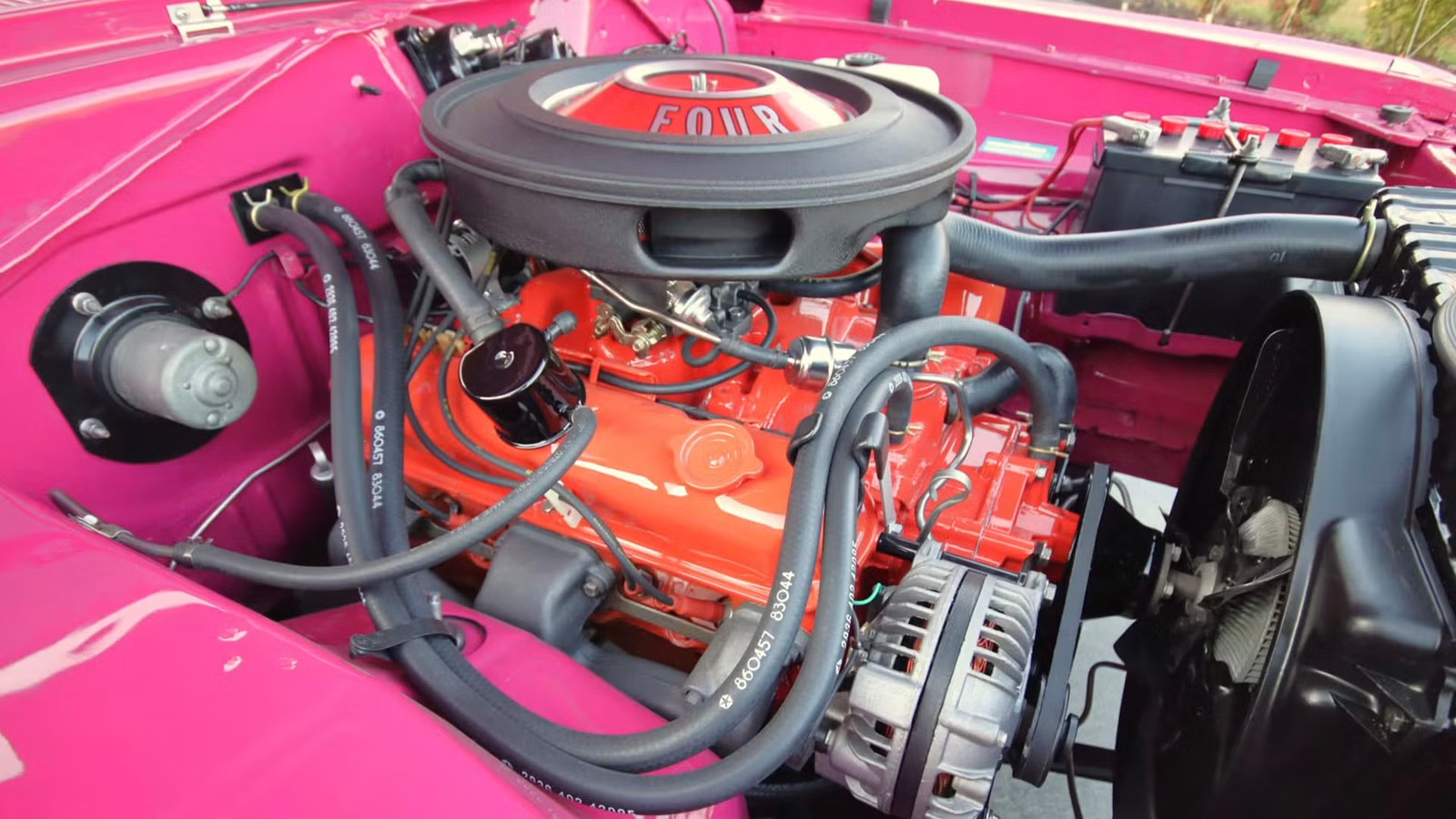
Plymouth rated the Duster 340’s engine at 275 hp, but the numbers only tell part of the story. The 340-cubic-inch small-block V8 featured a high-flow intake, a four-barrel carburetor, and a dual exhaust setup. It also used a forged steel crankshaft and high-compression pistons, giving it a solid foundation for both durability and performance. While the official rating fell below many big-block engines of the time, real-world results showed it could hold its own.
The engine produced around 340 lb-ft of torque at 3,200 rpm, which helped the Duster launch hard and sustain strong acceleration through the quarter mile. Period test results recorded 0 to 60 mph in as little as 6.3 seconds and quarter-mile runs in the mid-14-second range — numbers that matched or closely trailed more powerful cars with larger displacements.
Plymouth paired the 340 with either a 3-speed TorqueFlite automatic or a 4-speed manual transmission. Both options included performance-oriented final drive ratios, with 3.23 and 3.55:1 gears available. This gearing gave the Duster quick off-the-line launches without sacrificing highway cruising comfort. Combined with its relatively light curb weight of around 3,110 pounds, the 340 V8 gave the Duster a responsive and well-balanced driving experience.
1970 Duster 340 Models Are Rising In Value
Current Values
|
Condition |
1970 Duster 340 |
|
Concours Condition |
$67,800 |
|
Excellent Condition |
$42,600 |
|
Good Condition |
$24,300 |
|
Fair Condition |
$12,900 |
(Source: Hagerty)
Market Trends Reveal Demand And Values For The Duster 340 Is On The Rise
- Over the last year, values of the 1970 Duster 340 have risen by 4–10% depending on the condition
- The lowest recorded sale is $16,500 with 38,019 miles
- The highest recorded sale was $99,000 for an extremely low mileage example with 380 miles
The 1970 Plymouth Duster 340 has quietly gained traction in the classic car market, with values trending upward across all condition levels. According to Hagerty, Concours condition models now command an average of $67,800, while examples in excellent condition reach around $42,600. Even vehicles in fair condition have increased in value, averaging $12,900. Over the past year, these prices have climbed by approximately 4 to 10 percent depending on the car’s condition and originality.
One of the lowest recorded sales was $16,500 for a Duster 340 showing just over 38,000 miles, which suggests that even higher-mileage examples are holding decent value. On the other end of the spectrum, a near-new Duster 340 with only 380 miles on the odometer fetched a remarkable $99,000 at auction. This spread highlights the growing interest from collectors who recognize the model’s blend of affordability, performance, and historical significance.
These rising values reflect renewed appreciation for small-block performance cars that delivered real-world speed without relying on massive displacement. For enthusiasts considering a classic American muscle car, the Duster 340 has become an increasingly desirable option.
Sources: Stellantis, Hagerty, Classic.com.

Related posts



Latest Post


No Comments