
The Two Japanese Power Cruisers That Beat Harley On Specs For Under $10,000
Harley-Davidson bikes have always ruled the cruiser segment, with other manufacturers simply playing catch-up. Even the oh-so-mature Indian Motorcycles has failed to take the throne. Likewise, metric cruisers, whether from BMW, Triumph, or the Japanese Big Four, simply come off as imitations for the most part. That wasn’t always the case, though.

Back in the ‘80s and ‘90s, two Japanese manufacturers played a pincer move on Harley-Davidson, flanking the MoCo with a cushy, smooth cruiser and a tire-shredding power cruiser. And the best part? These two cruisers beat Harleys back in the day and still remain relevant against modern Harleys. Not to forget, they are also a ridiculous bargain in the used market. Here’s everything you need to know about the two Japanese cruisers that still beat Harley for under $10k.
Harley-Davidson Is The Default Cruiser Manufacturer
Whether you look at the cruiser market a couple of decades ago or today, American cruisers have always ruled the game, with Harley-Davidson taking the top spot. Its V-twin cruisers embody the great American motorcycling heritage with an authentic V-twin character that is unmatched by anyone else. Sure, other manufacturers have tried to take on Harley-Davidson, producing some incredible cruisers along the way. Case in point: the BMW R 18, Ducati Diavel, Kawasaki Vulcan, and more. Yet, most haven’t managed to shake off enthusiasts’ desire for Harley-Davidsons.
But New Harley-Davidsons Are Quite Pricey


Back in the ‘80s and ‘90s, Harley-Davidson produced some iconic cruisers, including the legendary Fat Boy. Right off its launch, the Fat Boy steamrolled into enthusiasts’ hearts and pop culture with its powerful V-twin engine and massive road presence. Other legendary Harleys of the time included the Dyna Super Glide, Dyna Wide Glide, Sportsters, and Dyna Daytona, among other more touring-oriented models, like the Road Glide.

Today, the Dyna lineup no longer exists, and the starter Sportster lineup has transformed into modern cruisers with high-revving, liquid-cooled Revolution Max engines. The latter has effectively alienated the core Harley audience; instead, the Softail lineup carries the torch for authentic cruiser fans. Models like the Fat Boy, Low Rider ST, Breakout, and the new Super Glide are excellent examples. The problem is that these cruisers have gotten too expensive now. Even the cheapest real Harley, the Street Bob, starts at $15k, making the barrier to entry too high for everyone.
But A Couple Of Decades Back, Two Japanese Cruisers Took Them On

Two Japanese manufacturers managed to create something that rewrote the rules, though. Honda and Yamaha launched two power cruisers, one each, which went after Harley-Davidson models. One was a smooth power cruiser while the other was a brash dragster, and both instantly became cult classics. Even today, these two cruisers have the oomph and aura to take on modern Harley-Davidsons. And the best part is that they’re a used market bargain.
The Cheapest Harley-Davidson That Still Feels Like A Harley
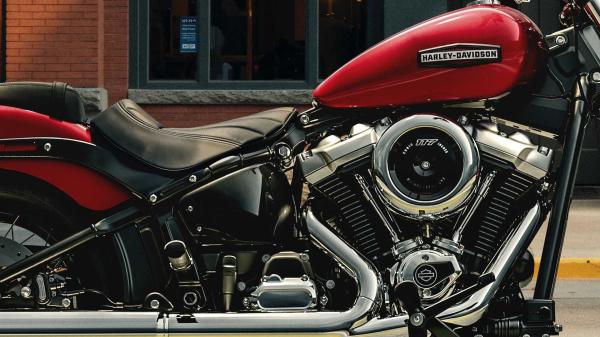
This chromed-out cruiser is the most affordable Harley-Davidson with the Milwaukee-Eight 117 engine at $14,999.
The Honda Valkyrie And Yamaha V-Max Keep Flanking Harley-Davidson

The late ‘80s and early ‘90s saw a resurgence of interest in cruiser motorcycles. However, the default option that remained was the V-twin-powered Harley-Davidson models. Still, two Japanese manufacturers, Honda and Yamaha, produce audacious answers to Harley’s authentic V-twin cruisers. The two cruisers took two distinct paths to outflank Harley-Davidson in performance, value, and reliability. And they still continue to do that as used bargains.
The Widowmaker Yamaha Power Cruiser

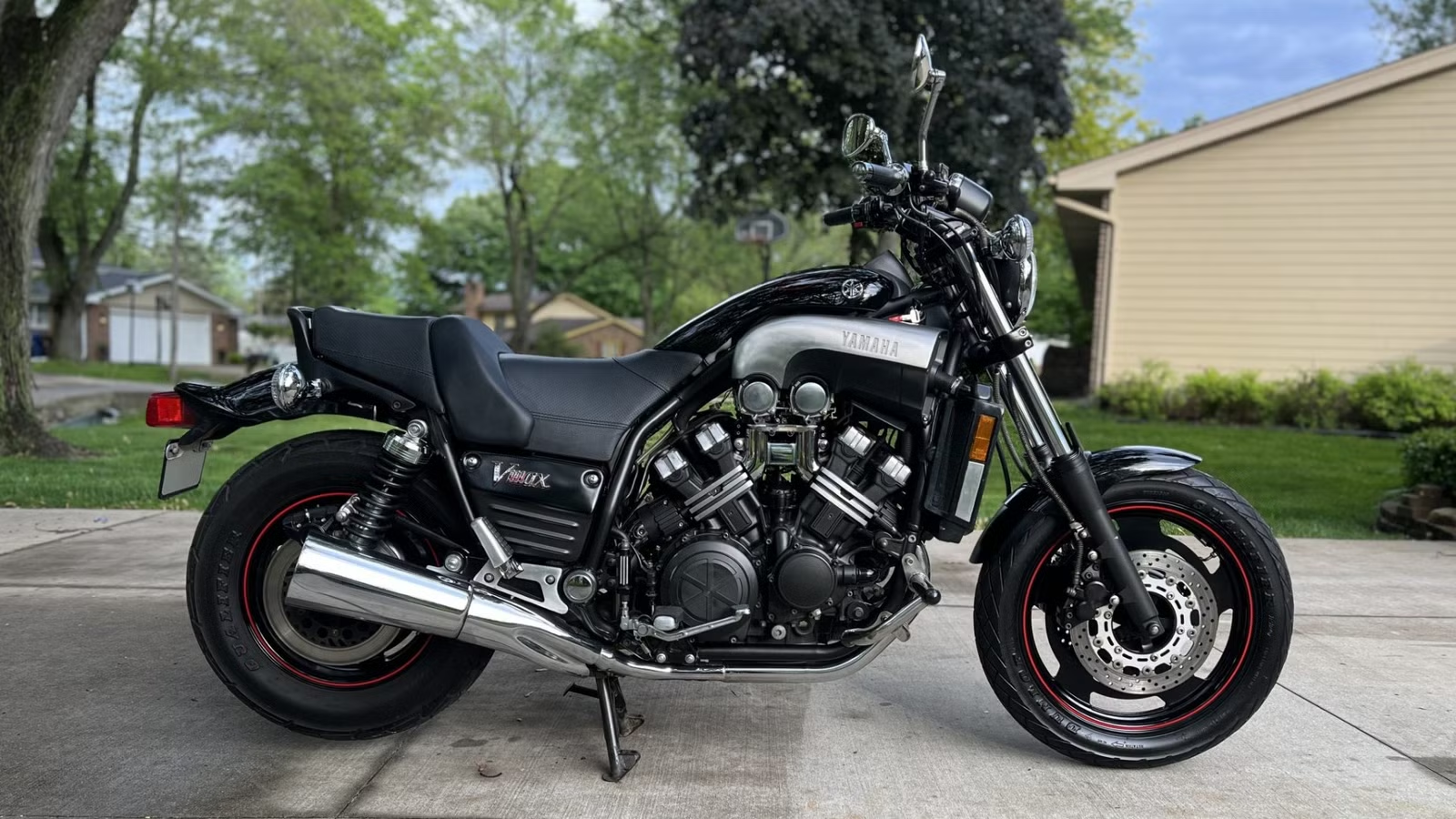
The first to come was the 1985 Yamaha V-Max, a V4-powered muscle cruiser with enough torque to fishtail off the start line and double up as a weekend dragster. It stayed around for over two decades, dominating the cruiser market as one of the most powerful and brash models you could buy. In fact, this cruiser is often credited for creating the muscle cruiser sub-segment that has only gotten popular over time. Modern muscle cruisers, like the Ducati Diavel, Triumph Rocket 3, and Suzuki Boulevard M109R, have the V-Max to thank for.
The Sensible Honda Power Cruiser

Honda followed soon enough with the 1997 Honda Valkyrie, not to be confused with the Valkyrie Rune. Unlike the V-Max that confused itself with a hot rod, the Valkyrie took a more refined approach to the power cruiser segment. Honda stripped down the Gold Wing and made its butter-smooth flat-six engine more powerful to create a power cruiser that felt composed and sensible. It still had the oomph to overtake Harleys of the time without compromising on everyday rideability.
Both Sit Firmly In The Sub-$10,000 Used Market

The Yamaha V-Max and Honda Valkyrie undercut comparable Harley-Davidson models even today. Sure, modern Harleys have gotten powerful enough to hold their own, with modern tech backing them, but when it comes to offering value, the V-Max and Valkyrie are hard to beat. Instead of spending around $20k on a Harley Softail, you can get legendary power cruisers with impressive performance for less than half of that. For instance, the V-Max can be had for around $3,090 for a 2007 model, whereas the Valkyrie can be had for around $5,025 for good condition 2003 models. Not to forget, both still offer excellent dependability.
The Japanese Cruiser That Makes Harley Riders Look Twice
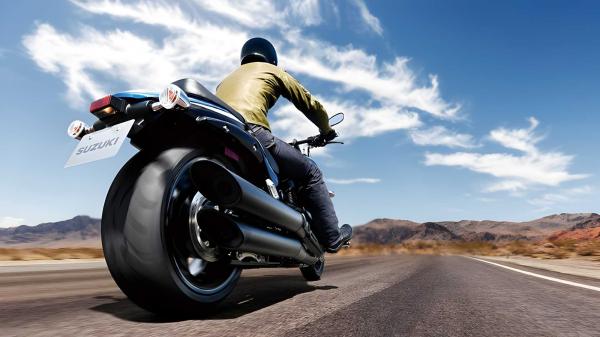
Here is a rare cruiser gem from Japan that can make Harley riders sweat with its presence, even though it has had no updates in 20 years
The Yamaha V-Max Redefined The Power Cruiser Segment

Diving deeper, the Yamaha V-Max has a different place in the hearts of cruiser fanatics. Produced from 1985 to 2007, the V-Max didn’t invent the rules; it wiped the board clean with its performance. Yamaha engineered it to embody the spirit of the American hot rod, and for H-D, the V-Max was difficult to follow. The bike became an instant cult classic, and since its introduction, the V-Max has managed to wow riders with its muscular design, sophisticated engineering, and unmatched performance.
Fire-Breathing V4 Engine

The V-Max’s crown jewel is its engine. Yamaha chose to break away from the Japanese inline-cylinder culture and branch into the V4 fold. The liquid-cooled 1,197cc 70-degree V4 engine here packs 135 horsepower and 83.1 pound-feet of torque, peaking at 9,000 RPM and 7,500 RPM, respectively. The party trick is the V-Boost system, which doubles the fuel and air flow over 6,000 RPM, giving the bike tire-burning muscle and a standing quarter-mile time of 10.8 seconds at 125 miles per hour. The bike is reported to have a top speed of 146 miles per hour.
It’s A Widowmaker, Though

Outside its terrorizing hold-on-for-dear-life takeoff and bodacious avant-garde design, the V-Max doesn’t have much else to offer. Not like it needs to, though. It features a double-cradle steel tube frame sitting on pedestrian Kayaba suspension that’s said not to feel at home in corners or the city. In fact, the bike’s handling is notorious for fishtailing off the line. This has earned the V-Max the widowmaker title, too. Rumor has it that dealers back then only sold the V-Max for cash, fearing that the owner might splat themselves on the ground before finishing the payments.
Used Market Value Hovers Between $1,840 to $14,340

Thinking of experiencing this incredible machine? You’re in luck because this cult classic is pretty cheap in the used market. According to J.D. Power, you can have the 1985 model for as low as $1,840 in fair condition. Good condition models go for $3,365, very good ones for $7,135, and excellent condition models go for $14,340 — still cheaper than a new Street Bob! Meanwhile, J.D. Power estimates an average retail value of the 2007 model at around $3,090. For much less than $10,000, you can grab one of the good-condition V-Max models in the used market.
Expect Vintage Maintenance, Though

The V-Max isn’t for everyone, though, especially if you are not a grease monkey. The V4 engine here is mechanically tough and can easily surpass 50k miles, but its age necessitates strict attention to certain things. For starters, because of the V-Boost system and seating position, gravity-fed carburetors aren’t used. So, the fuel pump and 4-carb rack are notorious for clogging if the bike sits for too long. Other common issues with the bike include electrical gremlins, stator and regular failure, and standard vintage wear and tear.
The Honda Valkyrie Is A Mature Way To Beat Harleys

As for the Honda Valkyrie, it takes a different approach. Honda is known for making touring bikes, with the mighty Gold Wing being considered the gold standard for tourers. Meanwhile, Honda isn’t so well-known for cruisers. It’s the brand’s touring pedigree that makes the Valkyrie so special. The bike is, after all, a stripped-down version of the 4th-generation Gold Wing. Back in the day, this gorgeous classic-vibing cruiser powered by a bold engine stood up against flagship Harley-Davidsons. Today, it can still hold its own against modern Harleys, thanks to its vintage-inspired design and bomb-proof engine.
Butter-Smooth Flat-Six Powertain

The Valkyrie features a design heavily inspired by the chrome-laden American big-twin cruise. But unlike the V-twin Harleys of the day, the Valkyrie packs an offbeat flat-six engine. The 1,520cc mill here is liquid-cooled and features some updates over its Gold Wing counterpart. Thanks to new camshafts, solid lifters instead of hydraulic ones, and six individual 28mm carbs, Honda has managed to increase the power and torque output to 100 horsepower and 95.9 pound-feet. With peak power and torque coming in at 6,000 RPM and 5,000 RPM, respectively, this power cruiser has a meaty low- to mid-range torque, which gives it a peppy nature.
A Predictable Riding Experience

Unlike the V-Max, the Valkyrie is also praised for its composure. It features a heavy-duty steel diamond frame along with chunky inverted 45mm forks and twin enclosed rear dampers, which were sophisticated for the time. Paired with a relaxed riding triangle, neutral-set pegs, and wide handlebars, the Valkyrie is said to offer stable handling both on the highway and in corners, at least as far as big cruisers go. Since the power is delivered in a linear manner, the Valkyrie also doesn’t fishtail as much as the V-Max, which should make riders feel more confident on the road.
Used Market Value Hovers Between $1,590 and $13,470

Like the V-Max, the Valkyrie is also present dime a dozen in the used market and offers terrific value. According to J.D. Power, a 1997 model can be had for as low as $1,590 in fair condition. Meanwhile, good condition models go for $3,415, very good ones for $6,795, and excellent ones for $10,940. Go for newer models, and you’ll have to spend a bit extra. For example, the 2003 models can be had for as low as $2,830 in fair condition and $13,470 in excellent condition.
You Also Get Bulletproof Honda Reliability

The Valkyrie is also known for its legendary reliability. Remember, the mill here is taken from the Gold Wing tourer, so the Valkyrie regularly surpasses 100k to 200k miles with only routine maintenance along the way. The shaft drive also eliminates chain adjustments. However, the flat-six uses carburetors, so it still demands proper fuel storage to prevent gumming up. Owners also report that the carbs can be tedious to balance. The only downside to owning the Valkyrie is the shrinking spare parts supply, which can make it difficult for some owners to keep their Valkyrie running for long.
Fork In The Road: V4 Monstrosity Vs. Flat-Six Sensibility

Choosing between these two motorcycles and a modern Harley-Davidson is easy; your budget will make that decision for you. Modern Harleys are simply too expensive to feel worth it. However, the actual fork in the road is choosing between the V-Max and the Valkyrie. Ultimately, the choice comes down to what you value more in your power cruiser: straight-line acceleration and muscle or dependability and smooth power delivery.
Source: Yamaha, Honda, Harley-Davidson, J.D. Power online forums

Related posts

Latest Post


No Comments