
The Last Big Lincoln Isn’t The One Collectors Chase
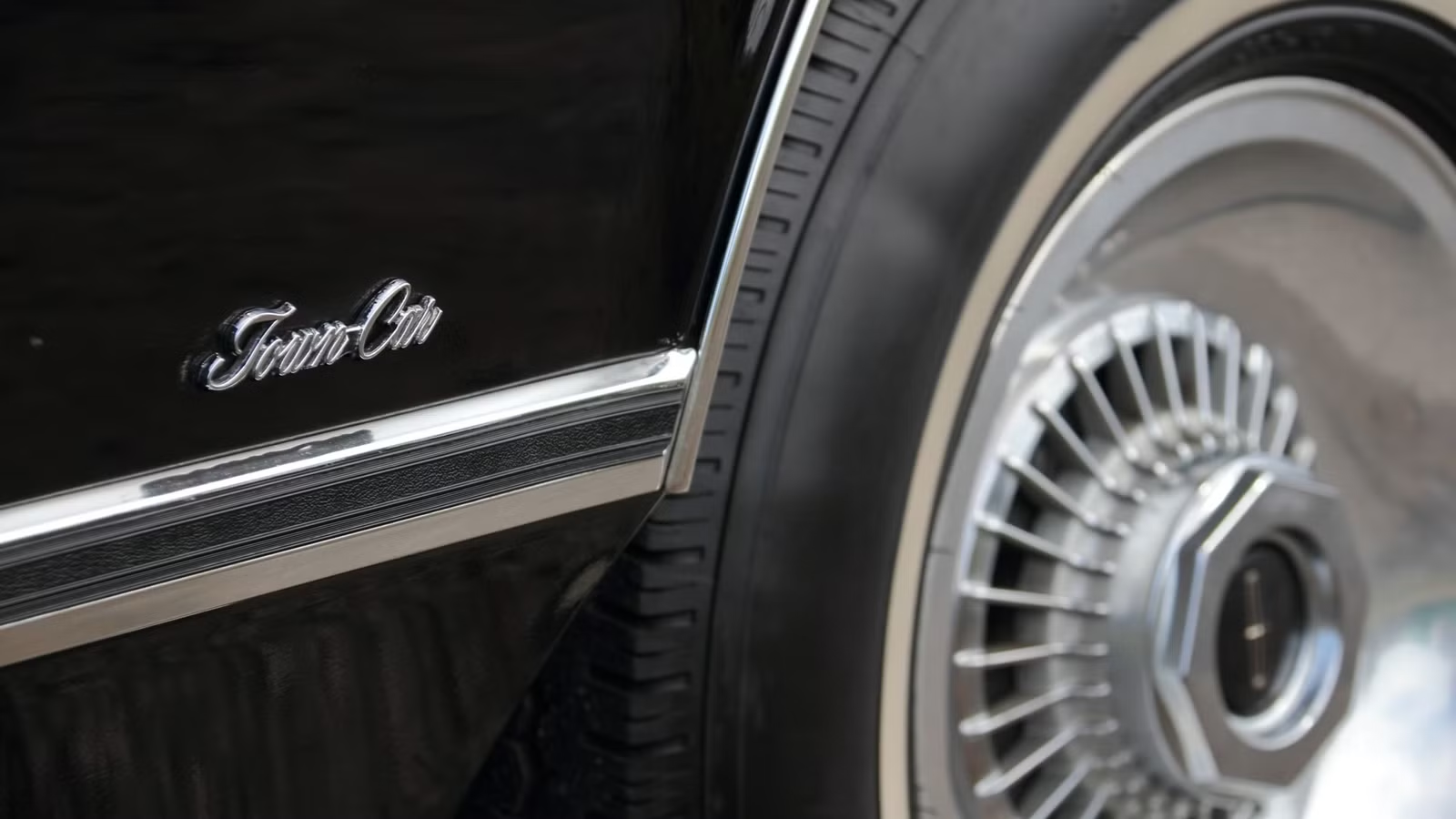
You could say that the Lincoln Town Car was large and in charge. For years, it marched to the beat of its own drum instead of following popular trends. This luxurious Ford land yacht kept its giant 460 cubic-inch big-block V8 engine for years after rivals started downsizing. But later models with the massive powerhouse aren’t what avid collectors are searching for. Instead, enthusiasts want what is considered to be the last big Lincoln, even if that means sacrificing torque and smooth cruising power.
The Lincoln Town Car Kept Its 460 V8 As Long As It Could

Let me set the scene here. It was the middle of the 1970s and the malaise era was in full swing. Rising insurance premiums, oil crises, rising fuel costs, and pressure from safety institutions were taking their toll on the peak muscle car era. As a result, big-block V8 engines were being discontinued left and right.
For example, the Cadillac Sedan De Ville dropped the famously large 472 cubic-inch (7.7-liter) big-block V8 in 1976. The Buick Electra also dropped its 455 cubic-inch (7.5-liter) big-block V8 in 1976. But the Lincoln Continental Town Car managed to hold on to its 460 cubic-inch (7.5-liter) big-block V8 engine until 1978 as an available option.
The Lincoln barge was first available with this engine in 1970, giving it a solid eight-year run. In 1971, it delivered 365 hp and 500 lb-ft of torque. But then it was detuned in 1972, and its power output was decreased to 212 hp and 357 lb-ft of torque. By 1978, it was churning out 208 hp and 356 lb-ft of torque as a thirsty beast with a fuel economy of about 8 mpg in the city and 12 miles per gallon on the highway.


This amount of torque helped move this large car from 0 to 60 mph in about 11.4 seconds. It covers a quarter mile in about 18.5 seconds with a top speed of roughly 115 mph. It is not a speed demon, but it delivers enough power for smooth highway cruising in this sizable luxury car.
Collectors Want The Last Big Lincoln

Even though the Lincoln Town Car lost its 460 engine after 1978, the 1979 model is known as the last big Lincoln because the car was moved to the smaller Panther platform in 1980. The 1979 Lincoln Town Car is about 223 inches, or 19.4 feet, long and measures about 79.6 inches wide. Also, it has a wheelbase of 127.2 inches and weighs in at about 4,649 lbs.
It is the same size as the 1978 model, though the 1978 weighs in at over 5,000 lbs with the 460 ci engine. The 1979 model features a smaller 400 cubic-inch (6.6-liter) V8 engine with 159 hp and 315 lb-ft of torque. This engine helps the hefty cruiser accelerate from 0 to 60 mph in about 14.8 seconds with a 20.8-second quarter-mile time and top speed of 110 mph.
But at least while you lose speed, you gain some fuel savings. This car is rated to get an estimated 8 to 11 miles per gallon in the city and up to 16 mpg on the highway. So taking a little more time to get from point A to point B could make a significant difference at the fuel pump. The ride was also notably plush.
But The 1978 Model Is The Last True Luxury Barge

Some collectors might be focused on the wrong thing with these late 1970s Lincoln Continental Town Car models. The 12 mpg figure for the 1978 model with the 460 ci V8 engine steals the spotlight, causing people to miss the fact that it has more torque. That torque comes with more speed, and extra power is a luxury.
The 1978 model has the same dimensions as the 1979 model. Both are extremely large, but with the 460 big-block you get an extra 53 hp and 41 lb-ft of torque, which provides a clear advantage in cruising power. It also gets from 0 to 60 mph in about three seconds faster, a meaningful gap during an era when performance hierarchy mattered.
It’s not like the 1978 Lincoln Town Car lacked any luxurious amenities. You can enjoy thickly cushioned twin-comfort lounge seats with soft leather or crushed velour upholstery. It is paired with a gold-accented digital clock mounted in the instrument panel. Also, it features standard automatic temperature control, which is still an excellent luxury option in modern cars.

The dash is wrapped in wood-tone accents, with thick, floor-to-ceiling deep-pile carpeting. Power adjustments include six-way front seats, windows, and locks. The cabin was designed with heavy sound insulation to keep wind and road noise at bay, and the soft coil-sprung suspension effortlessly glides over rough patches of pavement.
Lincoln Town Car Models With The 460 Engine Should Hold More Value

Because the 1979 Lincoln Town Car is considered the last big model — technically the last model year that did not compromise on size — it holds a little more value. Models that are in project condition but are still driveable fetch between $6,000 and $18,000. Options in good condition go for around $10,000 to $18,000. Then models in pristine condition sell for $20,000 to over $37,000.
Next up, the 1978 Lincoln Town Car with the 460 V8 is worth $7,400 to $11,000 in driving condition. Examples in good condition that have been well maintained typically sell for between $13,000 and $18,000. Rare, pristine models can push the value up to between $25,000 and $55,000. But that’s for original documented survivors.
Both model years have the same average price of about $4,000 to $18,000 depending on interior quality, mileage, and rust, even though the 1979 model doesn’t have as much power for smooth highway cruising. Only engine purists seem to know what they are missing by not choosing the 460 big-block V8. However, the 1979 Town Car does carry the official last-call title, even though 1978 examples share the same body style.
Source: The Autotopian, Hagerty, Automobile Catalog

Related posts

Latest Post


No Comments