
Toyota’s Mysterious New Truck Could Be A Baby Tacoma With RAV4 Bones
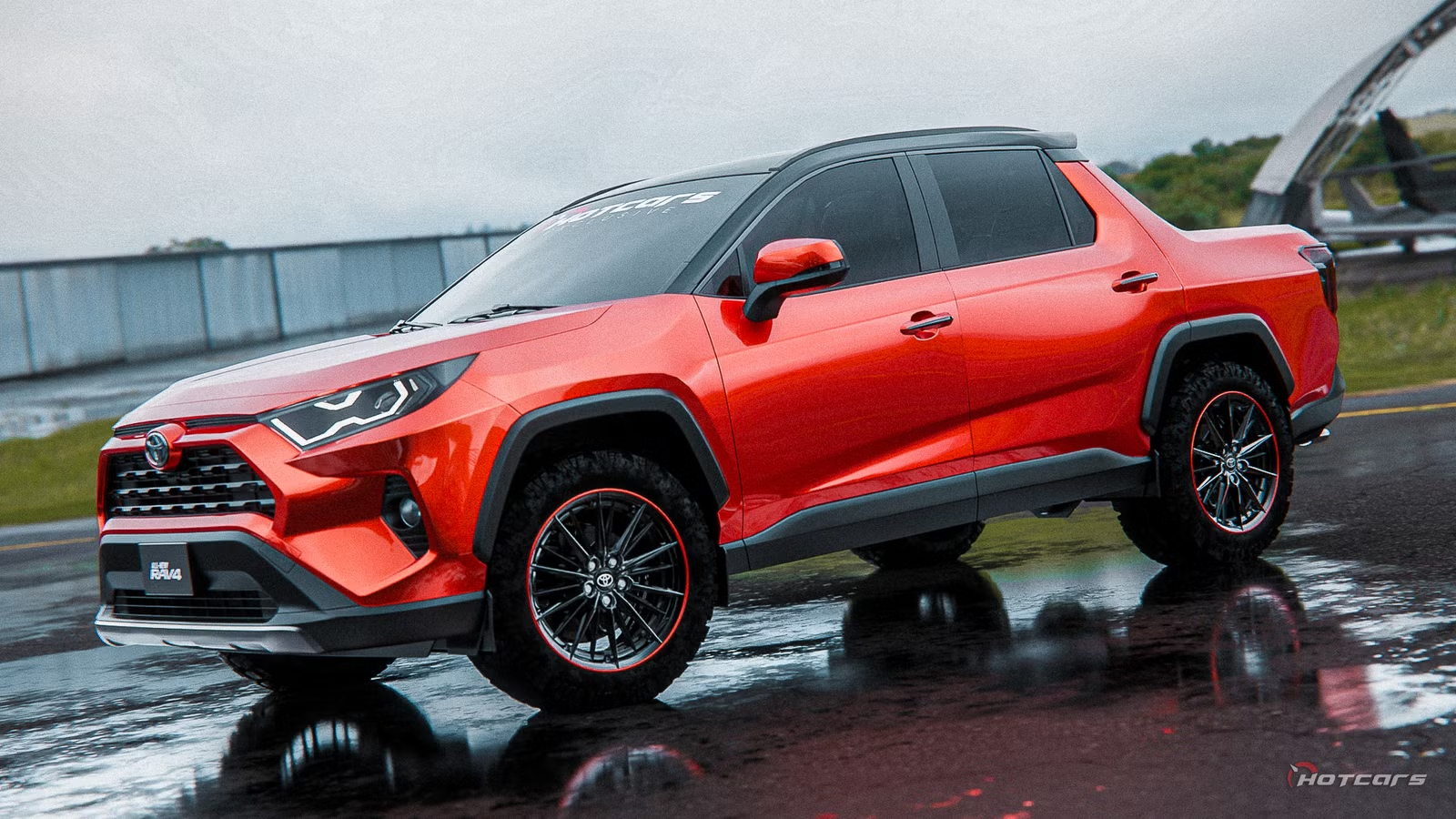
Small trucks are having one heck of a moment in America. The Ford Maverick proved buyers still want an affordable pickup that fits inside a garage, sips fuel, and does not require its own ZIP code. Toyota has certainly noticed, but it has yet to send anything into battle.

That could be about to change. A recently discovered patent reveals the Japanese carmaker has been developing a clever solution for one of the biggest weaknesses facing car-based pickups. It does not show us a finished truck, reveal a name, or promise that anything will reach production. However, automakers rarely spend time engineering stronger pickup beds purely for entertainment. Whatever Toyota is cooking, it appears designed to carry more than groceries and good intentions.
Toyota’s Patent Points To A Tough Little Unibody Truck
The patent describes a reinforced rear suspension mounting arrangement intended for a unibody pickup. Unlike the Tacoma and Tundra, which use separate body-on-frame construction, this smaller machine would likely share more of its basic architecture with one of Toyota’s crossovers.

That approach makes plenty of sense. Unibody construction can produce a lighter, more efficient, and more comfortable truck, exactly the formula that helped turn the Ford Maverick into a runaway success. However, removing a traditional frame creates challenges when owners start loading the bed, towing trailers, bouncing along trails, or pretending every speed bump is a Baja jump.
In a typical unibody vehicle, the rear shocks mount to reinforced towers inside the wheel wells. Heavy suspension loads can push those towers inward, temporarily flexing the surrounding body. Crossovers and cars usually have roof structures or bulkheads helping resist those forces. A pickup bed has a large open space where that support would normally live.
Repeated hard use could eventually reduce rigidity or permanently deform parts of the structure. That is not the sort of durability story Toyota wants attached to any truck wearing its badge.
A Surprisingly Simple Toyota Part Could Make It Much Stronger

Toyota’s solution is a welded reinforcement it calls a “strainer.” Despite the name, it will not rescue spaghetti from boiling water. Its actual job is to spread suspension forces across a larger section of the truck bed. The metal reinforcement uses several stamped beads, or creases, that increase bending strength without requiring a giant pile of additional material. Toyota also adds more strengthening beads around the rear wheel arch and places welded mounting nuts within one of those reinforced areas. It sounds wonderfully simple, but that is the beauty of the design. The extra support could prevent the wheel arches and shock mounts from being pulled inward when the bed is heavily loaded or the suspension takes a serious hit.
That would help with payload and towing, but the performance implications are even more exciting. A stiffer rear structure could give the suspension a more stable foundation when the truck is hammering across washboard roads, climbing rough trails, or briefly discovering the effects of gravity. Nobody should expect a baby Raptor R with a Toyota badge. Still, a compact truck carrying TRD hardware, all-terrain tires, and legitimate off-road ability would be considerably more exciting than another crossover wearing black plastic cladding.
Ford Maverick Buyers May Finally Have A Toyota Alternative

The most revealing section of the patent explains that Toyota could use the same basic architecture for both a pickup and a crossover. The truck would receive the new bed reinforcement, while the crossover could use a conventional rear cross-member instead. That suggests Toyota may be exploring a compact pickup sharing its bones with a vehicle like the RAV4. Such a strategy could reduce development costs while giving the company access to existing engines, hybrid systems, all-wheel drive, safety technology, and manufacturing infrastructure.
Toyota has not confirmed what would power this hypothetical truck. However, a fuel-efficient hybrid model would be an obvious response to the Maverick Hybrid, while a more powerful all-wheel-drive version could target buyers who want extra muscle and weekend capability. A tougher TRD variant almost writes its own marketing campaign.
The timing makes sense. Ford sold more than 155,000 Mavericks in the United States during 2025, proving that compact trucks are no longer some strange little niche. Toyota also has one of the strongest pickup reputations in America, making its absence from the segment increasingly difficult to ignore.
Still, this patent is not confirmation of a new Stout, RAV4 pickup, or any other production model. Automakers routinely protect engineering ideas that never reach showrooms. Even so, Toyota has designed a specific solution for making a unibody pickup stronger under real loads. That is an awfully suspicious amount of work for a truck that supposedly does not exist.

Related posts

Latest Post


No Comments