
The V-Twin Cruiser That Looks American But Runs Like A Japanese Machine
For decades, cruiser motorcycles have had the same visual formula: a low seat, a stretched wheelbase, generous chrome, and a V-twin displayed proudly between the rider’s knees. American manufacturers established the template, but buying into that image can mean accepting a higher price, considerably more weight, or the occasional mechanical personality quirk. Luckily, riders who want the traditional look without all the baggage have another option.
The Traditional Cruiser Formula Still Has Plenty Of Appeal

Adventure bikes, naked bikes, and performance-focused cruisers may dominate much of today’s motorcycle conversation, but the traditional cruiser still provides an experience those machines can’t easily replicate. Its appeal isn’t based entirely on speed, technology, or outright capability. You sit low to the ground, settling into a relaxed riding position, and letting a large engine carry the motorcycle forward without demanding constant gear changes.
That accessibility matters more than spec sheets often suggest. A low seat gives shorter riders greater confidence at stops, while a broad handlebar provides plenty of leverage during slow-speed maneuvers. Floorboards let the rider adjust their feet during longer journeys, and a substantial chassis creates a reassuring sense of stability on open roads. The result is a motorcycle that encourages its rider to slow down and enjoy the trip rather than attack every corner.
American Styling Comes With Certain Expectations

A traditional cruiser is also expected to look substantial before the engine has even started. The familiar recipe includes a long and low silhouette, deeply valanced fenders, a wide fuel tank, generous chrome, and a large V-twin that functions as much as a styling centerpiece as it does a source of propulsion. Add wire-spoke-style wheels, broad tires, twin exhaust pipes, and a deeply cushioned seat, and the visual message becomes unmistakable.

Buyers usually expect the engine to match that appearance. It should deliver a strong, steady pull from low revs, make its presence known through the bars and seat, and settle into an unhurried rhythm on the highway. Huge horsepower figures aren’t essential because the experience is built around torque, sound, and physical presence. All that can cost a bomb, though, and that’s where Japanese alternatives come in.
Japanese Cruisers Take A Different Route To The Same Destination

Japanese manufacturers recognized that riders wanted the American cruiser aesthetic, but they didn’t necessarily want every traditional mechanical characteristic or high price. Instead of recreating the formula bolt for bolt, Japanese engineers combined familiar proportions with features intended to improve consistency and everyday usability. The motorcycles still looked suitably dramatic, but the engineering underneath often took a more practical approach.
Liquid cooling helped engines maintain more consistent operating temperatures in traffic, while electronic fuel injection improved starting and fueling across changing weather conditions. Lighter controls, predictable throttle response, and manageable power delivery made these machines easier to live with throughout the week. Riders could get the laid-back ergonomics and V-twin character they wanted without turning routine ownership into a hobby of its own.
The Kawasaki Vulcan 900 Classic Looks American But Has Japanese DNA

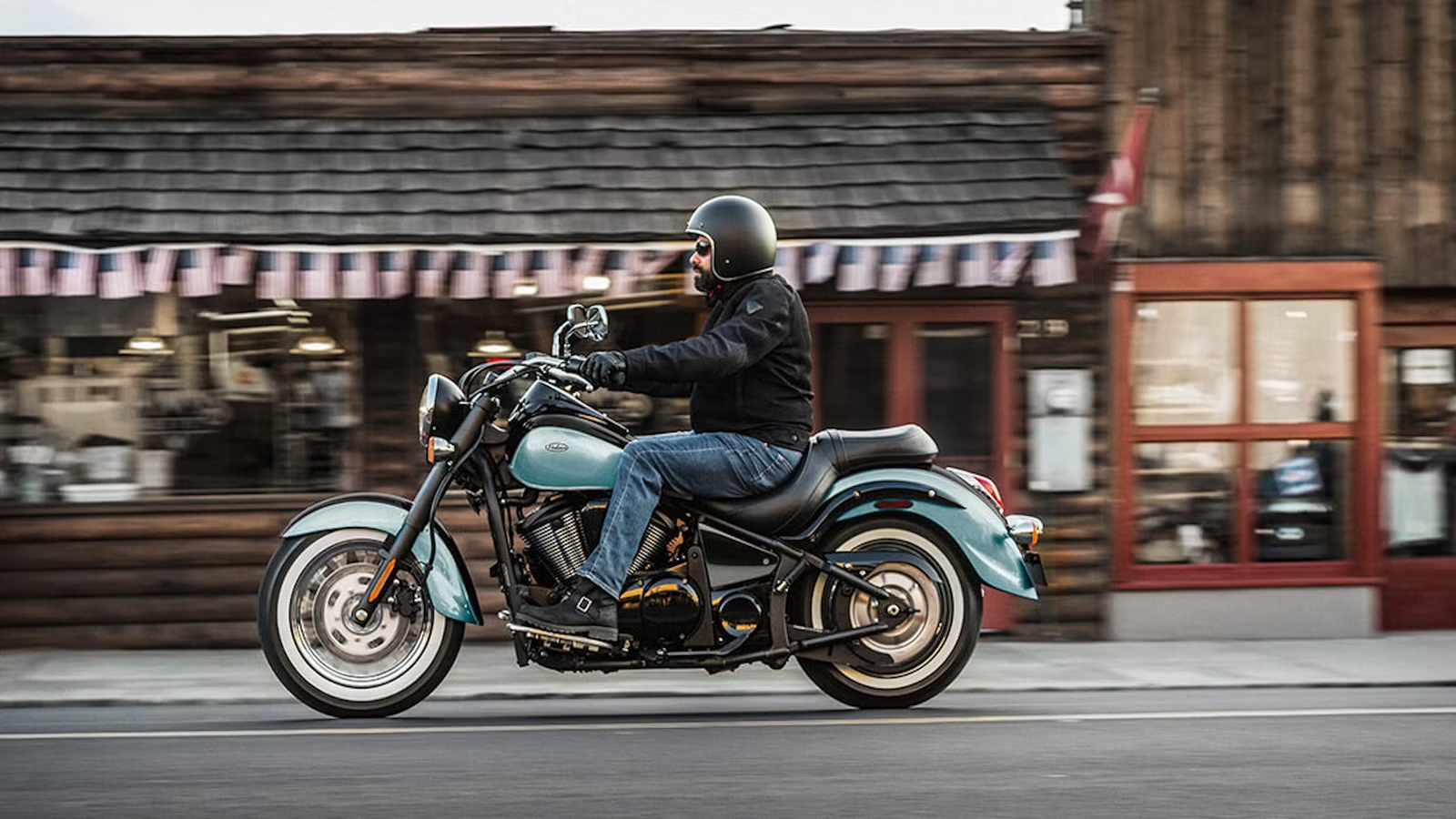
That motorcycle is the Kawasaki Vulcan 900 Classic, a machine that looks as though it was designed around a checklist of American cruiser styling cues. Deeply valanced fenders wrap around its wheels, chrome covers much of the engine and exhaust, and a broad fuel tank sits ahead of a stepped two-piece seat. Rider floorboards, a heel-and-toe shifter, tank-mounted instrumentation, and spoked wheels complete the traditional presentation.
The current Vulcan 900 Classic starts at $9,599 in the US, excluding Kawasaki’s listed $840 destination charge. That places it below the five-figure mark before delivery fees while still providing the size and visual presence of a significantly more expensive cruiser. For 2026, the Classic is offered in Metallic Graphite Gray with Metallic Spark Black, accompanied by a 12-month limited warranty.
Its 903cc V-Twin Prioritizes Usable Torque Over Headline Figures

At its center is a liquid-cooled, 903cc, 55-degree V-twin with a single overhead camshaft and four valves per cylinder. Its bore and stroke measure 88.0 x 74.2 millimeters, while the compression ratio is a relatively modest 9.5:1. Dual 34-millimeter throttle bodies handle fuel delivery, and Kawasaki’s sub-throttle valve system is designed to provide smoother airflow and more predictable response. Output sits at a claimed 51 horsepower at 5,500 rpm and 58.3 pound-feet of torque at 3,500 rpm.
Those figures won’t threaten modern performance cruisers, but that isn’t the point. The engine’s long-stroke character and low torque peak suit relaxed riding, allowing the Vulcan to move away from a stop cleanly and build speed without needing to be revved aggressively. A five-speed transmission includes Kawasaki’s positive neutral finder.

The visible single-pin-crank V-twin still supplies the pulse riders expect from a traditional cruiser, while liquid cooling and digital fuel injection keep its behavior comparatively consistent. Power reaches the rear wheel through a Kevlar-reinforced belt rather than a chain, reducing routine cleaning and adjustment. The setup preserves much of the mechanical character buyers want while remaining well suited to regular commuting and weekend use.
It Has Big-Cruiser Presence Without Full-Size Cruiser Intimidation

The Vulcan 900 Classic is still a substantial motorcycle. It measures 97 inches long, rides on a 64.8-inch wheelbase, and weighs 619.6 pounds with its 5.3-gallon fuel tank filled. However, its seat sits just 26.8 inches above the ground, allowing much of that weight to be carried low. A 32-degree rake and 6.3 inches of trail reinforce its steady, deliberate steering character. A 41-millimeter Showa telescopic fork provides 5.9 inches of front-wheel travel.
At the rear, Kawasaki uses a Uni-Trak swingarm arrangement with seven-way spring-preload adjustment and 4.1 inches of travel. The suspension is designed more for comfort and predictable road manners than aggressive cornering, which suits the motorcycle’s intended role. Ground clearance is limited to 5.3 inches.

The Vulcan rolls on a 130/90-16 front tire and a 180/70-15 rear tire. Braking comes from a single 300-millimeter disc with a two-piston caliper up front and a 270-millimeter disc with a two-piston caliper at the rear. ABS and modern electronic rider aids aren’t part of the package, which makes the motorcycle look dated beside newer competitors offering traction control, selectable riding modes, and more sophisticated instrumentation.
The Vulcan 900 Classic’s Age May Be Its Greatest Strength

*Touring version shown
The Vulcan 900 Classic isn’t trying to chase high-output performance cruisers or electronically sophisticated touring machines. Its design has remained familiar because Kawasaki already established what the motorcycle is supposed to accomplish. It offers proven mechanical components, recognizable proportions, approachable performance, and a price that stays below $10,000 before destination charges.
That combination has become surprisingly uncommon. Many current middleweight cruisers use smaller parallel-twin engines, stripped-back bodywork, compact dimensions, or sportier ergonomics. Those motorcycles may be lighter and more advanced, but they don’t always provide the visual weight, floorboard comfort, and low-rev V-twin delivery associated with the classic cruiser experience. Its age does bring compromises.

There’s no sixth gear, ABS, traction control, cruise control, or color display, and its single front brake disc looks modest beside more modern setups. Yet additional technology would increase complexity and potentially push the price closer to larger premium machines. The Vulcan’s simplicity is part of what keeps its purpose clear and its cost relatively accessible.
Ultimately, the Vulcan 900 Classic delivers much of the visual drama and laid-back character associated with an American cruiser, then packages it with the predictable behavior expected from Kawasaki. It may look like it belongs outside a roadside bar somewhere in rural America, but its real talent is starting every morning, handling ordinary errands, and behaving like a sensible Japanese commuter.
Source: Kawasaki

Related posts



Latest Post


No Comments