
What Every Letter And Number In Your BMW’s VIN Actually Means
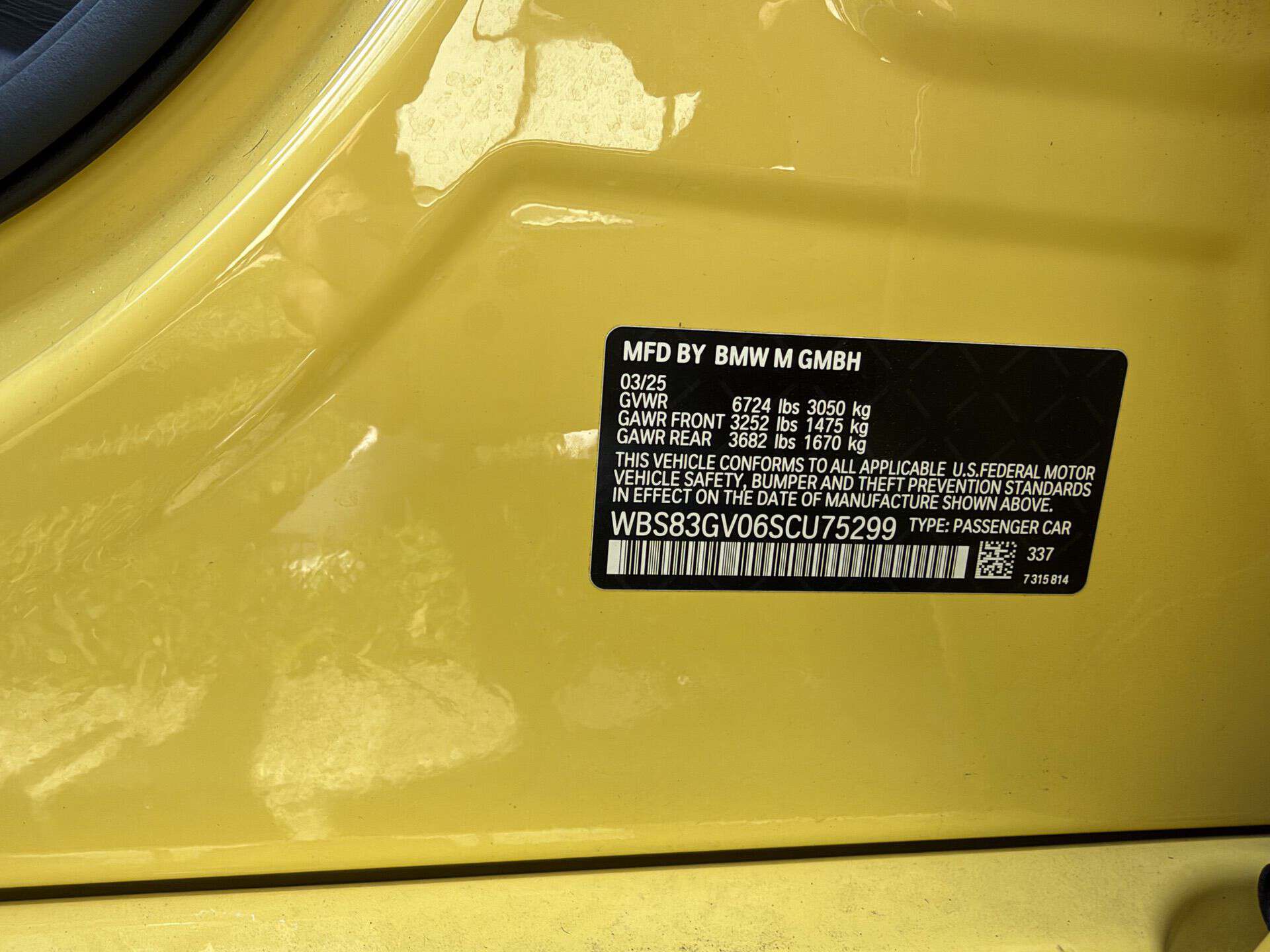
Article Summary
- Every BMW VIN breaks into three sections: manufacturer code, vehicle description, and production record, and most of it you can read yourself for free.
- The check digit at position 9 can catch a typo but can’t catch a cloned VIN, so it’s a sanity check, not proof of authenticity.
- A VIN decode confirms the factory build, not the car’s history, so accident, title, and odometer checks still need a separate report.
BMWs sold in the United States have used the standardized 17-character Vehicle Identification Number since the 1981 model year, following the structure set out in ISO 3779 and enforced domestically under 49 CFR Part 565. Older BMWs, mostly E21s and earlier, can carry shorter chassis numbers that follow completely different conventions, so don’t expect this guide’s structure to apply to a classic 2002 or an early 3 Series.
Modern VINs never use the letters I, O, or Q, because they’re too easy to confuse with the numbers 1 and 0. That’s a useful rule on its own: if a supposedly modern 17-character VIN contains an I, O, or Q, it has been transcribed wrong somewhere.
The Sections of a BMW VIN

Positions 1-3: The World Manufacturer Identifier (WMI)
The first three characters identify the manufacturer, the vehicle type, and broadly the region. BMW runs several WMI prefixes at once, not just one:
- WBA — BMW AG passenger cars
- WBS — BMW M GmbH passenger cars
- WBX — BMW SAVs and multipurpose vehicles, most associated with Magna Steyr’s contract-built cars out of Graz, Austria
- WBY — BMW i and electric models
- 3MW — passenger cars built at BMW’s San Luis Potosí, Mexico plant
- 5UX and 5YM — SAVs built at Spartanburg, South Carolina
- 4US and 5UM — earlier US-built cars and US-built M models out of Spartanburg
- WMW — MINI, part of the BMW Group but its own prefix
- SCA — Rolls-Royce Motor Cars
Here’s the part that trips people up: the WMI does not reliably tell you the actual assembly plant. A WBA prefix is not automatic proof of German assembly. In the past, NHTSA confirmed that BMW was using WBA and WBS on vehicles built at its Greer, South Carolina plant, assigned by Germany’s Kraftfahrt-Bundesamt rather than the US body that normally governs WMIs for American-built cars. BMW has also run US-built X3s under a WBA code before shifting them back to 5UX. If you need to know exactly where a specific car was built, position 11 is the more direct answer, not the WMI.
Positions 4-8: The Vehicle Descriptor Section (VDS)

This block describes the vehicle itself: series, body configuration, engine or powertrain family, restraint system, and on some vehicles a gross-vehicle-weight classification. BMW has never published a single, complete public table translating these five characters, and the logic has changed across generations. On an E90 335i, for example, the eighth character can distinguish a SULEV-calibrated N54 from a ULEV one, which matters because the PCV hose fittings differ between them. On current G-chassis cars, that same position still helps separate B46, B48, and B58 variants, but the underlying scheme is more layered than it was on older cars.
Be skeptical of any guide claiming a single VDS character “always” means one specific thing across every BMW ever built. It might hold true for one generation and not the next.
Position 9: The Check Digit
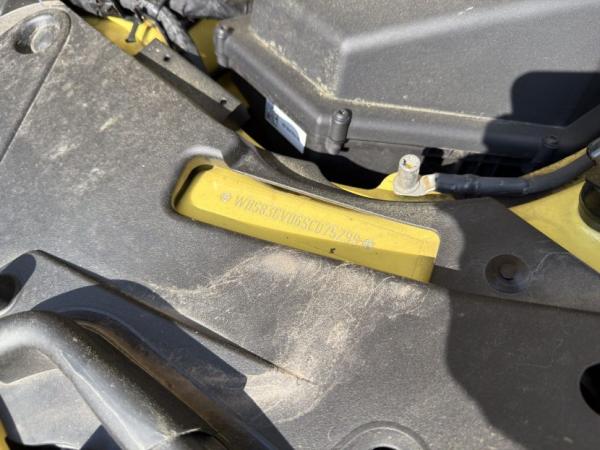
Position 9 exists to catch transcription and typing errors. It’s a number from 0-9 or the letter X, calculated with a weighted formula applied to the other sixteen characters, the same kind of self-validating math an ISBN uses on a book. In the US and Canada, every VIN carries one under 49 CFR 565.15.
The calculation: each letter gets a numeric value (A=1, B=2, C=3, D=4, E=5, F=6, G=7, H=8, J=1, K=2, L=3, M=4, N=5, P=7, R=9, S=2, T=3, U=4, V=5, W=6, X=7, Y=8, Z=9; digits keep their own value). Each of the 17 positions carries a weight, in order: 8, 7, 6, 5, 4, 3, 2, 10, 0, 9, 8, 7, 6, 5, 4, 3, 2 (position 9’s own weight is 0, since it’s the value being solved for). Multiply each character’s value by its position weight, sum all seventeen products, and divide by 11. The remainder is the check digit. If the remainder is 10, the check digit is X.
One limitation worth being direct about: a valid check digit does not prove the VIN belongs to the vehicle you’re looking at. A cloned VIN, copied accurately off a legitimate car and stamped onto a different one, will still pass this math every time, since the formula only validates internal consistency, not authenticity. Catching a clone requires comparing the physical VIN plate, door jamb sticker, title, and engine stamp against each other and against the vehicle’s actual specification, not just running the checksum.
Position 10: Model Year
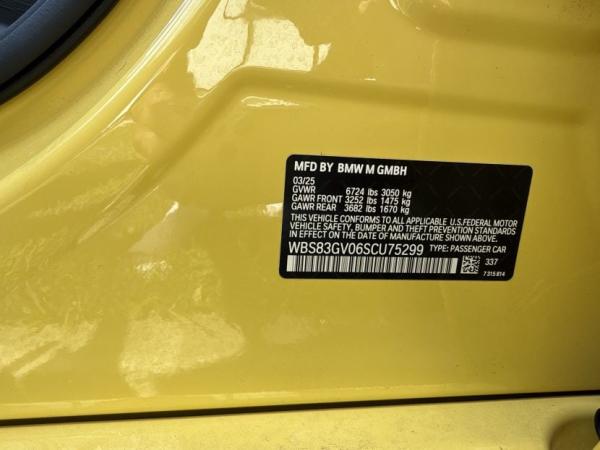
Position 10 gives the model year on a fixed 30-year cycle: letters A through Y, skipping I, O, Q, U, and Z, followed by the digits 1 through 9. The cycle repeats every 30 years, so one character maps to two possible years, resolved by cross-checking the chassis generation. For any BMW on the road today, it’s virtually always the recent value.
For the current cycle:
- A = 2010
- B = 2011
- C = 2012
- D = 2013
- E = 2014
- F = 2015
- G = 2016
- H = 2017
- J = 2018
- K = 2019
- L = 2020
- M = 2021
- N = 2022
- P = 2023
- R = 2024
- S = 2025
- T = 2026
Model year and production date are two different things and shouldn’t be conflated. A BMW carrying a 2026 model-year VIN code can have physically rolled off the line in calendar year 2025, since automakers routinely start building next year’s model partway through the current one.
Why Some European BMWs Don’t Follow The Model-Year Chart
This position-10 rule is most reliable for North American-market vehicles. European VIN regulation doesn’t require year and plant data the way the US rule does, and some Euro-spec BMWs use a 0 in position 10 instead of a year letter. That isn’t an error, it’s a different regulatory requirement. For a European-market car, the actual build date from the factory record is more useful than trying to force the VIN through the North American year chart.
Position 11: Assembly Plant
This is the character that identifies which factory built the car, and it’s also the part of the VIN where public information is genuinely inconsistent, so it’s worth being straightforward about that instead of presenting a tidy table that isn’t well supported.
The mapping documented most consistently by BMW enthusiasts, and which holds up reasonably well for cars from the 1990s through the 2000s:
- A, F, G, K — Munich
- B, C, D — Dingolfing
- E, J — Regensburg
- L — Spartanburg, South Carolina
- N — Rosslyn, South Africa
More recent VINs have shown plant characters outside that set, including digits, as BMW’s plants worked through their available letters and started reusing numbers instead. BMW hasn’t published a current, complete public master list, and different community sources disagree on specifics for cars built in the last decade or so. One data point worth flagging directly: BMW built the X1 at the VDL Nedcar plant in Born, Netherlands, for a few years, but that arrangement ended when BMW pulled its production out of that plant in early 2024, so any table describing Born as a live BMW plant is already out of date.
If the assembly plant genuinely matters, for a warranty question, a recall dispute, or provenance research, the most reliable route is NHTSA’s own VIN decoder at vpic.nhtsa.dot.gov. It pulls directly from the VIN specifications BMW itself files with NHTSA under 49 CFR Part 565, rather than triangulating forum posts the way most free online charts do.
Positions 12-17: The Production Sequence
The final six characters are the sequential serial number, the thing that separates your specific car from every other example of the same configuration built in the same plant that model year. BMW also treats the last seven characters of the full VIN, the plant code plus the six-digit sequence, as a shortened identifier that gets stamped on parts and components throughout the car. Enthusiasts often call this the “short VIN.” It isn’t a separate number, it’s just the tail end of the one you already have, and it’s useful for parts lookup but doesn’t carry the WMI, VDS, or year data the full VIN does.
How To Decode Your BMW’s VIN
Start by finding the VIN and confirming it matches everywhere it should appear: the dashboard at the base of the windshield, visible from outside on the driver’s side; a sticker in the driver’s door jamb; stamped into the engine block; and on the title, registration, and insurance card. If any of those disagree with each other, that’s a bigger problem than anything a decoder will tell you, and it’s worth resolving before you go any further.
From there, work through the sections in order. Confirm the WMI is consistent with the brand and rough origin you expect. Run the check digit if you want certainty the number itself hasn’t been mistyped or altered. Read the year letter. Note the plant character, and cross-reference it against NHTSA’s vPIC decoder if it matters for something more than curiosity. For the parts of the VDS that aren’t publicly documented, a dedicated BMW VIN decoder or a parts catalog like RealOEM will translate the series, body, and engine using BMW’s own data, which beats guessing at positions 4 through 8 by hand.
What a VIN Decode Cannot Tell You
A decode tells you what the car was when BMW built it: model, body style, engine, production date, assembly plant, and factory-installed equipment. It says nothing about what happened to the car afterward. Accident history, salvage or flood titles, odometer rollbacks, theft records, and prior ownership all require a separate history report, from a service like Carfax or AutoCheck, or from the National Insurance Crime Bureau’s free VINCheck tool for theft and salvage records specifically.
Open safety recalls are the one exception you don’t need to pay for. Both BMW and NHTSA offer free recall lookups using the full VIN. For a used BMW, the strongest approach combines the free VIN decode, a paid history report, a recall check, service records if the seller has them, and a physical pre-purchase inspection. No single one of those covers what the others do.

Related posts






Latest Post


No Comments