
Everything you need to know about Stellantis
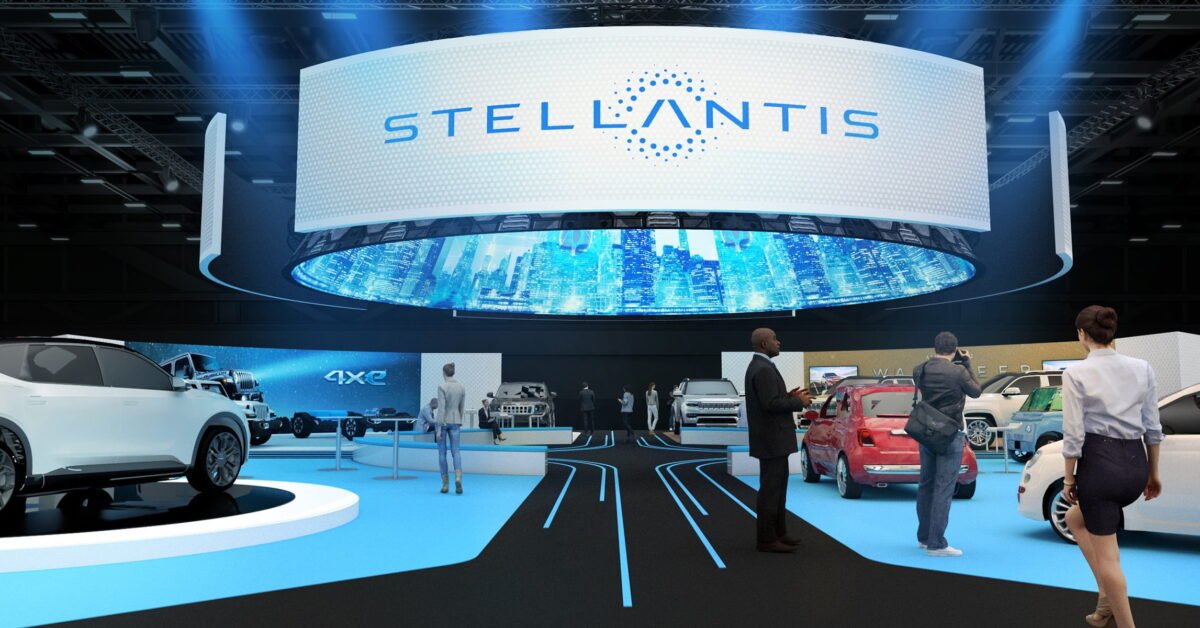
Visit enough car showrooms, or read any car websites or magazines, and you might occasionally hear the name Stellantis. Perhaps it’s one of the glut of new car brands currently charging into the UK? Actually, no.
In fact, Stellantis has only been around less than a decade, so it’s not surprising that many people have never heard of it. Yet in 2022, it was the world’s largest automotive manufacturer in terms of global sales, though it’s slipped back a bit since, ranking fifth in 2025. The reason it’s a big player? Stellantis is the name applied to a massive conglomerate that has resulted from a host of mergers and takeovers.

The brands that have been snapped up in those mergers are some of the best known in the industry – think the likes of Vauxhall, Peugeot, Alfa Romeo…
So who or what is Stellantis?
The industrial manoeuvrings that created Stellantis go back to 2019 when Fiat Chrysler Automobiles, itself a big group of Italian and American brands and one that has endured past struggles to remain profitable, tried to merge with French state brand Renault. The two reached a provisional agreement but then a combination of the French government and Renault’s partner Nissan scuppered the deal.

FCA then turned its attention to the other French automotive giant, PSA Group, owner of Peugeot, Citroën and – since 2017 – Vauxhall and Opel. The deal was completed in January 2021 and the new group was named Stellantis.
The Stellantis of 2026 is a huge group, selling in more than 130 countries and having around a quarter of a million employees.
When did Stellantis launch in the UK?
Stellantis effectively arrived in the UK in January 2021, as every brand listed below became part of the new giant group, the world’s fourth largest automotive manufacturer at the time.
But car buyers would not have noticed any differences as the various brands have continued to trade under their original names, the oldest being Vauxhall which stretches back to 1857.
What models does Stellantis have and what else is coming?
It’s easier to name the brands that now come under the Stellantis umbrella – listing all their models would require a lot of scrolling… Currently the Stellantis badges available in the UK comprise Fiat and its performance sub-brand Abarth, Vauxhall, sister brands Peugeot and Citroën along with the latter’s upmarket offspring DS Automobiles, Alfa Romeo, Maserati, Jeep, and finally Leapmotor.
Leapmotor? In 2023 Stellantis did a deal worth some £1.3 billion to take a 20% stake in the Chinese electric vehicle (EV) maker, founded in 2017, and to launch it as the group’s European EV brand. The first Leapmotor vehicles started arriving on UK roads in 2025, the TO3 city car becoming one of the cheapest EVs on the market.
Stellantis also owns Vauxhall’s European sister Opel, Lancia and US big names Chrysler, Dodge and the latter’s sub-brand Ram – and there’s an entire suite of commercial vehicle badges too…
Not long after it was created the group unveiled big future plans, in 2022 launching its ‘Dare 2030’ strategy which promised 100 new vehicles across its portfolio by 2030, including 75 battery-electric vehicles. A new electric platform was unveiled in July 2023 and from 2024 was set to underpin new versions of such core models as the Alfa Romeo Giulia and Peugeot 3008.
More recent times, however, have been a little tougher for Stellantis – the group has slipped from the most worldwide sales in 2022 to ranking only fifth in 2025, losing close to 5% of its European market and reporting global losses equivalent to £19.5 billion.
Bosses blamed over-estimating just how quickly buyers would switch to electric cars as the market changed, while the return of President Trump to the White House and his wide-ranging tariffs have also been a major factor.
Stellantis recently indicated that part of the road to recovery from this situation will include more investment in combustion-engined cars. Hybrids will be a major part of this but Ram trucks in the US are even getting their V8 powerplants back.
Where can I try a Stellantis car?
Probably, just round the corner – the Stellantis roster includes some of the most familiar car brands on the market, with plenty of dealers right across the country. Mind you only three of them, Vauxhall, Peugeot and Citroën, regularly make the UK’s top 20 manufacturers in terms of sales, though the Vauxhall Corsa is a fixture in the top five best-selling cars, fourth overall in 2025, with the Vauxhall Mokka and Peugeot 3008 also occasionally breaking into the top ten.
What’s particularly significant about this company?
Stellantis is a huge group, but also effectively a family company. The biggest shareholder is the Agnelli family – Giovanni Agnelli having founded Fiat in 1899 – while another significant shareholder in the group is the Peugeot family, who made salt and pepper shakers before building their first steam cars ten years before Agnelli.
Where makes Stellantis different to the rest?
Merging car manufacturers with one another usually leads to the less well-performing ones being jettisoned as the new group consolidates what it has.
But not, it seems, Stellantis. In 2021, the company announced that every one of the 14 brands now under the group’s umbrella would be given ten years of funding to prove themselves, to either rebound from previous difficulties or grow. Only then will company bosses decide whether to shut down any of the brands.
More recent troubles could see changes to this strategy – latest reports from America suggest Stellantis will prioritise investment in Jeep and Ram in America, and in Europe Peugeot and Fiat, its best performing brands. The likes of Citroën, Alfa Romeo and Volkswagen are not under threat, according to the reports, but they will rely on the big four for their technology.
Paradoxically the new Stellantis design head in Europe, Gilles Vidal, has also recently committed to making sure the various brands offer more distinctive cars that are not clones of each other.
Summary
Stellantis has made several headlines in its only five years or so of existence, discovering the pitfalls of making big plans in today’s automotive market and being forced to change direction as a result, and many questions still remain to be answered.
The group includes several names that have had their difficulties – for example while Fiat seems to be currently growing sales it has been through a few relaunches and disappointments in the past, and many buyers still struggle to grasp exactly what DS Automobiles is all about.
Will these brands flourish as part of a huge group, or will their individual elements have to be drowned under economies of scale making it impossible to avoid a raft of near-identical cars with different badges? And will the group be able to cope with the constantly changing landscape in the switch to electrification? We can only wait and see…
You may also like:
This article was first published in December 2023 and updated in August 2026.

Related posts



Latest Post


No Comments