Hybrid and plug-in hybrid tech have come a long way in the SUV market, and there are models available today that can deliver the kind of fuel efficiency that was once only meant for small cars. If there is a reason more people are buying SUVs over sedans, coupes, and hatchbacks, the improvement in fuel consumption combined with usable space leads the way. We have also seen another change in the market: mainstream SUVs are getting more luxurious.
Of course, this doesn’t mean the cheapest entry-level SUV will have the same level of refinement as something made by a traditional luxury brand, but there has been a huge swing in what is on offer. Mazda may be one of the leading mainstream brands offering premium at an affordable price, and one of their new PHEV SUVs is causing all sorts of trouble for premium brands.
You No Longer Need A Luxury Badge To Get A Premium SUV
Front 3/4 view of a 2026 Hyundai Santa Fe Hybrid CalligraphyIsaac Atienza | TopSpeed
Not long ago, stepping into a genuinely upscale SUV meant shopping at Lexus, BMW, Audi, Cadillac, Lincoln, or Mercedes-Benz. Today, we don’t need to. Flagship trims from mainstream automakers are delivering the kind of craftsmanship, tech, and refinement that would have been considered luxury-exclusive just a few years ago. We are increasingly judging vehicles by what they offer rather than just the badge on the hood.
Take the new Hyundai Santa Fe Calligraphy: for decades, the Hyundai badge meant low running costs and a basic build. However, today, the top-tier Santa Fe gets Nappa leather upholstery, dual 12.3-inch displays under a curved panel, an HUD, and an advanced driver assistance equipment list. Plus, it has a starting price of just over $50,000. The comparable BMW (the X3) has a starting price of $51,300 before any extras.
Mainstream Brands Are Closing The Gap Faster Than Ever
Front 3/4 shot of 2026 Toyota Grand Highlander Hybrid parkedToyota
The rivalry between mainstream and luxury SUV brands has also intensified because newer mainstream models have become sophisticated in ways that matter beyond an equipment list. The new Toyota Grand Highlander Hybrid makes for a great family SUV because it pairs generous interior space with excellent ride comfort, a quiet cabin, and ergonomics that make long-distance travel easy.
Add in Toyota’s bulletproof reputation and good resale value, and the whole ownership experience becomes very difficult for once-traditional-luxury-SUV buyers to ignore. Mainstream brands are also now investing heavily in chassis refinement, noise insulation, capable infotainment systems, and premium materials in their top trims.
Side shot of 2026 Toyota Grand Highlander Hybrid interior showing front seatsToyota
Instead of feeling like dressed-up economy vehicles, today’s mainstream flagship SUVs are competing very well on merit and are narrowing the gap with luxury brands for everyday driving, while still keeping costs down. The more expensive brands do genuinely have something to worry about today.
Plug-In Hybrid Power Makes The Value Proposition Even Stronger
Rear 3/4 action shot of 2025 Kia Sportage PHEV driving on roadKia
Electrification has made this trend even easier to see. Plug-in hybrid systems in mainstream SUVs also offer something some traditional luxury SUVs still struggle to balance: meaningful all-electric driving for daily commutes and usable power with long-range capability for road trips. On top of the generally lower prices of mainstream SUVs, the lower fuel and charging costs only work in their favor.
Just as vitally, modern plug-in hybrid powertrains deliver instant electric torque that makes them a little more fun to drive. Smooth low-speed acceleration, quieter running in the city, and fewer trips to the gas station add another form of value that goes beyond pump prices. When those kinds of benefits are paired with premium features and good pricing, some mainstream PHEV SUVs become very good alternatives to established luxury nameplates.
The Mazda CX-70 PHEV Makes A Very Convincing Luxury Alternative
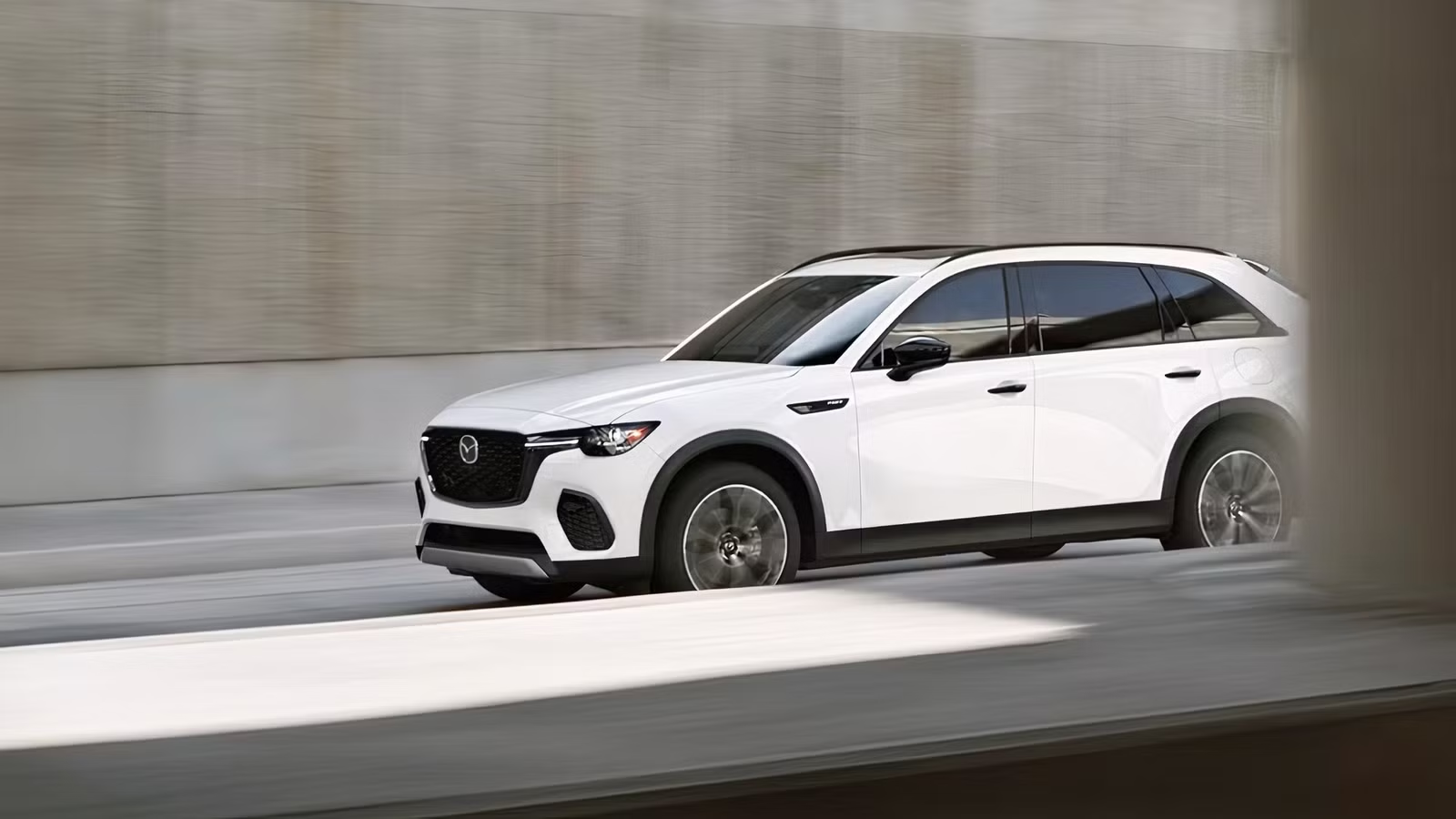
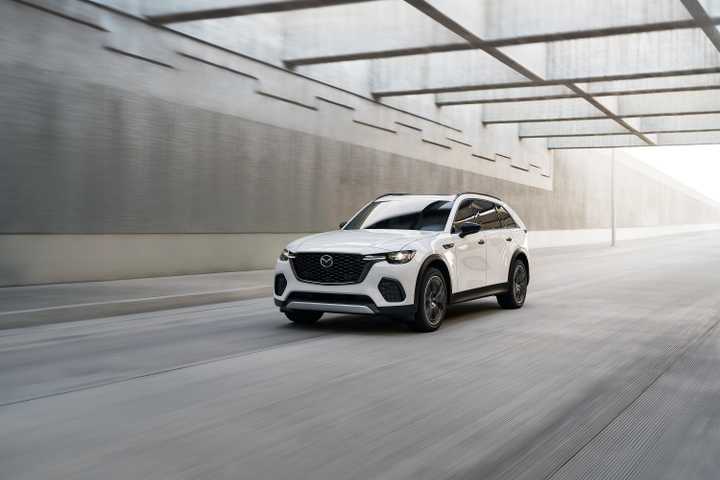
Front 3/4 action shot of 2026 Mazda CX-70 PHEV driving on roadMazda
Enter the 2026 Mazda CX-70 PHEV: everything mentioned above is well within its wheelhouse. There are just two grades of the new Mazda CX-70 PHEV: the CX-70 PHEV SC and the CX-70 PHEV SC Plus. Starting prices are reasonable at $44,450 and $47,450, respectively, and compared to its main rivals, such as the new Lexus RX 450h+ and 2026 BMW X5 xDrive50e, it is much cheaper to buy.
The new RX 450h+ has a starting price of $66,780, and the xDrive50e has a starting price of $77,450. While the CX-70 is considerably more affordable, you aren’t missing out on what matters in a luxury SUV-rivaling model.
Premium Cabin Quality Without The German Price Tag
Shot of 2026 Mazda CX-70 PHEV interior showing front cabinMazda
At the top of what most of us look for in a new SUV is interior comfort and quality. Yes, Mercedes may offer a plusher overall feel, but there is nothing to complain about in the new CX-70 PHEV. The entry-level SC already feels a cut above what you’d expect from a mainstream Japanese badge, with a minimalist dashboard design finished with soft-touch materials, and a choice between Black Leatherette and Greige Leather upholstery.
The cabin centers around a 12.3-inch Mazda Connect infotainment display with wireless Apple CarPlay and Android Auto, and an eight-speaker audio system. Heated front seats, ventilated front seats, heated rear outboard seats, a heated steering wheel, power-adjustable front seats, and retractable rear sunshades all come as standard. So, it doesn’t just look good inside for its price.
The top-tier option in the streamlined CX-70 PHEV lineup is the SC Plus, and everything gets a little more refined. Genuine black leather upholstery replaces the leatherette, while a 12.3-inch fully digital meter display takes the place of the standard TFT unit. You also get Mazda’s Active Driving Display, which projects information onto the windshield.
The SC Plus also gets features you might expect to see in a bona fide luxury SUV, in the form of a power panoramic moonroof, a hands-free power liftgate, an adaptive front lighting system, a 360-degree monitor with See-Through View and Trailer Hitch View, plus additional driver-assist tech (Front Cross Traffic Alert and Smart Brake Support). Rather than just overloading the cabin, though, Mazda has chosen to focus on a calm design that will likely age nicely, good ergonomics, and tech that is actually needed.
Strong Performance And Electric Range Make It Easy To Live With
Close-up shot of 2026 Mazda CX-70 PHEV rear endMazda
Across both new CX-70 PHEV trims, there is just one powertrain option: a 2.5-liter naturally aspirated e-SkyActiv inline-four paired with a 17.8-kWh battery and a 68-kW electric motor. The gas-only CX-70 is equipped with a 3.3-liter turbo-six, which would be welcome under the hood of the PHEV, but you still get a great deal for your money from the plug-in variant. i-ACTIV all-wheel drive is standard fare for both trims, and you get a maximum towing capacity of 3,500 pounds (when properly equipped).
When using premium gas, combined horsepower output is 323, and combined torque output is 369 pound-feet. 0–60 mph times have been recorded at between 5.9 and 6.3 seconds, providing plenty of power for easy highway entries, and an estimated top speed of 155 mph is not to be overlooked.
Rear 3/4 shot of 2026 Mazda CX-70 PHEV parked in garageMazda
The standout thing about the CX-70 PHEV’s powertrain, though, is that on top of the power you get and the commendable sprint times, it is also efficient. According to FuelEconomy.gov, the new CX-70 can achieve 61 combined MPGe, offering a 32-mile all-electric driving range and a 520-mile gas/electric tank range.
The Mazda CX-70 PHEV Gets More Right Than You’d Expect
Close-up shot of 2026 Mazda CX-70 PHEV badgeMazda
Shot of 2026 Mazda CX-70 PHEV rear USB chargingMazda
Mazda is an understated brand when it comes to delivering most things we could ask for from a vehicle, but here in the CX-70, it has done it again and provided more than just a sleek look, a well-appointed cabin, and a powertrain that effectively balances power, speed, and efficiency. It has also provided a proper crossover SUV build that can be used every day.
The CX-70 is a mid-sized plug-in SUV and measures in at 200.8 inches long by 84.9 inches wide (with mirrors), and rides on a 122.8-inch wheelbase. This again strikes a nice balance between being relatively city-friendly and big enough to open up room inside.
Shot of 2026 Mazda CX-70 PHEV cargo areaMazda
Front legroom measures 41.7 inches and rear legroom is a generous 39.8 inches; you get 39.6 cubic feet of storage space with the rear seats in place, and a maximum cargo capacity of 75.3 cubic feet with the rear 60:40 split-folding seats folded flat.
On top of these family-friendly credentials, the IIHS has also named the CX-70 PHEV a Top Safety Pick+ model, providing added confidence that it will make for a capable yet refined family SUV in 2026.
Rear-Biased Driving Dynamics Set It Apart From Mainstream Rivals
Rear 3/4 shot of 2026 Mazda CX-70 PHEV parkedMazda
The 2026 CX-70 PHEV has a standout feature beneath its composed exterior: a rear-biased version of Mazda’s i-ACTIV AWD system. While many mainstream SUVs are fundamentally FWD and send torque rearward when more bite is needed, the CX-70 is built on Mazda’s longitudinal, rear-wheel-based Large Platform. That gives it a naturally balanced feel, with steering and weight transfer that are noticeably more composed than the average family crossover.
The i-ACTIV AWD system is designed to be proactive rather than reactive. Instead of waiting for the tires to lose grip, it continuously monitors inputs such as steering angle, wheel speed, yaw rate, and throttle position to predict changing road conditions. The system can then vary torque between the front and rear axles before wheel slip occurs, so you get stability in the wet and on uneven roads. This is the sort of engineering usually associated with premium European SUVs, but it is available here in the well-priced CX-70 PHEV.
Rear 3/4 action shot of 2026 Mazda CX-70 PHEV driving on roadMazda
Combined with near-instant torque from the electric motor, the CX-70 delivers smooth, strong acceleration and a composed chassis feel under load. Plus, you get Mazda’s Kinematic Posture Control, which applies braking to the inside rear wheel when you’re cornering to reduce body roll and sharpen turn-in.
This kind of engagement is becoming rare in the mid-sized SUV market, and we aren’t surprised to see this setup has helped the CX-70 PHEV get a 4.8 out of 5 overall rating and 5 out of 5 performance rating from owners who left a review on Kelley Blue Book.
Lower Ownership Costs Than The Premium Brands
Close-up shot of 2026 Mazda CX-70 PHEV wheelMazda
Alongside higher up-front purchase prices, the downfall of many luxury SUVs is their ownership costs once warranties have expired. With the CX-70 PHEV, this is less of a concern. According to FuelEconomy.gov, it will cost you $1,900 a year for gas and electricity, costing you $2.02 to drive 25 miles electric-only or $4.94 using gas only, which is approximately $1,500 cheaper over five years compared to the average modern vehicle.
J.D. Power ratings for the new CX-70 PHEV are modest, at 77 out of 100 overall and 69 out of 100 for reliability, but with a CarEdge five-year maintenance estimate of $2,649 (or an annual cost of up to $677 a year at five years old), some of the typical headaches of owning a German vehicle are avoided.
Close-up front 3/4 shot of 2026 Mazda CX-70 PHEV parkedMazda
To put this into perspective, a BMW X3 will cost you, also according to CarEdge, on average $5,912 for maintenance over five years, while a Mercedes-Benz GLC will cost you $4,777 over the same time. Even the Lexus RX 450h+ will cost you slightly more, at $2,693 over five years.
On top of this, Mazda also offers a decent standard warranty for new CX-70 PHEV models, which includes a three-year/36,000-mile bumper-to-bumper warranty, a five-year/60,000-mile powertrain warranty, and an eight-year/100,000-mile high-voltage battery warranty.
Is The Mazda CX-70 PHEV Worth Choosing Over A Luxury SUV?
Front 3/4 action shot of 2026 Mazda CX-70 PHEV front 3/4 driving on roadMazda
No, you shouldn’t buy a new CX-70 PHEV over a luxury SUV made by BMW or Mercedes-Benz if you are looking for something with established luxury badge kudos. You also shouldn’t buy one if you are looking for the sprint times you can get from the likes of the X5 xDrive50e (around 4.6 seconds to 60 mph), or the exceptional sportiness of the Lamborghini Urus SE. However, at the CX-70 PHEV’s price point, that is not to be expected.
Its closest rivals (in terms of space and segment classification) are the new BMW X5 xDrive50e, the new Lexus RX 450h+, and the Volvo XC60 Recharge, but all of them have starting prices between $58,000 and $77,000 before extras, so any benefits you might gain from longer electric range, better MPGe ratings, or slightly more refined interiors will take some time to become apparent.
Shot of 2026 Mazda CX-70 PHEV Bose speakerMazda
You also don’t get the horrendous depreciation that we find in the luxury market, with iSeeCars rating it 7.7 out of 10 for value retention. Compared to something like the X5, which is rated 7.2 out of 10 for value retention and loses up to 59 percent of its value in the first five years, the CX-70 PHEV looks to be a safer bet.
Yes, the new Mazda CX-70 PHEV mid-size SUV may sit somewhere between luxury and non-luxury, and the Mazda badge doesn’t carry a great deal of weight in the premium market, but it doesn’t pretend to be a high-performance SUV or a luxury flagship; what it does well is master the fundamentals that straddle both markets. It is these fundamentals in ergonomics, value for money, reasonable running costs, comfort features, ride quality, understated performance, usable power, solid fuel efficiency, and a well-executed build that make the CX-70 PHEV such a compelling challenge for more expensive premium names.
Base Trim Engine
2.5L E-SKYACTIV-G I4 Hybrid
Base Trim Transmission
8-speed automatic
Base Trim Drivetrain
All-Wheel Drive
Base Trim Horsepower
189 HP @6000 RPM
Base Trim Torque
192 lb.-ft. @ 4000 RPM
Fuel Economy
56 MPGe/25 mpg combined
Make
Mazda
Model
CX-70 PHEV
0-60 MPH
6.5 seconds
Infotainment & Features
6 /10
Sources: Mazda, FuelEconomy.gov, J.D. Power, iSeeCars, IIHS, and Kelley Blue Book.










No Comments