
Toyota RAV4 2026: The Hybrid-Only Lineup Explained
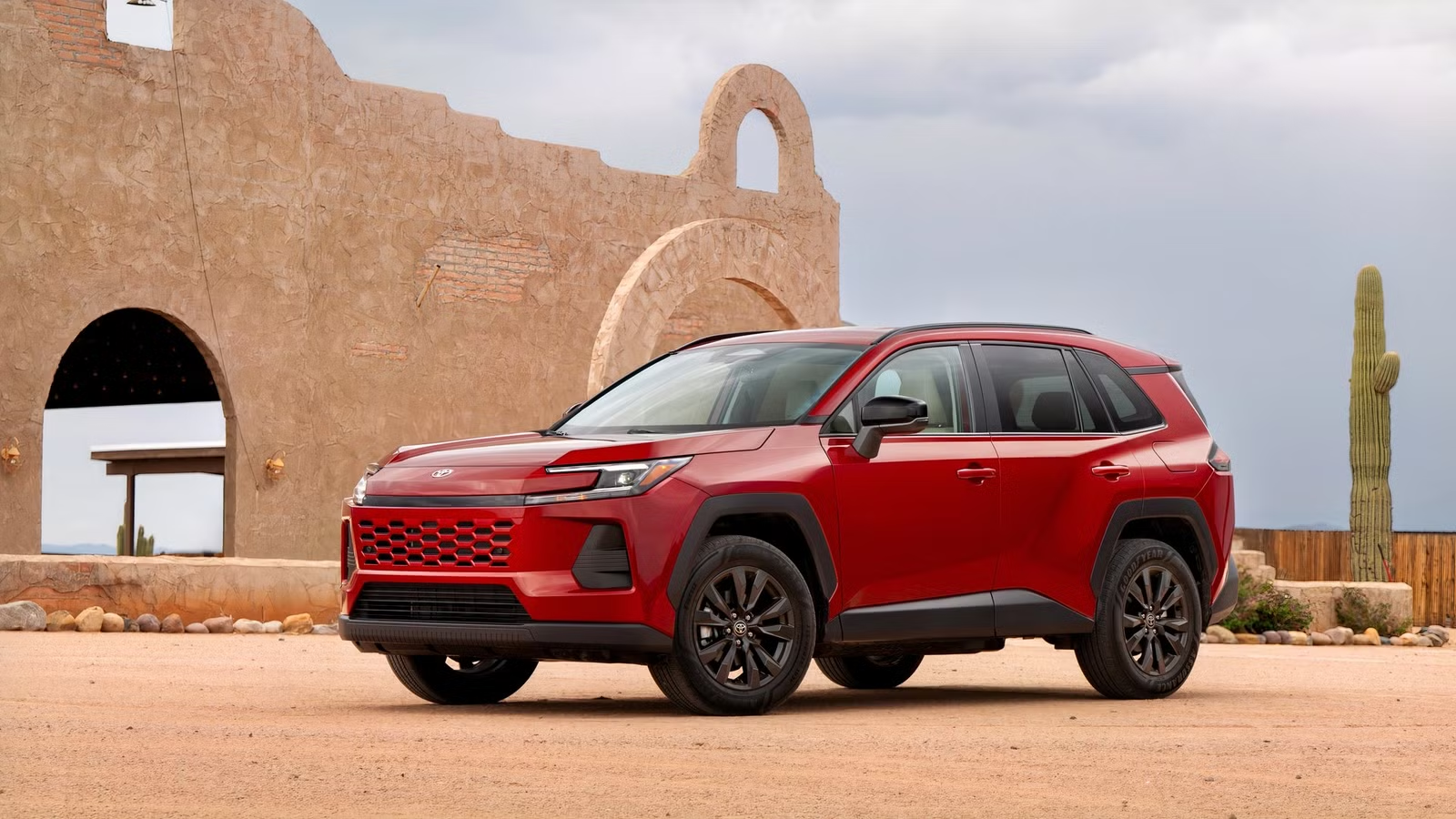
The 2026 Toyota RAV4 marks one of Toyota’s boldest product decisions yet, abandoning the traditional gas-only model in favor of an entirely hybrid-powered lineup in the United States. Every 2026 Toyota RAV4 is now offered as either a conventional hybrid or a plug-in hybrid, reflecting Toyota’s belief that electrification has become the new normal for compact SUVs. But what does that mean for buyers? This guide explains what changed, compares the hybrid and plug-in hybrid powertrains, and shows how the redesigned RAV4 stacks up against rivals like the Honda CR-V Hybrid and Hyundai Tucson Hybrid.
The Sixth-Generation Platform: What’s New Under The Hood
Platform Architecture And Efficiency Gains

The 2026 RAV4 Hybrid is a new direction for the popular SUV. While it’s had a hybrid powertrain in the past, the sixth-generation RAV4 goes all-in on hybrid, making it much more efficient. The agile and functional spirit of the 2026 RAV4 trims remains intact thanks to the TNGA-K platform. This platform gives the Toyota RAV4 improved structural rigidity by reinforcing the frame joints and suspension mounting points. These foundational changes improve handling and ride comfort, making this SUV more enjoyable to drive.
The previous version of the RAV4 began at the LE trim with a 2.5-liter four-cylinder engine mated to an eight-speed automatic transmission. This gave drivers 27 city/35 hwy mpg, which is respectable. Towing was limited to 1,500 pounds for the gas-only models.
The 2026 Toyota RAV4 LE uses that same 2.5-liter four-cylinder engine and two electric motors for FWD models. AWD versions have a third electric motor driving the rear axle. Power is routed to the wheels through a CVT, and the FWD models achieve 47 city/40 hwy mpg, showing a significant increase in fuel efficiency over the gas-only LE trim from 2025. The tow rating has also been increased to 1,750 pounds, making the hybrid-only lineup a bit more capable than previous versions of the RAV4.

Comparing a gas-only powertrain to a hybrid isn’t a direct comparison, but the 2025 RAV4 Hybrid, which was only offered in the AWD version and used the same powertrain as the current RAV4, was rated at 41 city/38 hwy mpg, which still falls behind the 2026 RAV4 mpg.
Hybrid Vs. PHEV: Powertrain Breakdown

The traditional hybrid powertrain is offered in FWD and generates 226 horsepower, which is more than enough for a compact hybrid SUV. The AWD model increases power to 236 horsepower thanks to the addition of the third electric motor. In Car and Driver testing, the AWD RAV4 Hybrid reached 60 mph in 7.1 seconds, which isn’t exceptionally fast, but it’s quick enough for highway passing and merging.
The 2026 RAV4 PHEV has the same basic setup as the traditional hybrid AWD, with a 2.5-liter engine and three electric motors, but a plug-in setup using a 22.7-kWh battery makes things more interesting. This power system delivers 324 horsepower to all four wheels via a CVT. The electric driving range depends entirely on the trim chosen. The SE and XSE models can drive up to 52 miles on electricity only. The Woodland trim is good for 49 miles, and the GR Sport version can travel 48 miles before using gasoline. Using a Level 2 240-volt charger, the PHEV batteries can be fully charged in 3.5 hours, but can reach 80 percent of a full charge in approximately 35 minutes using a DC Fast Charger.
These two hybrid systems exist to offer shoppers the choice they may want and need. Drivers who have shorter commutes or typically drive fewer than 50 miles per day might gravitate toward the PHEV powertrain, which runs on electric-only power, while those with long commutes and long daily driving distances may find the traditional hybrid system works better for them.
Trim Levels, MPG And Real-World Efficiency
2026 RAV4 Lineup And Trims

Toyota redesigned the RAV4 and offers it in three styles across seven trims. That doesn’t mean every style is available in each trim, but the available styles are Core, Sport, and Rugged. Most models will have the Core style, but there’s a new look to the Woodland trim and the introduction of the first-ever 2026 RAV4 GR Sport.
The trim levels offered for the 2026 Toyota RAV4 are LE, SE, XLE Premium, Woodland, XSE, Limited, and GR Sport. The SE, Woodland, and XSE trims can be had with either powertrain, but the LE, XLE Premium, and Limited trims are only offered with the traditional hybrid powertrain, while the GR Sport model comes exclusively with the PHEV powertrain.
The LE trim offers a strong foundation with 17-inch wheels, LED headlights, keyless entry, push-button start, dual-zone automatic climate controls, a digital gauge cluster, a 10.5-inch touchscreen display, a six-speaker audio system, wireless connectivity, and navigation. Every RAV4 comes with a comprehensive safety and driver-assist package that includes forward collision warning with automatic braking, lane-keeping assist, adaptive cruise control, lane-centering, blind-spot warning, and rear cross-traffic alert.
The SE model adds 18-inch black wheels, black exterior trim, a power driver’s seat, heated front seats, and blue interior accents. The PHEV SE model adds parking sensors and automatic braking at low speeds, front and rear. Moving to the XLE Premium gives you a power liftgate, a wireless phone charger, synthetic leather upholstery, and front and rear automatic braking at low speeds.
The Woodland Edition is meant to be the most rugged of the RAV4 trims, giving you 18-inch bronze-colored wheels with all-terrain tires, raised roof rails, black exterior accents, a 110-volt power outlet, a heated steering wheel, and red interior accents. In the PHEV model, you get faster at-home charging, and a surround-view camera is added.
Moving to the XSE model, the RAV4 has an available two-tone paint with a black roof, a sunroof, 20-inch wheels, ventilated front seats, a power-adjustable front passenger seat, driver’s side memory settings, synthetic suede-trimmed seat inserts, a 12.9-inch touchscreen, and the surround-view camera system in the regular hybrid models. The PHEV version adds a hands-free power liftgate.
At the top level, the Limited trim for the hybrid RAV4 includes a panoramic sunroof, dual phone chargers, and a nine-speaker JBL premium sound system. The GR Sport model changes things a bit with summer performance tires, a sport-tuned suspension and steering system, and paddle shifters.
EPA vs. Real-World Fuel Economy

The Toyota RAV4 PHEV gets an estimated 43 city/36 hwy mpg in the SE and XSE trims. The Woodland and GR Sport trims don’t fare nearly as well. These fuel mileage figures are expected when the entire system is working together.
For the traditional hybrid model, owner-reported figures on Road Ethos closely match the EPA numbers. Many drivers report achieving 42–45 mpg combined daily, which is certainly close to the 43 mpg combined quoted for the regular hybrid model. Some Reddit threads show drivers achieving 50 mpg or more but do not list the powertrain information. This is still impressive, especially for a hybrid SUV. A Facebook discussion shows the PHEV RAV4 reaching 41.7 mpg on a mostly highway trip, which is certainly in line with EPA estimates.
Comparing the 2026 Toyota RAV4 with two of its chief competitors offers even more insight into the efficiency discussion. The Honda CR-V Hybrid starts at the Sport trim, powered by a 2.0-liter four-cylinder engine and two electric motors that produce 204 horsepower. This hybrid SUV is rated at 43 city/36 hwy mpg. This means the 2026 RAV4 vs CR-V Hybrid efficiency conversation favors the Toyota SUV.
Turning to the Hyundai Tucson Hybrid, power comes from a 1.6-liter turbocharged four-cylinder engine and one electric motor, which together produce 231 horsepower. This hybrid SUV achieves 38 city/38 hwy mpg, which puts it behind the RAV4 and the CR-V. There’s a PHEV version of the Tucson Hybrid, which achieves up to 32 miles of electric driving, which doesn’t come close to the RAV4 PHEV.
The GR Sport Angle: Performance Meets Efficiency
GR Sport Styling And Handling

The 2026 Toyota RAV4 GR Sport builds on the XSE trim, which means it takes the styling packaging of the SE and XSE and adds a few additional items. Because it’s built on the sporty line of Toyota models, it features black wheels and exterior trim elements that give it a sporty, fun look. The GR Sport adds to the experience with its trim-specific features, making it more engaging to drive on the road. This makes it an eye-catching SUV, but not one you can take to the track.
The RAV4 GR Sport trim is only available with the PHEV powertrain, which is great because it means you have 324 horsepower, but it doesn’t make the RAV4 any faster than other trims. The PHEV model has been tested to reach 60 mph in 5.6 seconds, which is notably quick for a compact SUV, but the SE and XSE trims can do the same.
The difference in the GR Sport comes from its suspension and steering systems, which make it more fun on an open road than the lower trims. This stylish, fun variation of the 2026 Toyota RAV4 adds flair, sportiness, and more while still delivering on the promise of a hybrid Toyota powertrain.
Acceleration, Responsiveness And Track Readiness

The first-ever RAV4 GR Sport is offered in the United States and was developed in collaboration with Toyota’s Gazoo Racing team. This model has the performance features you want, with improved turn-in response, stable cornering, excellent body control, and improved steering feel.
Still, it’s an SUV and doesn’t actually have more power than lower trims. In most GR models, added power and performance are expected. The GR Sport trim is meant to give drivers looking for a more engaging RAV4 a vehicle they want to drive without abandoning the practical SUV nature of this small Toyota vehicle.
RAV4 2026 Vs. Competitors: Hybrid Compact SUVs Compared
CR-V Hybrid Comparison

The 2026 Toyota RAV4 is 181 inches long, 73.0 inches wide, stands 66.7 inches tall, and has a 105.9-inch wheelbase. Its interior volume measures 136.7 cubic feet, with 37.8 cubic feet of rear cargo room and 70.4 cubic feet with the seats down. Front passengers have 37.9 inches of headroom, 41.0 inches of legroom, and 57.0 inches of shoulder room, while rear passengers have 39.5 inches of headroom, 37.8 inches of legroom, and 56.4 inches of shoulder room.
By comparison, the 2026 Honda CR-V Hybrid measures 184.8 inches in length, 73.5 inches in width, and 66.2 inches in height. It rides on a 106.3-inch wheelbase and has 142.8 cubic feet of interior volume with 36.3 cubic feet of rear cargo space and 76.5 cubic feet of cargo room with the seats down. Front passengers have 38.2 inches of headroom, 41.3 inches of legroom, and 57.9 inches of shoulder room, while rear passengers have 38.2 inches of headroom, 41.0 inches of legroom, and 55.9 inches of shoulder room.
Overall, these SUVs are extremely similar in size, which could make the choice difficult if the Toyota RAV4 wasn’t so much more efficient than the Honda CR-V Hybrid. Additionally, the CR-V Hybrid doesn’t start at the base trim, which requires you to pay $35,630 for the Sport trim to get the hybrid powertrain, while the RAV4 LE costs $31,900.
In addition to the size, efficiency, and price comparison, the Toyota RAV4 lineup has a rugged Woodland model and a sporty GR Sport version, which you won’t find in the CR-V lineup. Honda also does not have a PHEV powertrain for the CR-V.
Tucson Hybrid And Other Rivals

Turning to the 2026 Hyundai Tucson Hybrid, you’ll find an SUV that measures 182.7 inches in length, 73.4 inches in width, 66.3 inches in height, and has a wheelbase of 108.5 inches. Its interior volume is 146.7 cubic feet, making it significantly larger than the RAV4. The cargo capacity behind the rear seats is 38.7 cubic feet, and there’s 74.5 cubic feet available with the rear seats down. Front passengers have 40.1 inches of headroom, 41.1 inches of legroom, and 57.6 inches of shoulder room, while rear passengers enjoy 39.5 inches of headroom, 41.3 inches of legroom, and 56.0 inches of shoulder room. The Tucson Hybrid can also tow up to 2,000 pounds, besting the RAV4 by 250 pounds.
The Kia Sportage Hybrid shares a platform and powertrain with the Tucson Hybrid, but it only achieves 35 city/36 hwy mpg. It can also tow up to 2,000 pounds and measures 184.4 inches long, 73.4 inches wide, and 66.3 inches tall, with a 108.5-inch wheelbase. The Sportage has 39.5 cubic feet behind the rear seat and offers 73.7 cubic feet of maximum cargo volume. Front passengers have 37.8 inches of headroom, 41.4 inches of legroom, and 57.5 inches of shoulder room, while rear passengers enjoy 37.8 inches of headroom, 41.3 inches of legroom, and 55.6 inches of shoulder room.
Although the Tucson, Sportage, and CR-V are all larger than the RAV4 overall, none can match the Toyota in fuel efficiency and trim selection. The RAV4 PHEV also offers a significant advantage in electric driving range, and Toyota offers the longest hybrid warranty on the market, protecting the hybrid powertrains for 10 years/150,000 miles. Kia and Hyundai offer a limited powertrain warranty of 10 years/100,000 miles, while Honda matches the industry standard of 8 years/100,000 miles for its hybrid powertrain.
Ownership Considerations: Costs, Reliability And Resale
Maintenance And Hybrid Reliability
Toyota and Honda have been offering hybrid powertrains for longer than any other automaker, with Toyota leading the way thanks to the popularity of the Prius. Toyota has also been among the most reliable brands on the market nearly every year, making it known and trusted for impressive reliability, high resale value, and affordable ownership costs. The extensive, transferable warranty adds to the Toyota RAV4’s impressive ownership appeal.
Owning a hybrid vehicle comes with a few extra maintenance items, which means a bit more out-of-pocket costs during service visits. The gas engine still requires oil changes, and the vehicle will still need regular maintenance of filters, fluids, brakes, and tires. The hybrid system will also need to be checked regularly to ensure it continues to perform as desired.
If you choose a Toyota RAV4 PHEV, you’ll want to consider installing charging equipment at home to keep the batteries charged. This adds additional one-time costs and will also increase your electric bill.
Resale Value And Market Demand

Because the 2026 Toyota RAV4 marks the beginning of a new generation, it’s difficult to predict its depreciation and resale value. Still, the RAV4 has generally been near the top of resale lists and has an average depreciation of only 28 percent over five years. This means owners could get back up to 72 percent of the original value after that time.
As you might expect, the Honda CR-V is right there with the RAV4. Its depreciation is only 29 percent after five years. The Hyundai Tucson doesn’t fare quite as well, depreciating 47 percent during the same time period, while the Kia Sportage loses half its value in the first five years.
The market shift toward hybrid vehicles could boost the resale value of hybrid-only models. Adding sporty and rugged versions to the mix can only boost the 2026 RAV4’s resale value as future owners search for the Woodland and GR Sport trims at affordable prices.
Verdict: Is the 2026 RAV4 Worth the Hybrid-Only Bet?
For most buyers, the 2026 Toyota RAV4 is easier to recommend than ever because Toyota has made the fuel-efficient choice the standard one. The conventional hybrid remains the sweet spot for commuters and families who want excellent efficiency without changing their driving habits, while the plug-in hybrid is ideal for owners who can regularly recharge and maximize its electric range. Performance enthusiasts shouldn’t expect the GR Sport to replace a true sports car, but its sharper suspension, quicker responses, and more engaging personality make it the most entertaining RAV4 Toyota has ever built. Together, those options prove Toyota’s hybrid-only strategy isn’t a compromise; it’s a smarter direction for the future of the compact SUV.
Sources: Toyota, Edmunds, Car And Driver, Road Ethos, CarEdge, Road And Track

Related posts






Latest Post


No Comments