
Tested: 2026 Jeep Compass – Full review, price & features
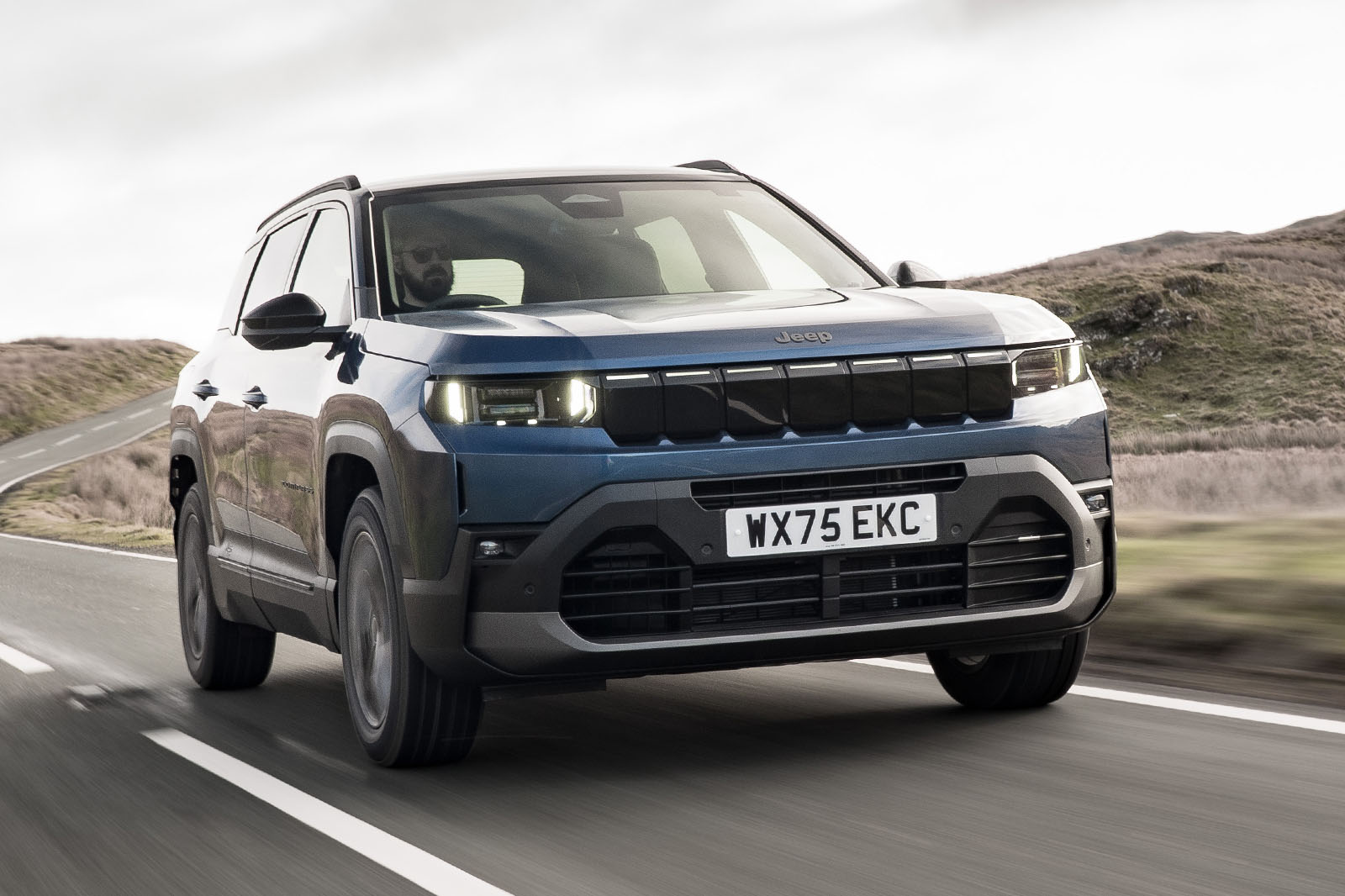
You wouldn’t choose the Compass for how it drives. It has next to no distinguishing features in that respect.
The EV’s 0-62mph time is an unremarkable 8.5sec, because 210bhp stops being a lot when faced with 2.2 tonnes of weight. But it still feels more potent than the e-Hybrid, as well as smoother, quieter and more assured. If price and charging aren’t issues, the EV has the powertrain to have.

It has steering-wheel paddles as well as a button to toggle one-pedal driving, so no complaints there.
Most UK Compass buyers are likely to go for the e-Hybrid version, however; and they’ll find it fairly refined, adequately powerful for day to day driving, and respectably economical (think a mixed-route 45mpg).
Even so, there’s no doubt that the hybrid provides the inferior performance. While 144bhp for 1667kg doesn’t make for a horrendous power-to-weight ratio, 10.0sec to 62mph is a little slow by modern standards. Moreover, there can be some momentary delay when you ask for power, and there’s certainly some inconsistency in the response and feel of both accelerator and brake pedals, which can seem to have rather too much to do when blending electric motor and combustion, managing regen and shifting gears.

With just 0.9kWh of battery and 28bhp of motor power, this powertrain’s capacity for electric running is very limited in a heavy car. Let the engine rev out and it makes quite an appealing three-cylinder thrum – but it’s the necessity to do that quite so often which undermines the powertrain’s sense of authority a bit. It just doesn’t feel quite potent enough for a car with pretentions of strength, toughness and versatility.
The e-Hybrid Plug-in boosts the power output to 222bhp courtesy of the tried-and-tested 148bhp 1.6-litre petrol (also seen in the Peugeot 3008/5008, Citroen C5 Aircross and so on) and a 123bhp e-motor. It claims a decent 58 miles of EV running, but never feels as potent as its combined output and factory-timed 0-62mph of 8.0 seconds would suggest. And when you’re in a hurry, mustering the efforts of both elements if the drivetrain, the turbocharged four-pot takes emits a tedious drone as you cajole it towards the redline.
Moreover, the integration between the two motive forces leaves a little to be desired. The switch between petrol and electric power is smooth enough, but when running purely on the latter there’s a surprising amount of transmission noise and motor whine. In addition, the seven-speed twin-clutch transmission can be sluggish in its responses (particularly when using the passles) and, in our test car, consistently served-up a subtle but noticable jerk when shifting from second to third gear.

Related posts

Latest Post


No Comments