
The American Automaker You’ve Probably Never Heard Of, And Why You Should Pay Attention
Luxury cars and posh marques are nothing new here in the U.S.; we have a lot to choose from. From the old guard that continues to wow, like Bentley, Rolls-Royce, and Lincoln, and sportier numbers from BMW and Porsche, to the huge array of luxury electric vehicles from the likes of Tesla and Lucid.

Many luxury brands have spent decades breaking into the market and maintaining a foothold there thanks to huge investments, tangible benefits compared to the mainstream offerings, and huge fan bases. It is a very hard market for new brands to muscle in on. However, there is a new American luxury brand on the market that you should know about, and it wants to take on the likes of Bentley and Tesla.
New Breeds Of Luxury Cars Are Emerging
Luxury buyers have never had more choice than they do today. Traditional flagships like the Bentley Flying Spur and Bentley Bentayga continue to blend handcrafted interiors with immense performance, while the Rolls-Royce Phantom and Cullinan remain the benchmark for real comfort and bespoke design.

German brands still dominate the performance-luxury segment with models like the Taycan and the i7, while the EV revolution has introduced premium newcomers that are very hard to ignore. Think the Tesla Model S Plaid and the Lucid Air Sapphire, which offer cutting-edge technology and exceptionally comfortable cabins.

Yet electrification has done more than simply change what powers luxury cars; it has lowered the barriers to entry for entirely new marques. Without decades of engine development or racing heritage to lean on, startups now have the opportunity to compete in a very hard market through design, craftsmanship, technology, and giving buyers what they want.
Boutique Brands Are Redefining What American Luxury Looks Like

Legacy names like Lincoln and Cadillac no longer define the American luxury market. While the Navigator continues to set the standard for full-size luxury SUVs and the hand-built Celestiq has pushed the brand into ultra-premium territory, a wave of newer brands is reshaping what American luxury can be.
Tesla proved there was and continues to be a demand for technology-led EVs, while Lucid combines class-leading range (up to 427 miles in the 2026 Sapphire) with performance capable of taking on the best European luxury sedans. To put it into perspective, the 2026 Lucid Air Sapphire can sprint to 60 mph in an incredible 1.89 seconds; something like the Porsche Panamera Turbo S E-Hybrid needs 2.4 to 2.8 seconds.

Alongside them, boutique automakers are carving out even more specialized niches. Rezvani has built a reputation with extremely low-volume vehicles like the armored Vengeance SUV and the military-inspired Tank, proving that there is a market for highly distinctive, bespoke American vehicles that prioritize individuality over mass appeal.
Unlike Tesla or Lucid, these smaller brands aren’t chasing sales volume but are targeting buyers who already own Bentleys, Rolls-Royces, and Ferraris, and want something even rarer.
Exclusivity Is Becoming The New Measure Of Prestige

For those of us with a budget for über-luxury, it is no longer defined solely by the badge on the hood. While models like the Flying Spur, Ghost, and Maybach S-Class are special and extraordinarily expensive, they have become “regular” sights in wealthy neighborhoods. For people who already have garages filled with luxury marques, true prestige is increasingly coming from owning something that few people will ever see, let alone drive.
That shift has given rise to low-volume manufacturers that build models to order rather than for stock. Rolls-Royce has embraced this through its Coachbuild program, which creates one-off commissions like the Boat Tail and La Rose Noire Droptail, while Bentley’s Mulliner division allows the lucky few to personalize models like the Batur.

New boutique American luxury brands are taking a similar approach from the outset, building exclusivity into their entire business model. Instead of measuring success by production numbers, they’re creating models whose rarity is every bit as valuable as the performance and craftsmanship.
Dacora Is Reinventing The American Luxury Car

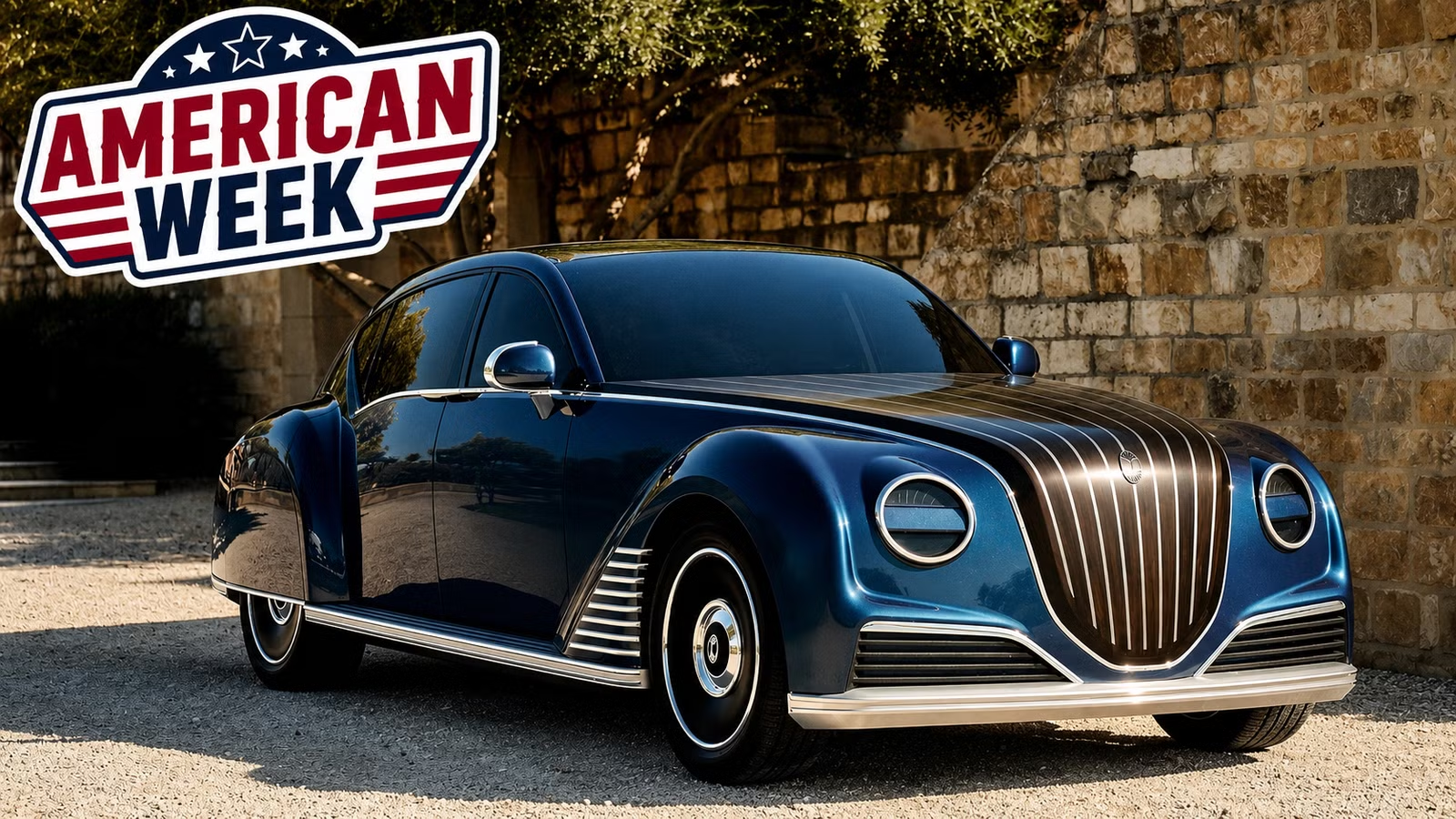
You may not have heard of it, but Dacora wants to be the new Duesenberg. That is obvious from a first look at its sole model at the moment, which has all sorts of 1920s, 1930s, and 1940s design cues and proportions.
Unlike many EV startups that have entered the market by chasing Tesla with minimalist styling and software-heavy cabins, Dacora has taken a different route. The New York-based automaker isn’t trying to reinvent what a luxury car should look like; it is trying to revive an era when American vehicles represented the pinnacle of elegance.
Its First EV Combines Handcrafted Design And Real Electric Performance
Models like the Porsche Taycan Turbo S and Mercedes-Benz EQS SUV show how far modern luxury EVs have come in terms of performance. The Turbo S can sprint to 60 mph in as little as 2.3 seconds, and the 6,391-pound EQS SUV can still blast to speed in around 4.5 seconds.
While Dacora hasn’t provided full powertrain specs, or even named its first model yet, it has said that the debut Dacora model will be good for 800 horsepower and have an estimated driving range of 400 miles. That puts it firmly in Lucid Gravity SUV territory, which can eke out 828 horsepower and has an estimated range of 450 miles.

Where the current EV flagships lean heavily, though, is toward aerodynamics and futuristic minimalism. Dacora has deliberately gone in the opposite direction. Its design is deeply rooted in American coachbuilding, with long and sweeping proportions, upright presence, and detailing that feels closer to a handcrafted GT from the pre-war era than a modern all-electric sedan.
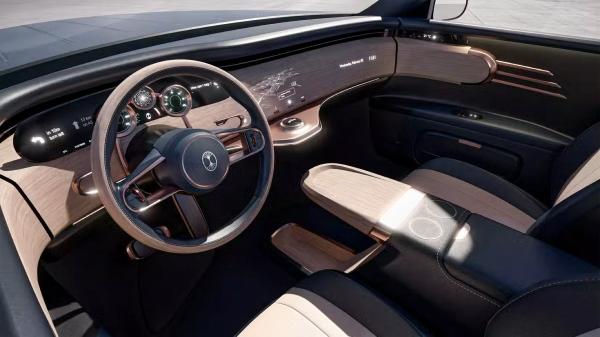
The same thinking has gone into the cabin design; technology is present but deliberately understated rather than a defining feature, as it is in so many modern EVs. It is expected to get all the driver assistance systems, full connectivity, and modern infotainment features we’ve come to expect, but offered in a way that prioritizes calmness over constant interaction.
Every Model Is Built To Order With Nearly Endless Customization

At the center of Dacora is a rare kind of leadership: Kristie D’Ambrosio-Correll, an MIT-trained engineer with a master’s in engineering and a background in aerospace systems, alongside co-founder and CTO Eric D’Ambrosio-Correll. This combination of high-level engineering discipline and systems-level design thinking will be central to how the marque approaches its first model.
Dacora doesn’t want this to be a conventional car program, but rather a fully integrated design and manufacturing program. This thinking feeds into how they want the ownership experience to work. There are no trim levels and no typical “pick your options” configurator. Every Dacora is built to order, starting as a black canvas.

You can choose the basics you want, like seating layout, with options from chauffeur-focused layouts to more relaxed, four-seat lounge-style arrangements. From there, the cabin design is up to you. With a maximum cargo capacity of 25 cubic feet and SUV-like rear legroom of 45 inches, it looks to be a genuinely usable luxury car alongside its premium credentials.
Material choice is equally expansive; buyers can select from different species of hardwood finishes (including black walnut from the northwestern U.S.), woven natural textiles, Oletax bio-leather, genuine leather, and metal detailing. This effectively makes the interior more distinctive than the standard wood and leather options found in most luxury sedans.
Why Dacora Could Be The Next Big Name In American Luxury

Currently, Dacora is a relatively unknown American luxury startup, and while it has only a small following at the moment—with fewer than two thousand followers on Instagram and limited exposure compared to the likes of Tesla and Bentley—its bold entrance into the market could pay dividends.
British brands like Morgan are still turning out cars that look like they belong at Beaulieu National Motor Museum in the UK or on classic track days, and while they have history behind them, the old-school design is still working. There have already been some reservations about the all-wood hood design, finish, general styling, and Duesenberg throwbacks, but there is nothing that looks like this in the modern luxury market.
Limited Production Makes Every Car Feel Exclusive

Limited production has always made cars more appealing to collectors, and the bespoke nature of Dacora’s first model fits the bill. Starting prices for the new Dacora EV sedan are $500,000. That, admittedly, does immediately push out a huge swathe of buyers, but it also makes the handcrafted build, exceptionally different looks, and unique all-round approach to modern luxury vehicles feel worth it (if you have the budget).
The market for a Dacora is much different from the BMW or Mercedes models that a lot of us can think about budgeting for; Dacora models will certainly be in the sights of wealthy buyers. There are currently no Dacora models finished and ready to drive, and while its website currently only allows visitors to join a waiting list or become an investor, it will only take a few orders from influential buyers to generate wider interest.
It Takes Aim At The World’s Most Prestigious Luxury Marques

In a market where standing out can mean totally flipping what is available, Dacora is up there with the most ambitious at the moment. A 2026 Rolls-Royce Phantom has a starting price of $550,000, a 2026 Bentley Continental GTC Mulliner has a starting price of around $364,000, and a 2026 Lucid Air Sapphire has an MSRP of $249,000, so the Dacora sits somewhere in between them all.
However, because Dacora cannot rely on decades of brand heritage the way Rolls-Royce and Bentley can, or on the sleek, “affordable” super-sedan positioning and established customer base enjoyed by Tesla and Lucid, it must compete in the premium market with a unique blend of old-school design and understated modern technology. That is a bold proposition.

Yes, the odds do look slightly stacked against Dacora given how competitive the market is, the dominance of established luxury brands, and the increasingly luxurious appointments found in mainstream vehicles, but for buyers with the budget who want something truly different from what is seen among the higher echelons of the market, there isn’t much like the Dacora.
Why Dacora Is A Brand Worth Watching

The pricing may seem ambitious to some, and the design may irk some, but there is no doubt that Dacora is a marque that is worth following and finding out what they do next. There will be some challenges for them. To be a successful American luxury EV brand today, Dacora will need to ensure that the 400-mile estimated range is achieved in real-world conditions and that the quality lives up to its stated ambitions.
FuelEconomy.gov says the 2026 CLA 250+ can achieve 126 combined MPGe and give you a range of 374 miles. For budget-minded luxury buyers, it is pretty good; it has an MSRP of $48,500. It does get a lot of nice interior tech; it is very modernly plush inside, and it is a well-loved Mercedes. While what Dacora is proposing is an exceptionally premium-looking car, it deserves credit for bringing something new to market with a completely different design language, an absence of visible screens in the cabin, a distinctive interior, and an ambitious price point.


What makes the Dacora sedan appealing is that not only does it carry hints of the rarest and most expensive American luxury cars ever made and will include all the modern technology one would expect, but every aspect of it appears to be executed with a distinct point of view. We all spend a great deal of time in front of screens, so why not have all the modern cabin convenience we have come to expect, but discreetly integrated? This will likely be one of the most appealing things about Dacora; consider some of the best restomods out there, where modern technology is tastefully integrated so as not to undermine the vintage aesthetic.
Dacora is effectively cutting out the middleman and offering a classically styled car that doesn’t need an electric powertrain retrofitted, or new screens added to bring it up to modern standards. That is not to say this approach will succeed entirely, but it is going to make a lot of people take notice of Dacora when models begin appearing on the road.
Sources: Dacora and FuelEconomy.gov

Related posts



Latest Post


No Comments