The Porsche 911 has always set the benchmark for the driving experience, especially with the GT3 models, which ditch turbochargers for high-revving, naturally aspirated engines and aggressive handling characteristics. The GT3 is built for precision and blistering track times, making it the ideal tool for those seeking Porsche-like handling and N/A glory.
On the other hand, the 911 Cabriolet models offer something different: an open-top motoring experience. You know, wind in your hair and all that. And for the first time in the 911 GT3’s 27-year history, Porsche has decided to combine the GT3 driving dynamics with the Cabriolet’s open-top fun. The result is the new GT3 S/C, which sets the benchmark for convertible sports cars in 2026.
Rear 3/4 shot of 1993 Porsche 911 Turbo 3.6 parkedBring A Trailer
The Porsche 911 was first introduced in 1963 as the 901 before being renamed due to a trademark dispute with Peugeot. Designed by Ferdinand Alexander “Butzi” Porsche, the 911 had a peculiar rear-engine layout, standing as the ultimate paradox of automotive engineering. Porsche spent the next six decades refining this layout into a sports car that sets global standards for both daily drivability and track dominance.
A front-quarter tracking shot of the Porsche 911 GT3 by Manthey.Manthey
Just how successful is the 911? According to Porsche, over 1.2 million 911 sports cars have been sold between 1963 and 2023. This very model, by the way, has earned Porsche the reputation for making the best-handling cars out there. So if you think BMW is the ultimate driving machine, the 911 would like to have a word with you. At the same time, the 911 has grown beyond just being a driver’s car; the moniker is now an icon of automotive design (still retaining the same silhouette as the original one), pop culture, and luxury.
The GT3 Models Represent The Sweet Spot
Porsche
Over the years, Porsche has introduced many versions of the 911, including the Turbo models. In this lineup, the GT3 sits in the sweet spot, bridging the gap between track-ready performance and daily drivability. Introduced in 1999, the 911 GT3 is known for its relentless, high-revving naturally aspirated engine, offering driving enthusiasts an experience that’s pure and precise.
Over five generations, the 911 GT3 has now grown into a small family, including the standard GT3 and the for-purists GT3 with Touring Package. Yet in its 27 years of production run, the GT3 was never offered with a drop-top. That changes now with the new 2027 Porsche GT3 S/C, which combines the open-top driving experience of the 911 Cabriolet with GT3 Touring finesse.
5 Porsche Models That Hold Their Value Exceptionally Well
These five Porsche models defy typical depreciation patterns through their combination of performance, desirability, and enduring enthusiast appeal.
When You Need GT3-Level Performance With A Drop-Top
orsche has recently launched the 911 GT3 S/C, which is essentially the GT3 of cabriolets, or a convertible version of the 911 S/T. And don’t confuse its S/C tag for supercharged; it stands for Sport Cabriolet. At the rear, the S/C still features a high-revving, naturally aspirated flat-six engine with 502 horsepower and a 0 to 60 miles per hour time of 3.7 seconds. It combines this performance with an extensive use of lightweight materials, making it the lightest open-top 911 on sale. For purists, this car comes only with a manual six-speed transmission, with no automatic option available (just like the highly exclusive S/T).
Base Trim Engine
4.0-liter flat-six
Base Trim Transmission
6-speed manual
Base Trim Drivetrain
Rear-Wheel Drive
Base Trim Horsepower
502 hp
Base Trim Torque
331 lb-ft
Make
Porsche
Model
911 GT3 S/C
Segment
Sports Car
Like the GT3 Touring, the GT3 S/C is designed to be a street machine, so the goal here isn’t to be the fastest 911 to drop the top. Instead, the GT3 S/C wants to bring open-top motoring to the already amazing GT3 experience. Critics might argue that the lack of a fixed roof would result in less stiffness and more weight, but Porsche has addressed that. The car weighs only slightly more than the GT3 Touring. As a result, you can expect nearly the same levels of handling on the road while enjoying the wind in your hair and the N/A flat-six soundtrack.
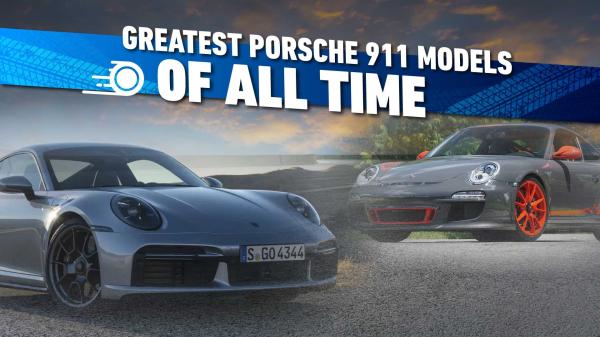
Best Of The Best: Greatest Porsche 911 Models Of All Time
Within the 911 lineage, certain models stand out as definitive highlights with milestones that pushed the boundaries of design, technology, and speed.
High-Revving, N/A Flat-Six Performance With Plenty Of Lightweight Bits
Porsche
At the heart of the 911 GT3 S/C sits the high-revving, naturally aspirated 4.0-liter flat-six engine from the GT3, complete with individual throttle bodies, titanium connecting rods, and aggressive camshafts from the GT3 RS. The result is a high rev-ceiling of 9,000 RPM, along with an output of 502 horsepower and 331 pound-feet of torque. Thanks to this, the S/C can do a 0 to 60 miles per hour run in 3.7 seconds and tops out at 194 miles per hour. There’s also speculation that this could be the last GT3 generation to use internal combustion, positioning the S/C as a near-guaranteed collector’s car in the future.
Dedicated To Keeping The Manual Alive
Porsche
The Porsche 911 GT3 S/C is essentially a convertible version of the S/T, especially when you consider what the N/A flat-six is paired with: a six-speed manual transmission. To be specific, it’s a short-ratio six-speed GT Sport Transmission, with the same final drive ratio that originally debuted on the S/T. Porsche claims this gearbox is 37 pounds lighter than the 7-speed Porsche Doppelkupplung (PDK) of the 911 GT3, which isn’t available even as an option here.
Plenty Of Lightweight Bits, Including Carryovers From The S/T
Porsche
The car is underpinned by a lightweight chassis and, as Porsche calls it, a lightweight construction concept. Essentially, the automaker has incorporated nearly every lightweight component at its disposal into the S/C, including carbon fiber doors and front fenders from the S/T. The car also makes extensive use of carbon fiber-reinforced plastic (CFRP) to reduce weight and increase agility. These include the anti-roll bar and connecting links of the rear axle and the underbody panel.
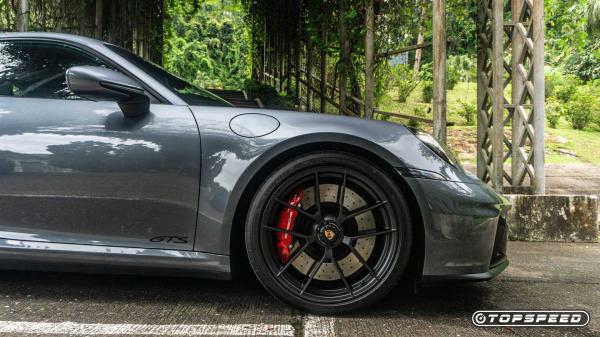
Also taken from the 911 S/T are the 20/21-inch lightweight forged magnesium wheels, saving 20 pounds, and Porsche Ceramic Composite Brakes (PCCB), saving 44 pounds. The latter are said to offer higher braking performance, consistent brake pressure, and excellent fading stability. All of this results in a curb weight of 3,322 pounds, which is over 200 pounds lighter than the base 911 Cabriolet and only 83 pounds heavier than the fixed-roof GT3 with Touring Package (manual).
Double-Wishbone Front Suspension, Like A Proper GT Model Should Have
Porsche
Lightweight isn’t the only thing that makes the 911 GT3 S/C special. Like a proper GT model, the S/C also features a double-wishbone front suspension instead of the MacPherson strut design found on the normal 911 convertibles. This should translate to better cornering, braking, and overall handling as the setup allows engineers to more precisely design suspension travel and tire contact with the road. The spring and damping rates remain identical to the GT3 Touring, so it should still offer sharp handling through corners.
Drop-Top With An Available Street Style Package
Porsche
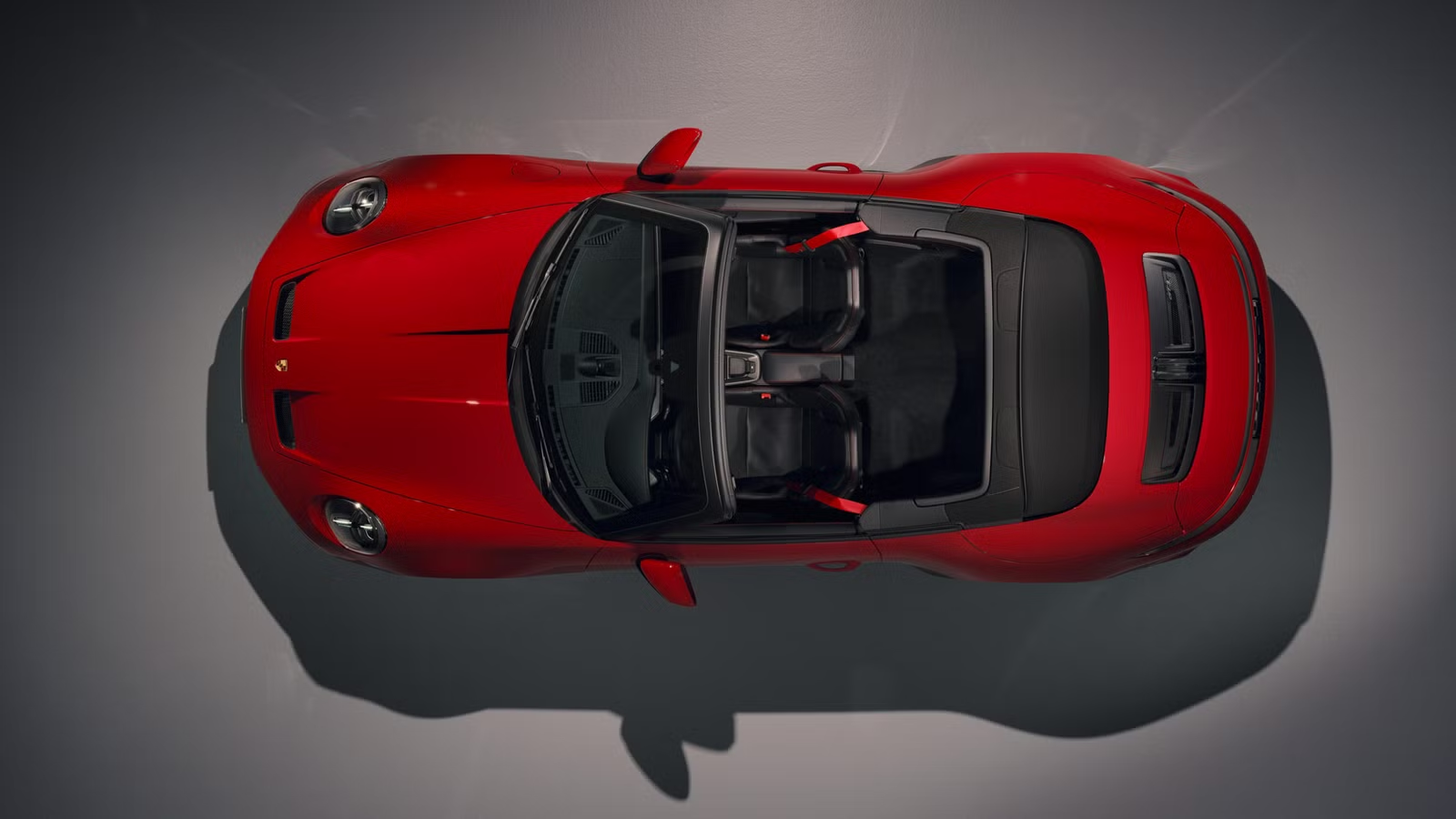
This is a Sport Cabriolet, and justifying the second word in that title is the drop-top that takes 12 seconds to raise and retract. Porsche has gone with the 86-pound power convertible top from standard 911 Cabriolets, instead of the complex and lightweight roof from the 911 Speedster, which was manually operated. Despite being a drop-top with no structural bracing, Porsche assures that the car’s torsional stiffness is 25 percent improved over the old 911 Speedster.
Only Available As A Two-Seater
Porsche
Sticking to the lightweight philosophy, the 911 GT3 S/C also does away with the rear seats, which aren’t available even as an option. Instead, there are only two seats with just empty space at the back. Porsche also offers optional folding lightweight bucket seats with electric height adjustment made of CFRP for optimal lateral support. For the rear, you can also tick an options box for a storage compartment, which offers 2.82 cubic feet of space to keep your gear from shifting around during a spirited drive.
Available Street Style Package Takes Things Up A Notch
Porsche
Porsche also offers the Street Style Package that unlocks a new level of customization, adding various elements to both the interior and the exterior. On the inside, it adds a two-tone leather interior in Slate Grey/Guards Red, along with a unique Porsche Crest logo outline embroidered on the headrest and a leather keycase. It also brings adaptive Sports Seats Plus with 18-way electric adjustment and four-color braided leather seat centers.
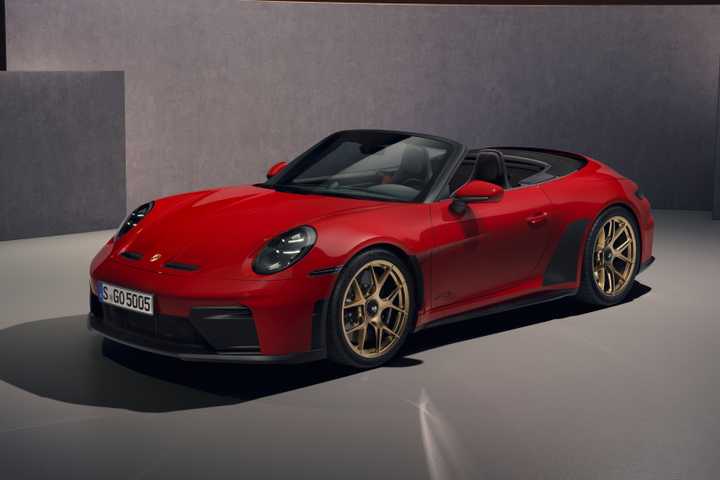
Open the door, and you’ll also see illuminated door sill guards in carbon fiber and the crest outline projected on the ground. The exterior also features contrasting colors with a Slate Grey Neo base and Pyro Red graphics; the same color palette follows onto the 20/21-inch wheels, along with Victory Gold finish on the brake calipers. The package gives the car a much more exclusive look, though it is a $34,190 option.
The Porsche 911 GT3 S/C Starts at $273,000
Porsche
Speaking of pricing, the 911 GT3 S/C starts at $273,000. That’s more than the typical convertible premium over the GT3 Touring (which starts at $235,800), but it doesn’t come as a surprise, given the car includes many optional extras as standard. These include the Lightweight package, magnesium wheels, carbon-ceramic brakes, and a leather interior pack. You can’t deny the GT3 S/C is expensive, but you also can’t deny the fact that it is a rare combination of open-top motoring and GT3 performance.










No Comments