
The 400-HP Manual GM Coupe Hiding Corvette Power Under Boring Sheetmetal
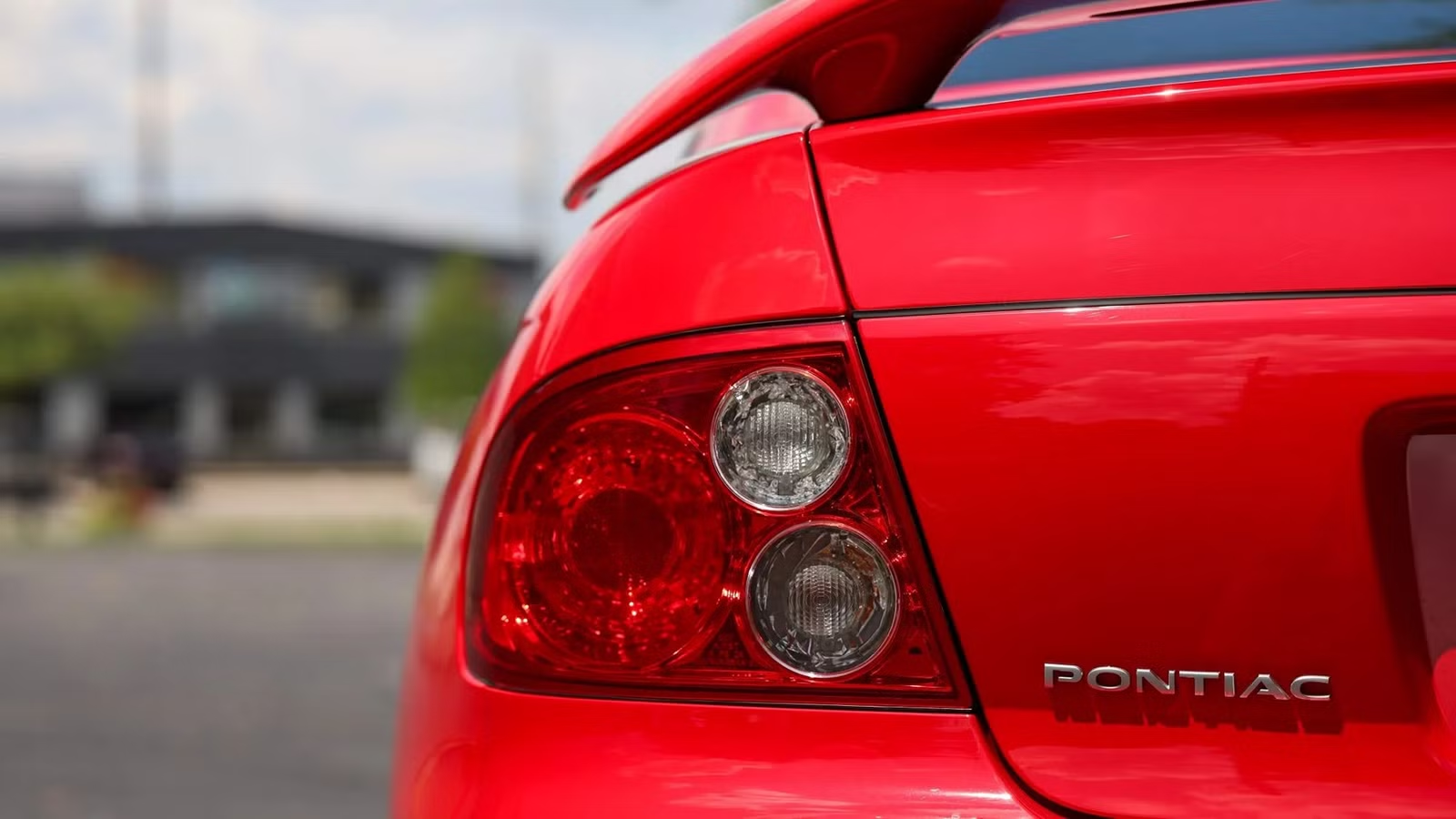
A car that quietly sits in the corner of a parking lot, completely unassuming, looking like a rental fleet car or maybe a mid-level executive’s daily commuter. It features a rounded, anonymous silhouette devoid of the aggressive cuts and creases, massive spoilers, and neon brake calipers that define today’s automotive market. A car that blends seamlessly into the background of the grocery store. But there’s a hidden secret inside the hood; as you twist the keys, a sudden rumble appears and wakes the beast from its sleep.

In an era when every modern performance car screams for attention with fake hood vents and loud exhaust pops. It’s fair to say that the automotive world has forgotten what subtlety looks like. But it wasn’t always like that. For a brief moment in the 2000s, Detroit built something lethal, wrapped in the most unassuming body you can imagine, and paired it with three pedals. It didn’t look like a Supercars; it didn’t even come close to looking like a sports car. But underneath the hood, it had the heart of America’s premier sports car.
The Death Of Understatement: How Modern Muscle Lost Its Subtlety
Take a look at any dealer lot today or even on the streets: performance is no longer sold by the mechanical figures but more by the visual theater, as we live in the era of the over-styled weekend warrior. If a car today has a hint of performance in its DNA, good luck finding a subtle, understated variant; manufacturers are adamant that it means aggressive graphics, massive splitters, and an exhaust that will wake up the whole neighborhood at 5 am.
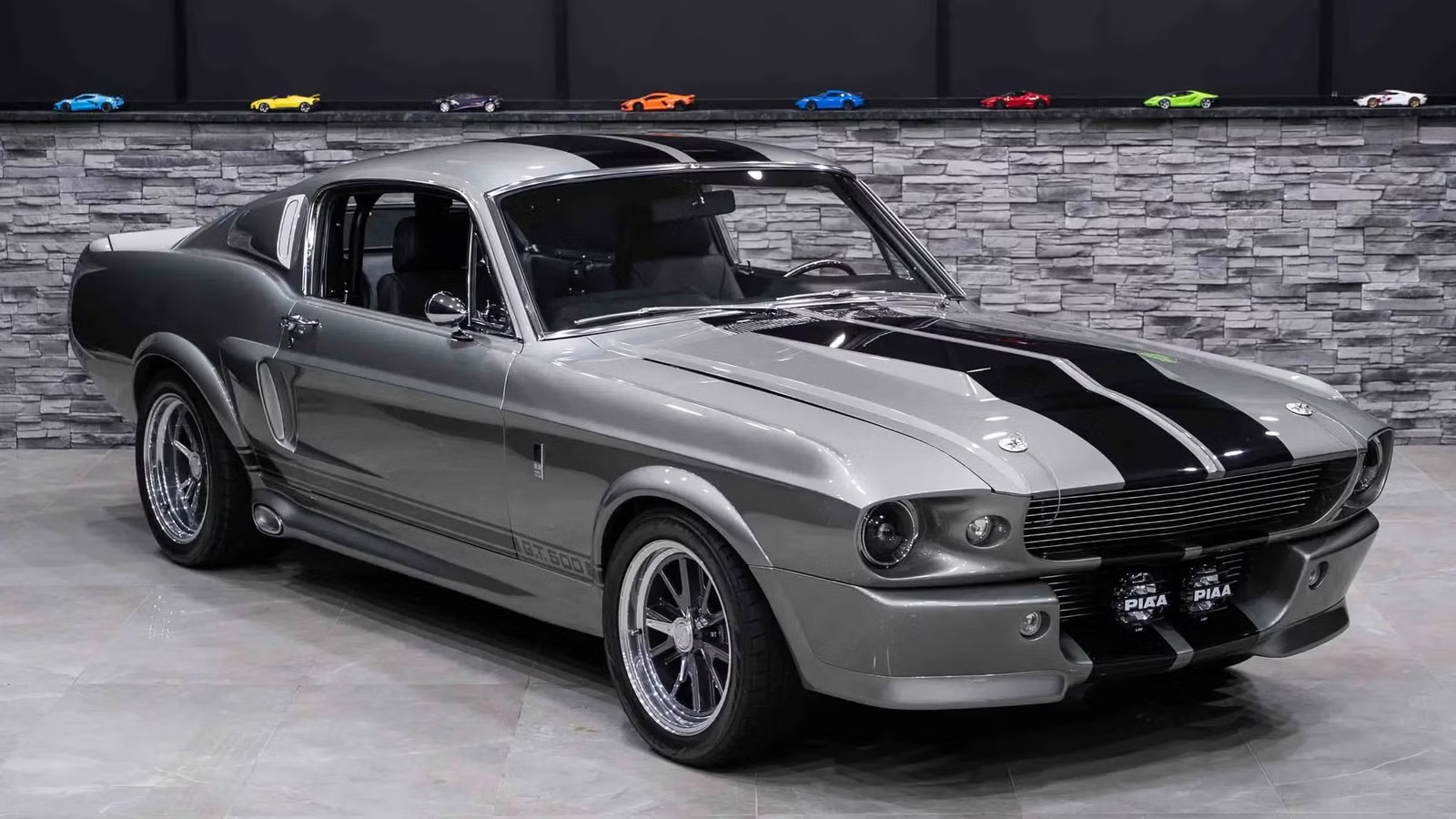
This hyper-aggressive styling has stripped the modern Muscle Cars and performance cars of their core identity. When a car looks fast, everyone expects it to be fast. The thrill of the unexpected has gone missing somewhere in the way. The pureness of a true sleeper has been traded for the visual theater. Performance enthusiasts have always preferred a car that speaks for itself in how it drives rather than shouts that it has arrived, so the element of surprise has been replaced by constant social media validation.
The Most Underrated Muscle Car Of The 2000s
The 2000s market a resurgence of the muscle car segment, but one high-powered model remained unappreciated and underrated to this day.
A Look Across The Pacific For Mechanical Clarity

When General Motors noticed this growing divide among enthusiasts in the 2000s, legendary GM product executive Bob Lutz didn’t look for a solution in America; instead, he looked for a solution across the Pacific in Australia. Under the guidance of GM’s Holden division, engineers quietly began perfecting a secret formula: a rear-wheel-drive architecture strong enough to handle the Australian outback, paired with an American V8.
The cross-country engineering project laid the pipeline for a highly understood yet serious machine for generations to come. But in reality, the cars that shared this understated and, if you know, you know formula failed to grab the attention of the public on the showroom floors; the public simply ignored these cars because they lacked the emotional drama. But for pure enthusiasts who wanted world-class chassis and a Corvette drivetrain without the flashy badge or styling, GM’s Australian import was a big sigh of relief. A philosophy that would later yield classics like the Pontiac G8 and the Chevrolet SS.
The Pontiac GTO: 400 Corvette Horses in a Rental Car Silhouette

The car that executed this formula properly was the reborn Pontiac GTO, imported directly from Australia as a rebadged Holden Monaro. The new GTO arrived on American shores with a body so anonymous that automotive critics quickly labeled it “boring.” It lacked the retro-nostalgic look of the upcoming Mustang and the sharp, almost stealth-fighter looks of the Cadillac CTS-V.
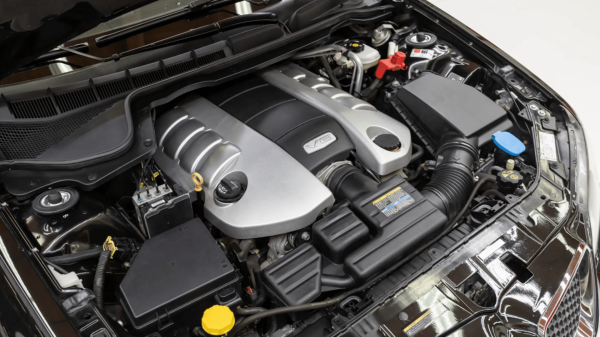
But beneath the rental car silhouette was an absolute masterpiece and the heart of the car. For the 2004 model year, GM launched it with a respectable 350-horsepower LS1 engine. But GM truly perfected the formula for the 2005 and 2006 model years. Engineers stuffed the 6.0-liter LS2 V8 under the hood of the GTO, the same powerhouse found in the C6-generation Corvette.
This gave the GTO a massive 400 hp and 400 lb-ft of torque, sent straight to the rear wheels via a heavy-duty Tremec 6-speed manual transmission, making the GTO an absolute powerhouse. It went from 0 to 60 MPH in just under 4.8 seconds, while completely obliterating its competition, the Mustang GT, all while looking so subtle no one would even look twice.

Pontiac’s Fastest Sleeper Sedan With A Manual Transmission
Pontiac’s forgotten four-door packs Corvette power, a manual, and speed that shames new V8s. Meet the sleeper sedan enthusiasts crave.
European Dynamics With a High-End Cabin

What truly sets the LS2-powered Pontiac GTO apart from the typical American muscle car of its era isn’t just the straight-line speed. It’s the sophisticated Australian chassis refinement, unlike the Mustang’s live rear axle, which was unstable at high speeds in corners. The Holden-engineered GTO featured a fully independent rear suspension. This gave the car a planted feel on the highway and a European ride quality that could handle mid-corner imperfections without upsetting the car’s balance.
The step into the GTO’s cabin was unlike that of any other GM car at the time; it defied all stereotypes of American cars being filled with cheap, scratchy plastics. It was hand assembled in Australia. It had an interior that put the outgoing GM quality cabin to shame. The car was lauded by enthusiasts at the time for its heavily bolstered leather sports seats, true dead-pedal placement, and color-matched dials.
When you rowed through the 6-speed Tremec manual gearbox, you weren’t treated to a crude, unrefined experience like a domestic car; it felt like something that belonged in a highly refined long-distance cruiser. Furthermore, because it utilized the massive Corvette LS engine ecosystem, it offered owners incredibly cheap, bulletproof reliability and endless aftermarket tuning potential.
This Cheap American Sleeper Sedan Can Gap A Ferrari Testarossa And Still Haul Groceries
This forgotten four-door muscle car holds a surprising secret under the hood.
The Smartest 400-HP Manual Buy on the Used Market

The original MSRP of $31,290 was steep compared to its rivals, forcing the GTO to compete with the much cheaper $25,140 Mustang GT. GM managed to sell 40,808 units over three years of sale. However, due to its perceived expense relative to its established rivals and an appearance that failed to excite the masses, the car was a flop.
However, that initial showroom failure is exactly why it is the smartest enthusiast purchase on the market today. While pristine low-mileage examples routinely sell for $22,000 to $26,000 on platforms such as Bring a Trailer, real-world driven examples can be found for as low as $13,000 to $16,000.
The GTO remains one of the last places where you can get 400 hp, rear-wheel drive, modern, reliable examples with a six-speed gearbox without paying the premium of a Corvette. As modern vehicles become more sterile, electronically assisted, and visually loud, this subtle Australian masterpiece proves that you don’t need a flamboyant body kit to be a top performance machine. And proof that a good driving machine lets its performance do all its talking.
Source: Pontiac, Bring a Trailer

Related posts





Latest Post


No Comments