
10 Legendary Engines That Defined the Muscle Car Era
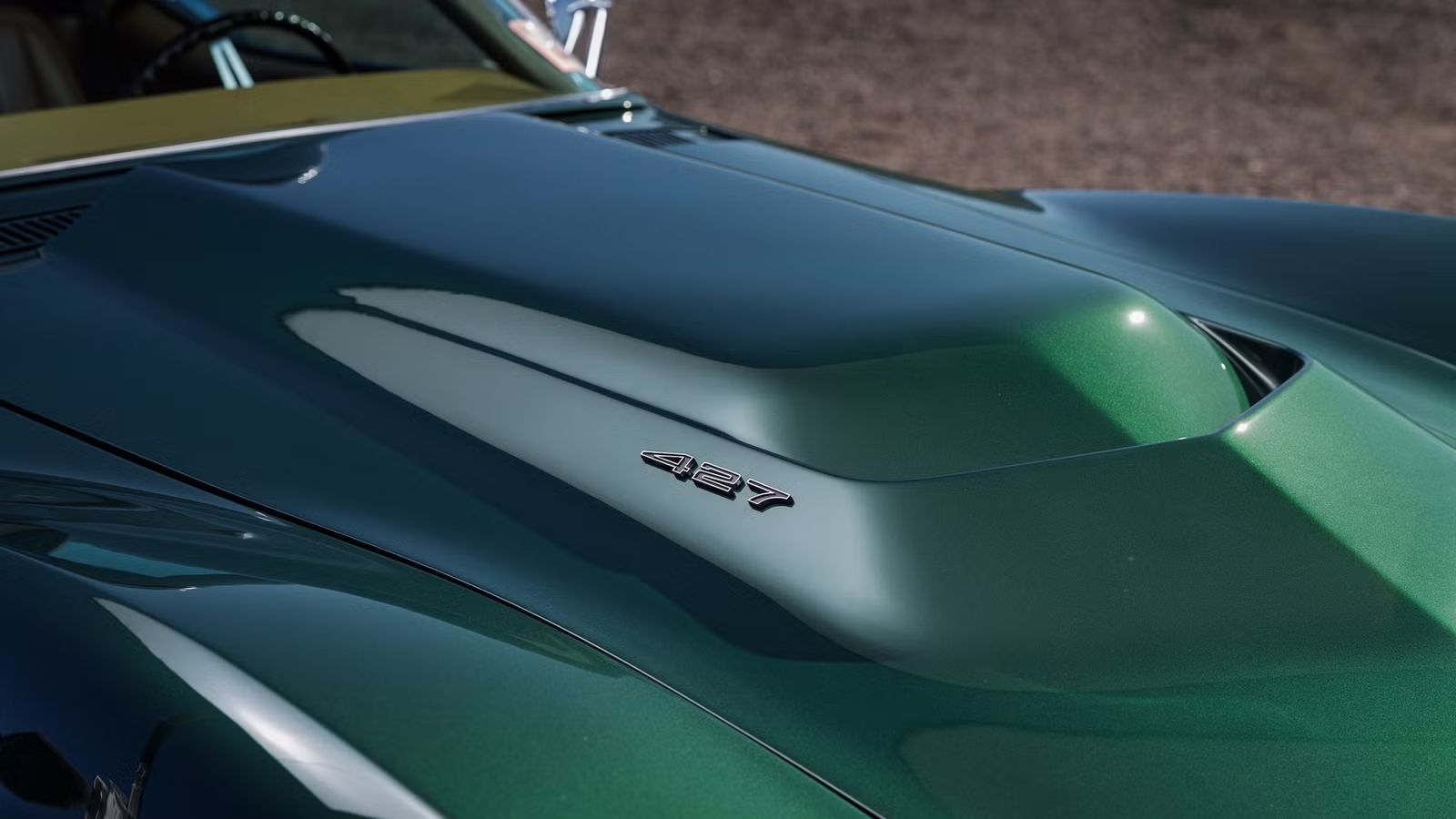
Before emissions and insurance premiums ruined everything, Detroit’s Big Three were locked in a serious battle. It wasn’t just about styling or marketing; it was a war fought in cubic inches, compression ratios, and quarter-mile times. To the uninitiated, a muscle car is just a sleek piece of vintage sheet metal. But insiders know better. The sheet metal was just an appearance package, and the real magic—the violence, the noise, the sheer audacity of the era—lived under the hood.

It was an era where factory-backed power plants were barely street legal race engines sold to the public with a warranty. If you walked into a dealership with the right amount of cash and checked the right option box, you could drive off the lot with a machine capable of tearing up the local drag strip on Friday night and driving to work on Monday morning. We’re looking back at ten legendary engines that took the muscle car wars to their absolute, glorious extreme.
10
Chrysler 426 Hemi
(1964–1971)
If there is a holy grail of the muscle car era, this is it. Affectionately dubbed “The Elephant” due to its massive physical size and weight, the 426 Hemi was never meant for the street. Chrysler originally built it to dominate NASCAR, but after a 1965 ban forced their hand, they had to homologate it for production cars.
What made it legendary were its hemispherical combustion chambers. By placing the spark plug right in the center and using massive, canted valves, the Hemi was more efficient than anything else on the market. With two four-barrel Carter carburetors sitting on top of an aluminum intake, it was conservatively rated at 425 horsepower and 490 lb-ft of torque, though real-world figures were closer to 500 hp. It was temperamental, expensive, and a handful to keep running, but when those secondary barrels opened up, nothing on earth performed like a Hemi at full tilt.
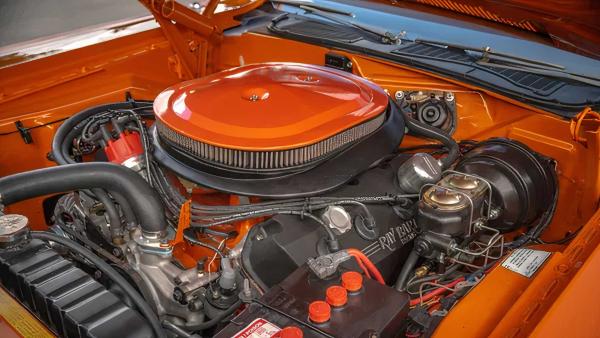
The Fastest Quarter-Mile Time For A Big Block V8 Ever
Meet the big boy of big blocks with the fastest 1/4-mile time ever.
9
Chevrolet L88 427
(1967–1969)

If the Hemi was an elephant, the L88 was a stealth bomber. Chevrolet under-reported this engine’s output so severely it bordered on a criminal conspiracy. On paper, GM claimed the L88 made 430 hp—five fewer than the more street-friendly L71. In reality? The L88 made around 500 hp right out of the box. Chevy did this on purpose.
They didn’t want everyday drivers buying this monster to cruise to the grocery store. It had a 12.5:1 compression ratio that required 103-octane racing fuel, a massive solid-lifter camshaft, aluminum cylinder heads, and a single, giant Holley 850 CFM four-barrel carburetor. It lacked a choke, hated idling, and would overheat if sat in traffic for more than five minutes. It was an outright race engine that was available as an option, dropped into a handful of Corvettes and Chevelles for drivers who meant serious business.
8
Ford Cobra Jet 428
(1968–1970)

Ford’s Boss 429 grabbed the headlines, but the 428 Cobra Jet did the hard work on the street. Introduced mid-year in 1968 to rescue Ford from getting embarrassed by big-block Chevys and Mopars at local races, the CJ was a brilliant exercise in parts-bin engineering.
Ford took the heavy-duty FE-series block, stuffed it with the rugged crankshaft from their 428 Mercury station wagon engine, added high-flow cylinder heads from the 427 race motor, and topped it with a 735 CFM Holley carburetor. Conservatively rated at 335 hp to keep insurance agents sleeping at night, it was a torque monster, churning out 440 lb-ft down low in the RPM range. It transformed Mustangs, Torinos, and Cougars into legitimate street brawlers overnight.
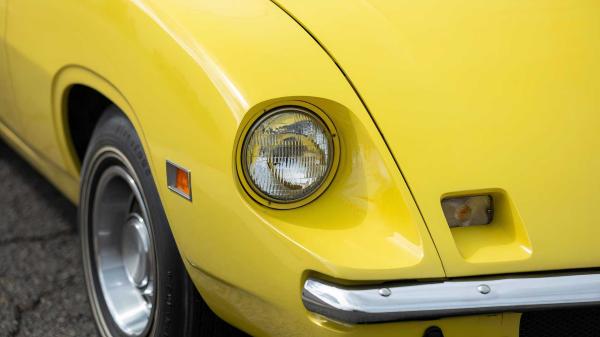
The Ford Muscle Car That Was Rarer Than A Boss 429
Technically this rare car is a failed project, but collectors still throw insane amounts of money at it’s massive Big Block V8 power.
7
Oldsmobile 455 W-30
(1968–1972)

Oldsmobile was known for luxury, but when they cooked up the W-30 package for the 455 big block, they created a gentleman’s freight train that could pull a house off its foundation. The 455 W-30 wasn’t about high-RPM screaming; it was about absolute torque. The W-30 variant featured select parts like a hotter camshaft, high-flow cylinder heads, and a specialized aluminum intake.
It produced 370 horsepower, but the headline number was 500 lb-ft of torque at an incredibly low 3,200 RPM. To ensure it got enough fresh air, Olds routed functional air ducts from under the front bumper directly into a sealed air cleaner assembly. It allowed the Hurst/Olds and 4-4-2 to launch forward like an ocean liner caught in a tidal wave, offering effortless, tire-shredding power wrapped in a premium package.
6
Chevrolet ZL1 427
(1969)

Take everything that made the L88 a terrifying street engine, and make the entire thing out of aluminum. That is the story of the mythical ZL1. By swapping the heavy cast-iron block for an exotic all-aluminum casting, Chevrolet managed to shave roughly 150 pounds off the nose of the car. The result was a 427-cubic-inch big-block that weighed about the same as a standard 327 small-block, completely transforming the handling of the cars it lived in.
Only 69 Camaros (ordered through the legendary COPO fleet system) and two Corvettes ever received the factory ZL1 treatment. Rated again at a laughable 430 hp, it easily pushed past 500 hp on the dyno. It was an engineering masterpiece, but it came with a staggering price tag: the engine option alone cost more than a base Camaro at $4,160. Today, true factory ZL1s are the unicorns of the muscle car world.
5
Chrysler 440 Six Pack
(1969–1971)

You didn’t always need a Hemi to rule the boulevard. For a fraction of the cost, Mopar guys could order the 440 Six-Pack (or “Six-Barrel” if you were shopping at a Plymouth dealership). While the Hemi was a high-RPM race motor at heart, the 440 was a low-end torque factory designed specifically for street warfare.
It had three two-barrel Holley carburetors mounted on an aluminum intake manifold. Under normal driving conditions, you ran entirely on the center 350 CFM carb, getting decent gas mileage. But when you mashed the gas pedal, vacuum pressure snapped open the two outer 500 CFM outboards. Suddenly, you were flowing around 950 CFM of air and fuel into a massive big-block. Rated at 390 hp and 490 lb-ft of torque, a 440 Six-Pack could easily match or beat a Hemi from light to light without the mechanical headaches.
4
Ford Boss 429
(1969–1970)

Ford needed an answer to the Chrysler Hemi on the NASCAR circuits, and their solution was the “Boss 429.” Like Mopar, Ford used massive, semi-hemispherical combustion chambers (which earned it the nickname the “Blue Crescent”) to maximize airflow. The engine was so physically wide that Ford had to cut and modify the shock towers of the Mustang Mach 1 just to squeeze it between the fenders.
The Boss 429 was rated at 375 hp, a number everyone knew was understated, as it made considerably more with the right tweaks. It featured a forged steel crank, four-bolt main caps, and aluminum heads. While it was choked a bit from the factory by a conservative camshaft and a small-ish carburetor, gearheads who swapped out the cam and opened up the exhaust unlocked a screaming, high-RPM monster that loved to live at the top of the rev range.
3
Chevrolet LS6 454
(1970)

The 1970 Chevelle SS 454 LS6 represents the absolute mountain peak of the factory horsepower wars. In 1970, GM finally lifted its self-imposed corporate ban that restricted intermediate cars from carrying engines larger than 400 cubic inches. Chevrolet wasted zero time making the LS6 available for street cars.
This 454-cubic-inch titan made 450 hp and a monumental 500 lb-ft of torque. It used a high-rise aluminum intake manifold, a solid-lifter cam, and heavy-duty four-bolt mains. Unlike some of the high-strung, race-bred engines on this list, the LS6 was incredibly streetable. It would idle cleanly, run on premium pump gas, and then absolutely vaporize its rear tires the second you dropped the clutch. It was the ultimate expression of raw, American displacement.
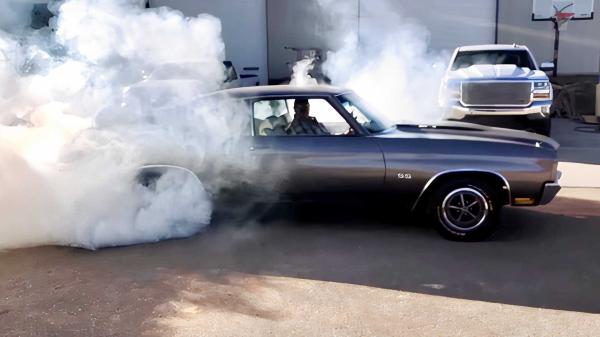
What Period Timing Slips Reveal About The LS6 Chevelle vs 440 Six-Pack
Manufacturer power ratings are meaningless on the street or the track, and the tale of the Chevelle LS6 vs. the Road Runner 6BBL proves it.
2
Chevrolet LT-1 350
(1970–1972)

This engine proved you didn’t always need a heavy big-block to dominate the streets. In 1970, Chevrolet introduced the LT-1, which many consider the absolute pinnacle of the classic small-block design. By focusing on high-rpm efficiency instead of brute displacement, the LT-1 proved that a lightweight, well-balanced car could run circles around nose-heavy big blocks.
The LT-1 pushed out 370 hp and 380 lb-ft of torque in the Corvette (and 360 hp in the Camaro Z28) out of just 350 cubic inches. It achieved this via an 11:1 compression ratio, high-flow solid-lifter camshaft, aluminum intake, and a massive 780 CFM Holley carb. It loved to rev, screaming all the way up to a 6,500 RPM redline while maintaining excellent power throughout the band. It was a sports car engine with a muscle car attitude.
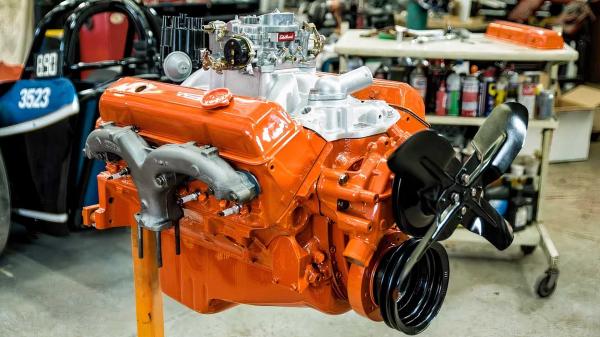
Chevy’s Smallest Engines That Made The Biggest Power
Three legendary Chevy small-block V8s proved that efficient engineering could outperform bigger engines.
1
Pontiac Super Duty 455
(1973–1974)

By 1973, the party was effectively over. Strict emissions mandates, the introduction of unleaded fuel, and soaring insurance costs forced manufacturers to drop compression ratios and detune their engines. But Pontiac refused to go quietly into the night. While everyone else was waving the white flag, Pontiac unleashed the Super Duty 455.
The SD-455 was essentially a street-legal race engine built at the worst possible time in automotive history. It featured a heavy-duty block with four-bolt mains, forged aluminum pistons, provision for a dry-sump oiling system, and high-flowing round-port heads. Even with a choked-down 8.4:1 compression ratio, it still managed a net rating of 290 hp and 395 lb-ft of torque, a figure that drastically underrepresented its true performance. Dropped into the Firebird Formula and Trans Am, it stood as a defiant, tire-smoking final salute to the golden era of American muscle.
Sources: Chrysler, Ford, General Motors, Motortrend.

Related posts



Latest Post



No Comments