
The Full-Size Buick Muscle Car Rarer Than Any Skylark GS
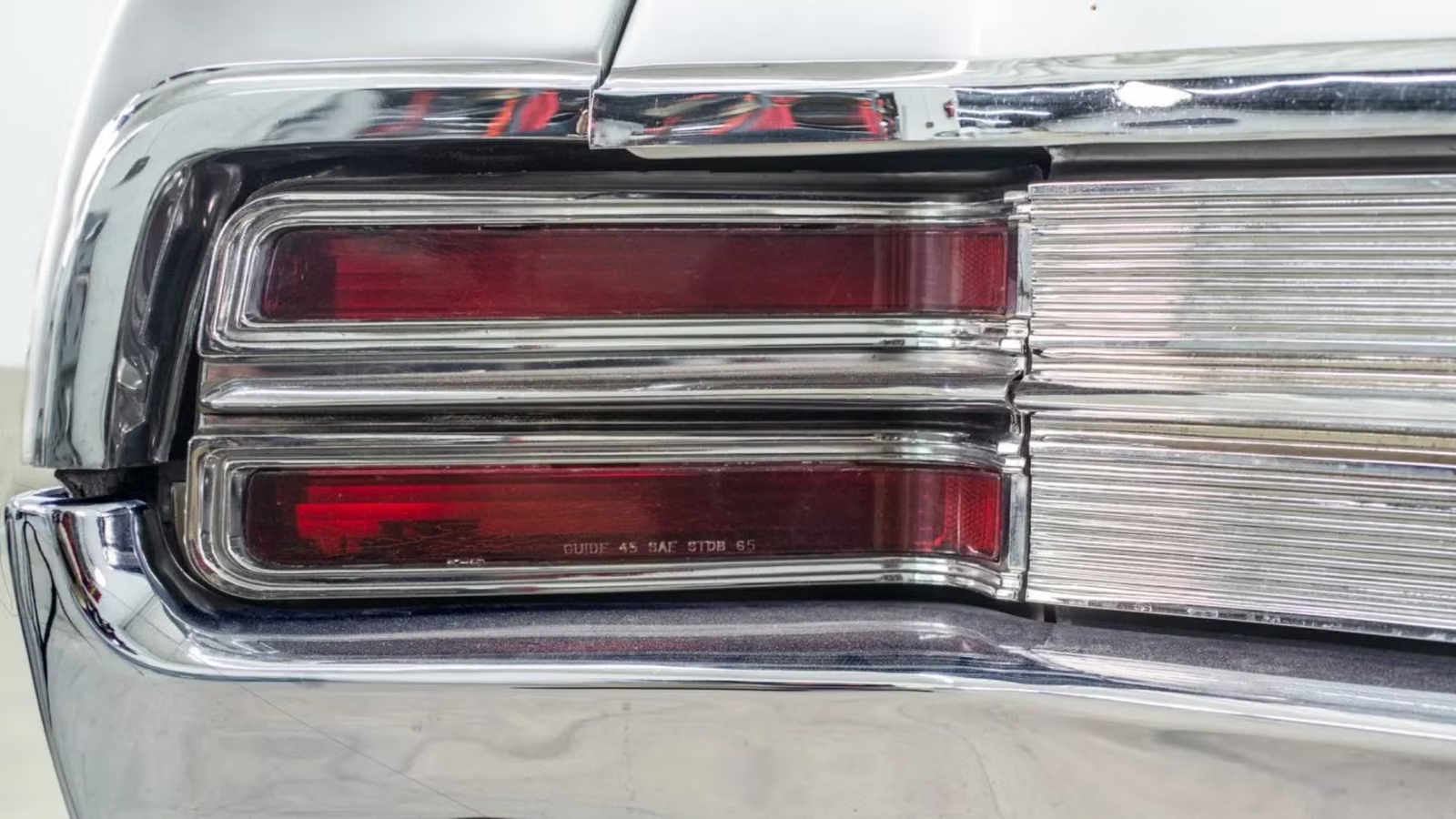
Ask any Buick fan to name the rarest muscle car the brand built in the mid-1960s, and you’ll get the same answer every time: the Skylark GS. It’s the car with the reputation, the collector following, and the price tag to match. But the actual rarest performance Buick of that era isn’t a Skylark at all.

It’s a full-size cruiser that looks like it belongs in a bank executive’s driveway, not at a stoplight duel. Chrome trim, a vinyl roof option, and a plush interior hid something most people never expected. Before we get to what that something is, it helps to understand why the Skylark GS became the default in the first place.
The Skylark GS Isn’t Buick’s Rarest Muscle Car
The Skylark GS earned its reputation the same way most muscle cars did in the 1960s: magazine covers, drag strip bragging rights, and a direct rivalry with cars like the Pontiac GTO. It was mid-size, affordable, and built to be noticed. Buick leaned into that image, and enthusiasts have kept the story alive ever since.
That reputation is well-earned, but it’s also incomplete. While the GS was busy collecting attention, Buick quietly built something rarer in a completely different part of its lineup. It wasn’t marketed as a muscle car, it wasn’t cheap, and it didn’t chase headlines.
It was full-size, understated, and easy to overlook. That’s exactly why almost nobody talks about it today, and exactly why it deserves a second look.
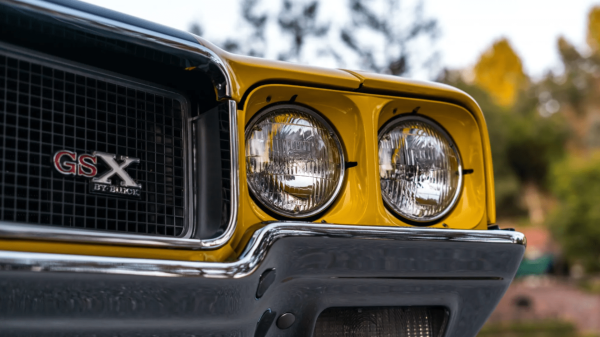
This 1970 Buick Was So Powerful That GM Tried To Hide Its True Horsepower
Buick once released a model that was so powerful that GM downplayed its true output to dodge corporate limits and keep insurers off its back.
Meet The Super Wildcat: Buick’s Best-Kept Performance Secret

|
Engine |
Transmission |
Power |
Torque |
|
425-cid Nailhead V8, dual four-barrel Carter AFB carburetors |
T-10 four-speed manual or TH-400 three-speed automatic |
360 hp |
465 lb-ft |
The car in question is the Super Wildcat, a factory performance package offered on Buick’s full-size Wildcat from 1964 through 1966. On paper, it was just an option box. Under the hood, it was one of the most serious engines Buick ever built for a car this size.
At the center of the package sat a 425-cubic-inch Nailhead V8, ordered through option code RPO W5. Instead of a single carburetor, Buick fed it with twin Carter AFB four-barrel carburetors mounted in-line on a cast-iron manifold. The setup was rated at 360 horsepower and 465 lb-ft of torque, a meaningful jump over the 340-hp single-carburetor version of the same 425 engine.

Buyers could pair the engine with a Posi-Traction limited-slip differential and choose between a T-10 four-speed manual or a TH-400 three-speed automatic. Either way, the power reached the rear wheels through gearing built to handle serious torque. This wasn’t a mild dress-up option; it was a genuine performance upgrade hiding inside a luxury car’s option sheet.
Period road testers noticed the contrast immediately and gave the car a nickname that stuck: the “Executive Hot Rod.” It was built for speed, even though there was no such thing as midsize Buick muscle at the time to compare it against. That nickname captures the whole story in two words: a fast car wearing a slow car’s wardrobe.
The Phantom Muscle Car That History Barely Recorded
This wild ’60s muscle car managed to all but disappear from the history books
How Rare Is Rare? The Numbers Don’t Fully Agree

Here’s where the rarity case gets interesting, and a little messy. In 1964, Buick built 638 dual-quad Wildcats across every body style it offered that year, according to Hemmings Classic Car. That’s already a tiny slice of total Wildcat production for the year.
The coupe breakdown is where sources disagree. Hemmings states that 366 of those 638 dual-quad cars were two-door coupes. A Curbside Classic auction writeup tells a different story, citing a seller’s claim that only 114 coupes actually received the engine. Neither figure has been definitively confirmed, so it’s worth treating both as informed estimates rather than settled fact.

The 1966 model year adds another layer. That year, Buick built 1,244 Wildcat GS models, and multiple sources put the Super Wildcat dual-carb count at just 22 units. Hagerty’s own valuation notes complicate that picture, stating the dual-quad option was discontinued for 1966 entirely.
That leaves genuine ambiguity, and it matters for how this rarity claim gets used. Several sources note the dual-carb setup started life as a dealer-installed modification before Buick began building the option at the factory with its own engine code. Whether all 22 of those 1966 units came straight from the factory or included some dealer-installed examples isn’t fully clear.
According to available production records, roughly 22 Wildcat GS models reportedly left the factory with the Super Wildcat setup in 1966. That’s still an astonishingly small number, even with the caveat attached.
The Executive Hot Rod Had The Performance To Back It Up

Rarity alone doesn’t make a car interesting. The Super Wildcat backs it up with real performance, even if the numbers came with an asterisk. Car Life tested a dual-quad, four-speed Wildcat in April 1964 and recorded a 0-60 mph time of 7.7 seconds, followed by a quarter-mile run of 16.00 seconds at 87 mph.
Those numbers tell only half the story. The Wildcat’s narrow 7.60-15 rear tires simply couldn’t handle 465 lb-ft of torque, and the car spent much of first gear spinning its wheels instead of moving forward. Motor Trend ran its own test around the same time and found the dual-quad setup actually cost time compared to the single-carburetor version in most everyday driving situations.

In other words, this was a car with more power than its chassis could use, not a car that was actually slow. For comparison, the 389 Tri-Power GTO that helped launch the muscle car era that same year ran the quarter-mile in 14.5 seconds. The Wildcat wasn’t trying to beat it; it was doing its own thing in a car that weighed well over 4,000 pounds.
That contrast is exactly why period testers called it the “Executive Hot Rod.” It had the torque of a serious performance engine wrapped inside a full-size luxury body that never asked to be taken seriously as a racer.
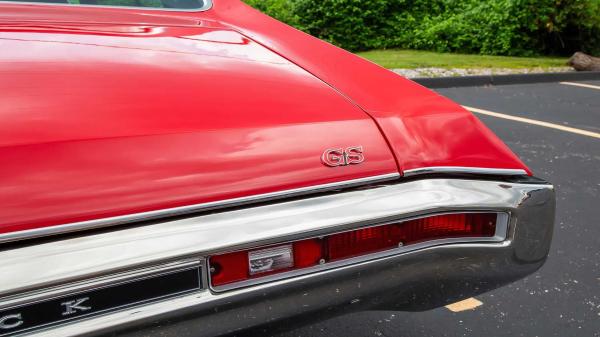
Rare 1970 Buick Coupe Is A Muscle Car Bargain Against The Chevelle SS
With rising collector values and unmatched torque, the 1970 GS 455 is finally getting the recognition it always deserved.
Rarer Than A Skylark GS, And Nobody Noticed

Put the numbers side by side, and the case writes itself. Roughly 22 Wildcat GS models reportedly left the factory with the Super Wildcat setup in 1966, a figure that’s genuinely harder to pin down than most Skylark GS production totals collectors already treat as rare.
Value tells its own version of this story. According to Hagerty, a 1966 Wildcat GS Custom two-door Sport Coupe with the standard 340-hp single-carburetor engine is valued at $36,200 in Concours condition, $21,800 in Excellent condition, $12,800 in Good condition, and $7,800 in Fair condition. A 1965 Skylark GS two-door coupe lands in a similar range, at $37,400, $25,600, $15,800, and $8,900 across those same condition tiers.

What’s missing from that comparison is that those Wildcat GS figures cover the standard package, not the 22-unit Super Wildcat variant. The dual-quad car is so rare that it doesn’t even have its own separate valuation line the way the Skylark GS does.
That absence says more than any number could. The rarest Buick muscle car of the 1960s isn’t hiding because nobody wants it; it’s hiding because almost nobody knows it exists.
Sources: Hagerty, Curbside Classic

Related posts


Latest Post


No Comments